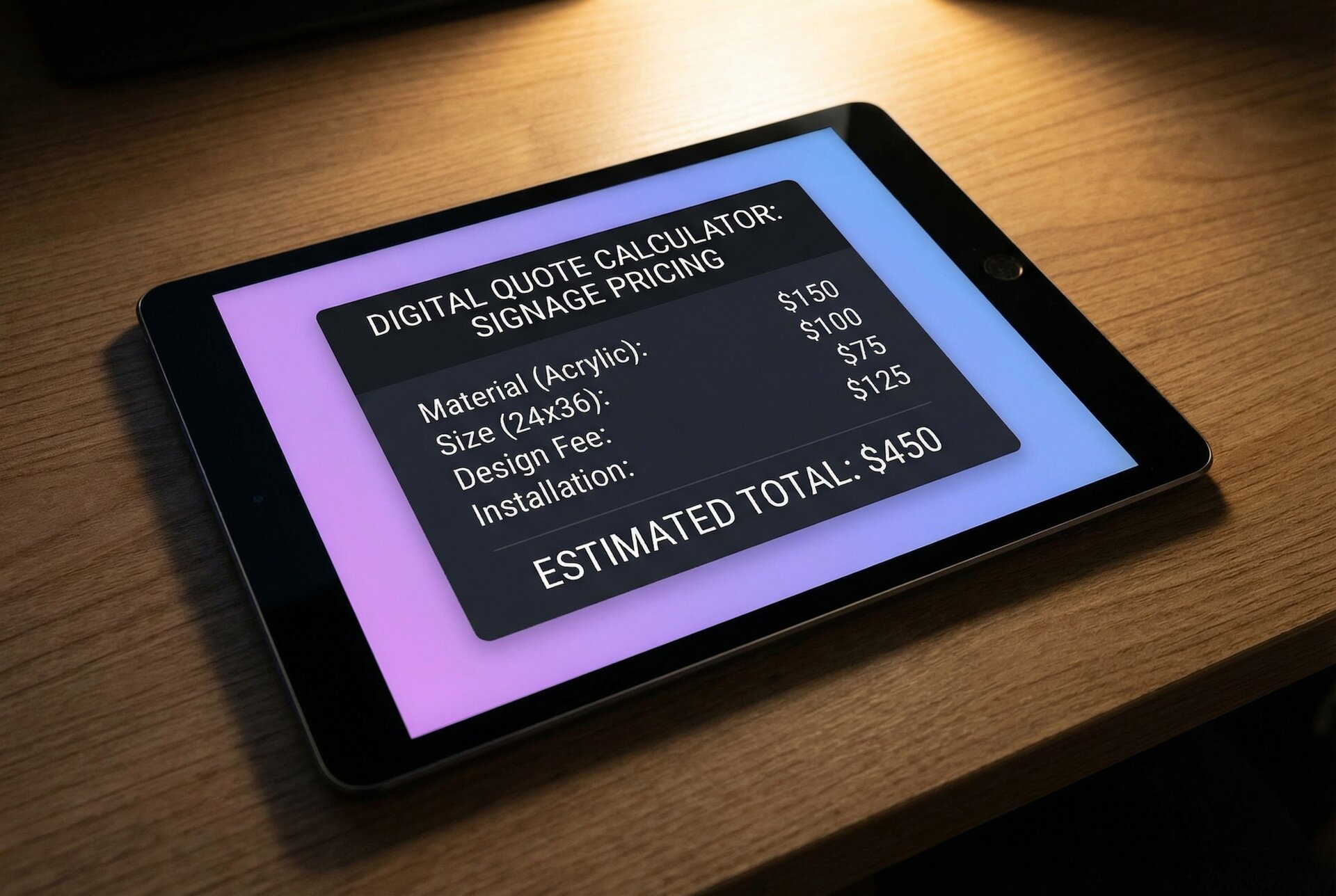

That £450 neon sign quote just cost you £127. You thought you made money—material was £180, labour £120, 50% margin seemed safe. But overhead ate £90, true labour costs hit £156, and waste added another £31. Welcome to the reality most sign shops discover too late.
Professional sign calculators solve this by building real costs into every quote from the start. No more margin erosion. No more profitable-looking jobs that actually lose money.
The Hidden Costs That Kill Profit
Simple material-plus-labour pricing ignores the costs that actually run your business.
Overhead reality: Your £2,400 rent doesn’t disappear when you quote jobs. Neither does insurance, utilities, or equipment depreciation. Most sign shops carry 25-45% overhead—£75-135 on every £300 job that material-plus-labour pricing completely ignores.
True labour costs: That £40/hour wage becomes £52/hour after national insurance, holiday pay, and pension contributions. Add equipment time, setup, and cleanup, and your “3-hour” job actually consumes 4-5 billable hours.
Waste and consumables: Every cut creates waste vinyl. Every paint mix leaves leftovers. Installation hardware needs extras. These costs compound to 8-15% beyond base material calculations.
Scale this across hundreds of jobs and margin erosion becomes terminal. Busy shops can still go bankrupt if every “profitable” quote actually loses money.
The Consistency Problem
Manual pricing creates dangerous variations. Your experienced estimator might add 15% buffer for installation complexity. Your new person forgets overhead entirely. Customers notice these differences—and lose trust.
Worse, you can’t identify which jobs actually make money. Some subsidise others, creating an illusion of profitability until cash flow reveals the truth.
How Professional Calculators Actually Work
Real sign calculators don’t just add markup to materials. They systematically account for every cost required to keep your doors open.
Start With Real Overhead Numbers
| Cost Category | Monthly Examples |
|---|---|
| Facility | Rent £2,400, utilities £350, insurance £280 |
| Equipment | Lease payments £800, maintenance £200, software £150 |
| Administrative | Accounting £300, phones £120, internet £80 |
| Marketing | Website £100, advertising £500, materials £150 |
| Professional | Legal £200, banking £50, licenses £100 |
Total monthly overhead: £6,080
At £20,000 monthly revenue, that’s 30.4% of everything you sell. Miss this on enough jobs and you’re subsidising customers with your own money.
What Labour Actually Costs
That £16/hour employee costs £32.77/hour once you include everything:
- True employment cost: £20.94 (wages + taxes + benefits)
- Overhead recovery: £6.37 (your shop’s running costs)
- Profit target: £5.46 (why you’re in business)
Many shops discover their casual “£40/hour” estimates need to be £55-65/hour for actual profitability. Professional calculators eliminate these costly surprises.
Materials Cost More Than You Think
Simple material pricing misses the full picture:
Vinyl that costs £8.50/m² actually costs £10.53/m² when you add waste, weeding time, and application materials.
LED neon at £12/metre becomes £23.84/metre once you include controllers, mounting hardware, connectors, and testing allowances.
These differences compound across every job. Underestimate by 20% consistently and you’ve eliminated profit entirely—before considering any other costs.
Not All Work Is Equal
Standard vinyl application and custom neon bending shouldn’t cost the same per hour. Professional systems adjust for complexity:
| Complexity Level | Rate Multiplier | Why |
|---|---|---|
| Standard | 1.0x | Routine processes, minimal risk |
| Complex | 1.5x | Specialist skills, installation challenges |
| Bespoke | 2.0x | Custom engineering, historic constraints |
That 6-hour neon installation becomes 9 billable hours when you factor in the expertise and risk involved.
Professional Calculator Options
Sign Customiser
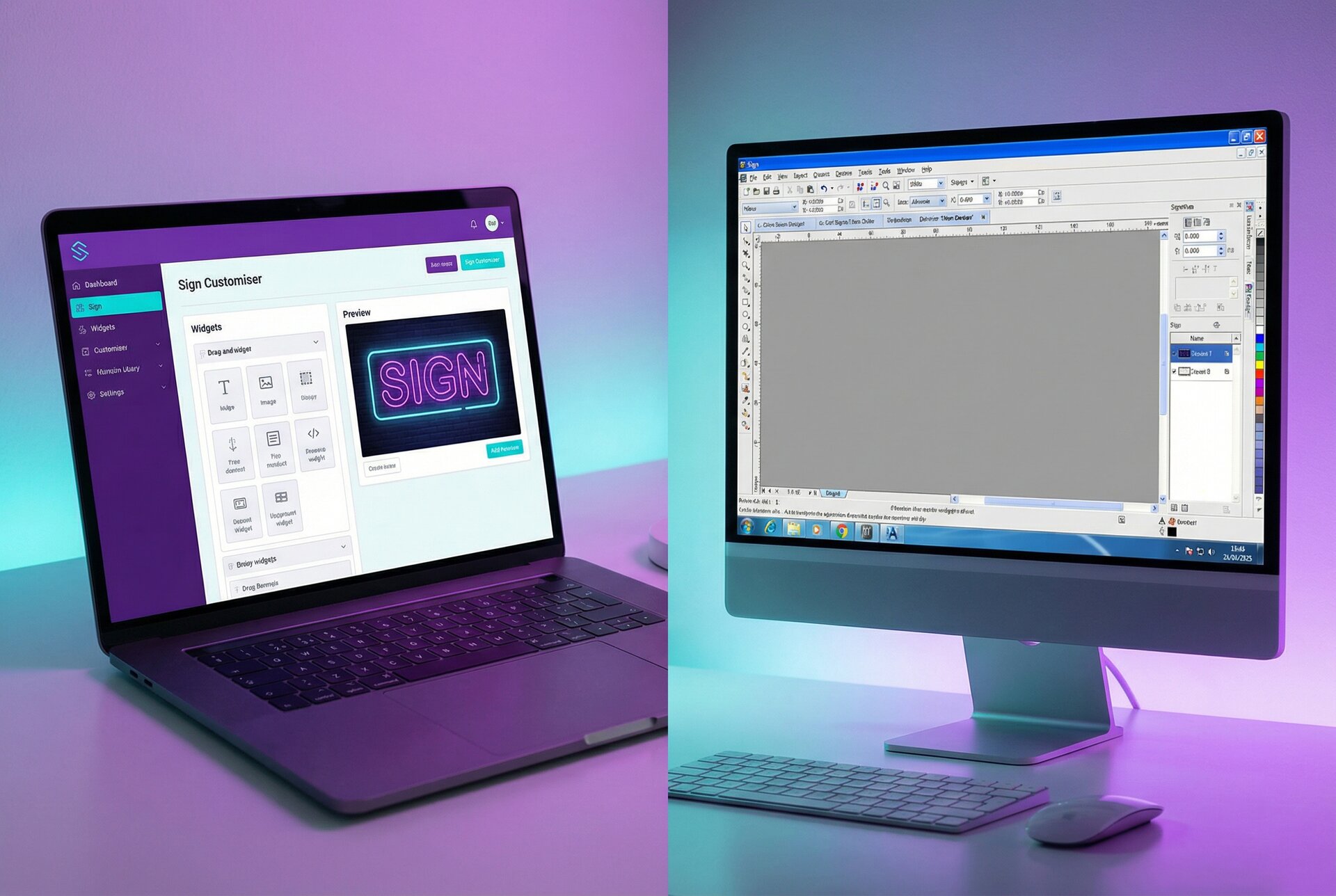
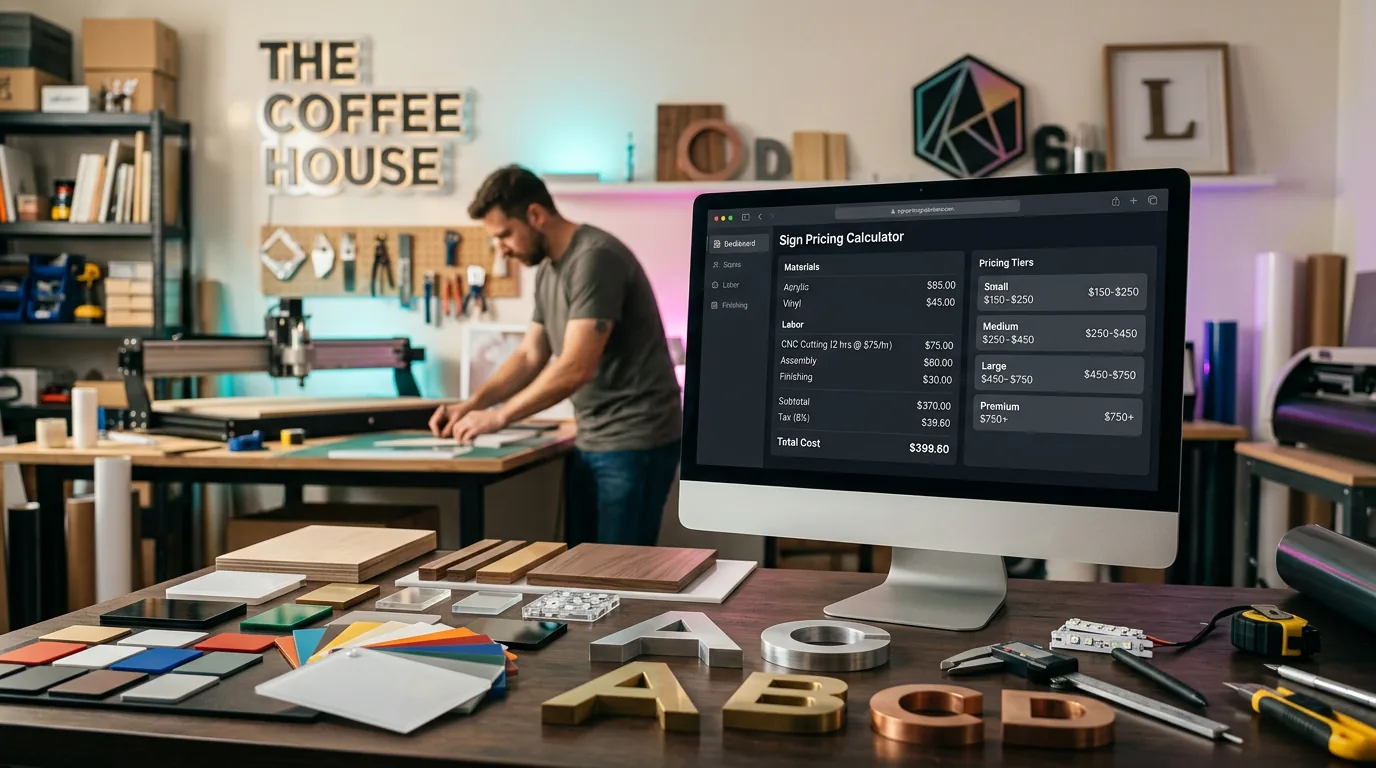
Sign Customiser’s sign pricing calculator automates customer-facing pricing with professional-grade calculations running behind the scenes. Real-time pricing eliminates quote delays while maintaining accuracy.
Handles sophisticated font-based material calculations automatically—useful for LED channel letters where actual character paths determine material usage. Native Shopify integration enables full e-commerce automation.
Best for: Shops selling standardised products online where speed matters more than personal consultation.
Investment: £29-299/month based on volume.
The Sign Expert Calculators
Educational tools that teach proper cost calculation rather than automating pricing. Focus on understanding overhead, true material consumption, and margin requirements through specific calculators for vinyl graphics and general frameworks.
Best for: Shops learning systematic pricing principles or validating existing methods.
SignSums (Australia)
Specialises in fabricated letter estimation with customisable shop rates and machine speeds. Industry-specific for complex fabrication that general tools can’t handle, but limited to specific product types.
Signs.com Pricing Estimator
Customer-facing calculator for standard products. Simplified model suitable for volume providers offering limited customisation rather than professional shop calculations.
Making The Switch to Professional Pricing
Professional pricing starts with cost reality, not guesswork:
True overhead: List every monthly expense that occurs whether you’re busy or quiet. Calculate the percentage this represents of current revenue. Most shops discover overhead consumes 25-45% of sales.
Real labour costs: Add taxes, benefits, and non-productive time to base wages. Include equipment amortisation and facility costs. That £16/hour wage typically becomes £30-35/hour in true costs.
Actual material consumption: Track waste on recent jobs. Include all consumables and secondary materials. Factor in quality control and testing requirements.
Choose Your Approach
Match your pricing method to how you actually sell:
Standardised products: Fixed tiers work when production is consistent. Good for shops educating customers about options.
Custom fabrication: Time and materials with complexity adjustments handle variable projects.
E-commerce focus: Real-time engines like Sign Customiser’s sign pricing calculator enable instant customer pricing.
Mixed operations: Automate standard products, manually calculate bespoke work.
Test Before You Commit
Validate your new pricing on recent jobs before going live:
- Recalculate 10 recent projects using your new methods
- Compare calculated prices to actual costs and margins
- Adjust for variances—if new pricing shows losses on jobs you thought were profitable, your old system was hiding problems
- Monitor customer response and margin performance for the first month
Most pricing problems come from inaccurate cost data, not calculation errors. Get the inputs right and the mathematics becomes straightforward.
Three Fatal Pricing Mistakes
Competing on Price Instead of Profit
Setting prices by watching competitors rather than covering your costs is a guaranteed route to failure. Your competitors might have different overheads, lower-skilled staff, or venture capital subsidising their operations.
Calculate your minimum viable pricing first. Then compete on speed, quality, or service—not just price.
Treating All Jobs as Equal
Standard vinyl application and architectural signage restoration require different skills, carry different risks, and deserve different rates. Price everything the same and complex work subsidises simple jobs.
Ignoring Capacity Reality
Pricing identically whether you’re swamped or quiet leads to overcommitment during busy periods and underutilisation during slow ones. Professional systems adjust pricing based on current capacity.
Strategic Margin Management
Different work deserves different margins based on risk and expertise required:
| Product Type | Target Margin | Why |
|---|---|---|
| Vinyl graphics | 40-60% | Standard skills, low risk |
| Channel letters | 50-75% | Electrical complexity, permits, installation |
| Neon signs | 60-85% | Specialist fabrication, artistic value |
| Emergency work | 80-120% | Speed premium, disrupted schedules |
These aren’t arbitrary markups—they reflect business realities professional calculators help you understand and defend.
Growing Through Better Pricing
Professional pricing reveals which work actually makes money, enabling strategic decisions about capacity, services, and automation.
Focus sales efforts on highest-margin opportunities. Understand the volume required to justify additional staff. Identify bottlenecks limiting growth.
For service development, calculate whether new offerings contribute to business goals before investing in equipment or training.
High-volume standardised products benefit from automated quoting through tools like Sign Customiser’s sign pricing calculator. Complex consultation work remains manual but uses systematic methods.
From Guesswork to Profit
Professional pricing isn’t about perfect calculators—it’s about systematic methods that protect margins while staying competitive.
Start with cost reality. Understand your true overhead, employment costs, and material consumption. No tool compensates for inaccurate inputs.
Match tools to workflow. E-commerce shops need automated pricing. Consultation-based operations need internal calculation systems.
Choose consistency over complexity. Simple systems your team actually uses beat sophisticated tools that gather dust.
For automated professional pricing, try Sign Customiser’s sign pricing calculator or review pricing options for your operation.
The difference between profitable shops and struggling ones isn’t talent or equipment—it’s knowing exactly what every job really costs.