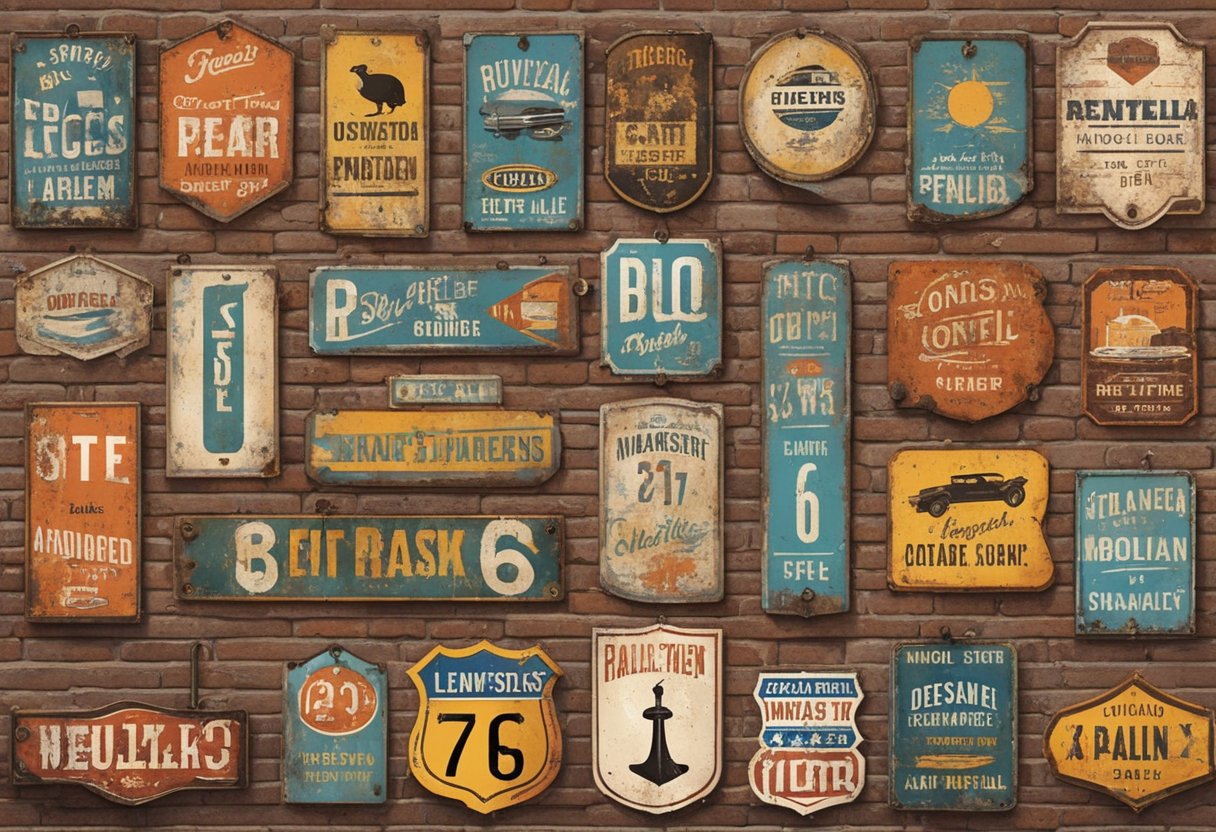
Vintage steel and tin signs share a recognisable look: bold, high-contrast typography, a limited palette of flat colours, and a printed or enamelled surface built to survive decades outdoors. Most date from the late 19th century to the mid-20th century, when brands used them as outdoor advertising, so their design choices were practical first and decorative second.
Characteristics of vintage steel sign design
The features collectors and sign shops look for are consistent across eras and brands.
- Bold, simplified typography. Large sans-serif or condensed lettering, chosen to read clearly from a distance.
- A limited colour palette. A few flat colours in solid blocks rather than gradients, so the design stays legible at a distance.
- Porcelain enamel or printed tin. Early signs used cast iron or steel with a porcelain enamel coating fired over the metal for a hard, glossy, richly pigmented finish. Later, cheaper signs switched to tin.
- Embossing. Many designs press the lettering or border into the metal in relief, using matched dies to stamp the sheet or pass it between patterned rollers, which adds depth and helps the sign catch the light.
- Patina and rust as an ageing signal. Steel signs are usually a thin layer of tin over steel, which resists rust only while that coating stays unbroken. Once it chips, the exposed steel rusts, which is why genuine vintage signs show rust bleeding from scratches, edges and screw holes rather than an even coat all over.
Historical significance of vintage metal signs
Metal advertising signs date back to the late 19th century and stayed popular until the mid-20th century, when other forms of advertising took over. Early signs were steel or iron with porcelain enamel, and around the turn of the 20th century makers switched to cheaper tin. Enamel is glass rather than paint, so it does not fade under ultraviolet light. That is why many surviving signs still show close to their original colour after decades outdoors, even as the surrounding metal rusts and wears.
Collectors and interior decorators value original signs for that mix of durability and visible age, and a parallel market has grown for faithful reproductions and personalised versions of the same look.
Selling vintage-style metal signs from your sign shop
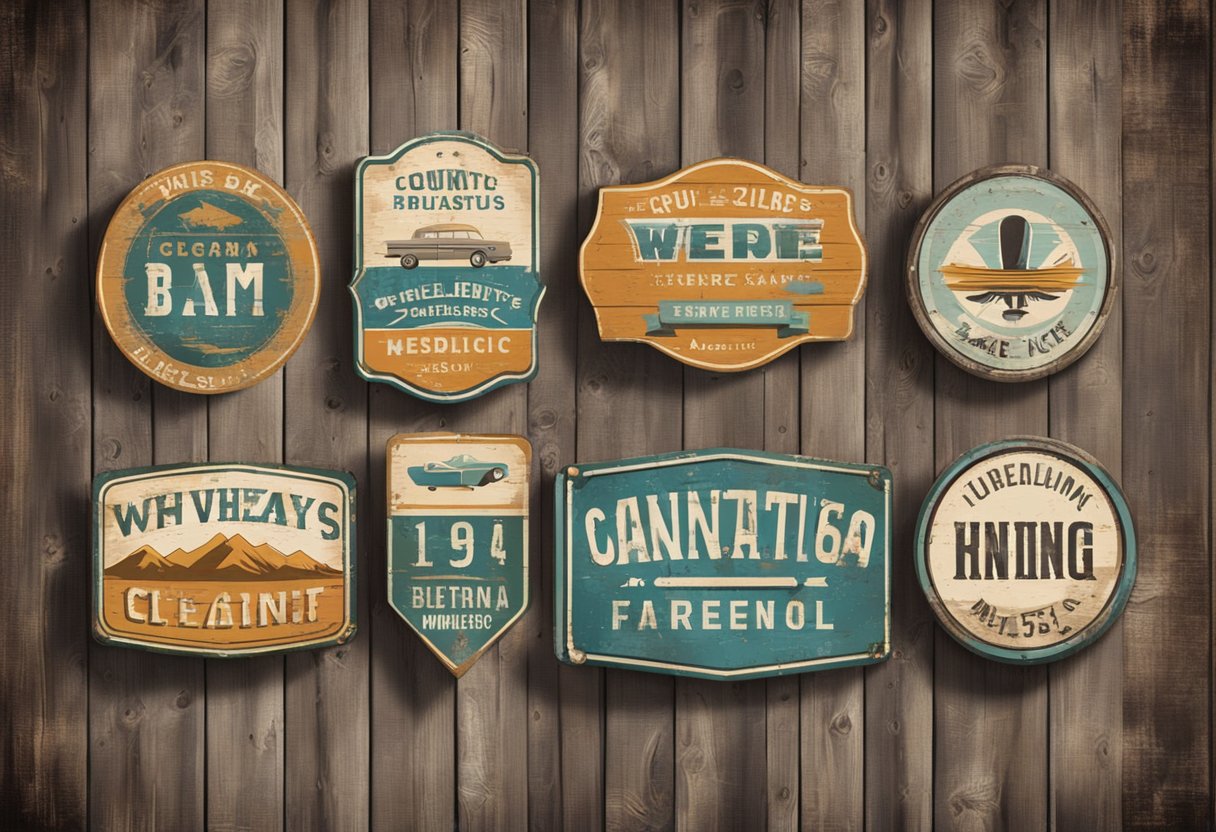
Vintage-style metal signs sell well beyond the antiques trade. Sign shops fill orders for bar and restaurant owners who want a themed feature wall, garage and man-cave owners who want a personalised name or car brand sign, cafés and retail shops that want retro branding, and gift buyers ordering a custom sign for a birthday, anniversary or new home. The common thread is a customer who wants the vintage look with their own text, name or logo rather than an original antique.
A live customiser lets shoppers build that sign on your own website instead of emailing back and forth for a quote. With Sign Customiser, a customer types their text, picks a font, colour, size and backboard, and sees a live preview and price update as they design. Your shop sets the materials, finishes and rates. The customiser handles the layout, the preview and the checkout.
A worked pricing example
Metal plate and cut-out signs typically use the Frame Fit pricing model, which charges by the sign’s area rather than by letter count.
(width in cm x height in cm x price per sq cm) + base price
The numbers below are illustrative only. Set your own rates in the Sign Customiser admin.
| Sign size | Price per sq cm | Base price | Illustrative price |
|---|---|---|---|
| 30cm x 20cm | $0.04 | $12.00 | $36.00 |
| 45cm x 30cm | $0.04 | $12.00 | $66.00 |
| 60cm x 40cm | $0.04 | $12.00 | $108.00 |
A finish or material selection, such as brass instead of standard aluminium, can add its own base price or multiplier on top of the area price. Configure those rates once in the Sign Customiser admin, and they apply automatically whenever a customer picks that option.
Production notes
Reproduction and personalised metal signs are usually cut from aluminium composite or aluminium sheet rather than tinplate, since aluminium does not rust. Shops offer the design printed flat, embossed for a raised relief, or laser cut as a silhouette or cut-out shape, with a powder-coated or faux-aged finish to match the vintage look the customer wants. Sign Customiser exports production-ready vector cut paths with every order, along with material and finish details, so a laser cutter or plate manufacturer can go straight to production without chasing the customer for specs.
For printed or embossed plate-style reproductions, closest to a traditional tin sign, start with metal plate signs. For laser-cut silhouette designs, such as a name or logo cut clean out of the panel, use metal cut-out signs. Both run on Shopify, WooCommerce, Wix, Webflow, Squarespace and Etsy stores. Plans run from $29 to $299 a month, and every plan starts with a 7-day free trial. Try it on your store.
Understanding authenticity and value
Two checks help separate a genuine vintage sign from a modern reproduction.
- Material composition. Genuine vintage signs are typically cast iron or steel with porcelain enamel, or tin.
- Wear patterns. Tin only protects the steel under it while the coating is unbroken, so rust on an old tin sign starts where the surface has chipped or been scratched, such as the edges and screw holes.
Value is driven more by brand recognition, size and condition than by age alone. Signs in the 30 to 42 inch range tend to hold more value, because they read clearly from a distance, which was the point of the original design.
The role of metal signs in home and business decor
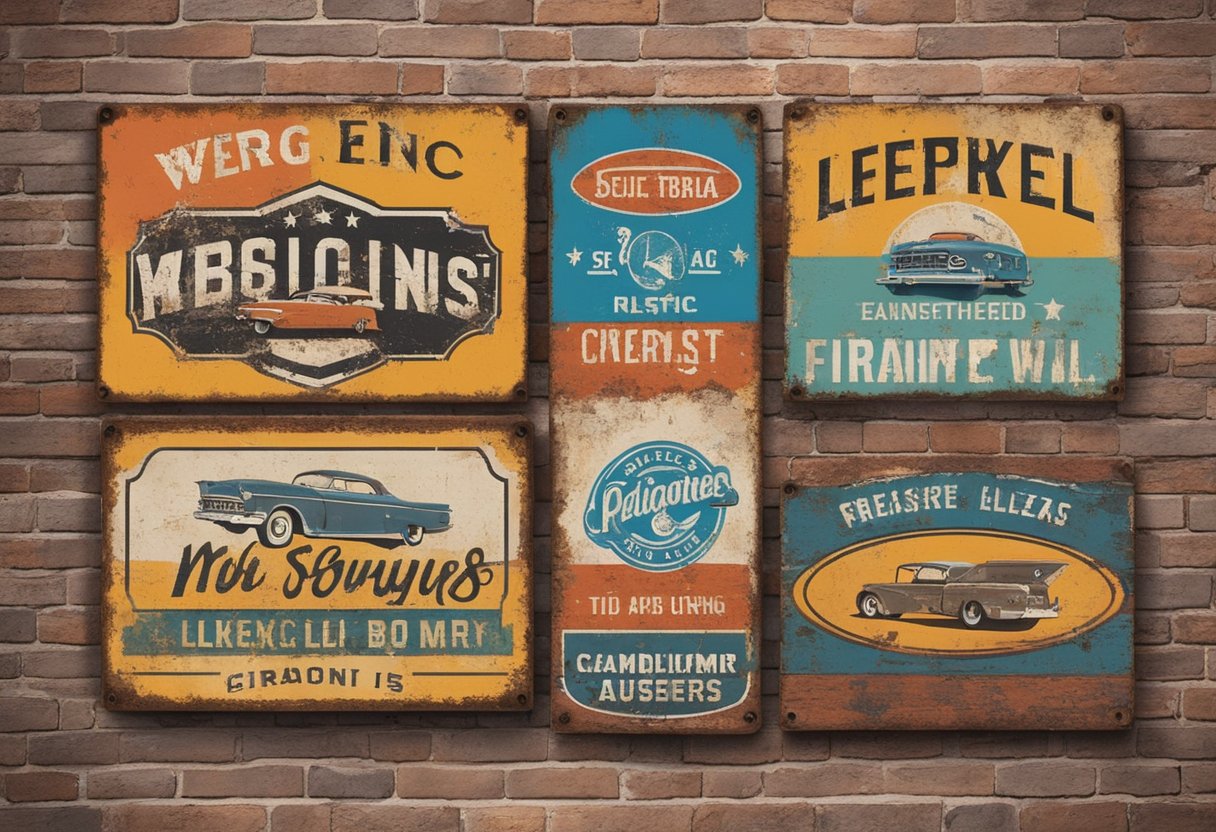
At home, metal signs work as a focal point on a living room wall, a themed collection in a garage or home bar, or a personalised welcome sign at the front door. In a business, they double as decor and branding: a themed feature wall in a restaurant, a personalised sign behind the bar, or a laser-cut logo sign in an office lobby. Businesses that want to update pricing or specials often pair a fixed metal sign with a chalkboard or dry-erase panel for the parts that change.
Powder coating gives a modern reproduction a durable, even finish in almost any colour, while a natural or faux-aged patina finish suits a traditional pub or garage look. Whichever finish you choose, avoid harsh chemical cleaners on painted or powder-coated signs. They strip the finish faster than ordinary wear would.
Acquiring vintage metal signs
Original vintage signs are sold through antiques dealers, auction houses and general marketplaces, including small independent sellers working from home. When buying an original, check high-resolution photos closely for touch-ups or repaint, read the seller’s condition notes in full, and compare recent sold prices for the same sign rather than relying on a single asking price.
Shipping is worth checking before you buy. A heavy steel or porcelain sign is easy to damage in transit.
| Shipping consideration | Why it matters |
|---|---|
| Insurance | Steel and porcelain signs chip and crack; insurance covers transit damage. |
| Packaging | Rigid packaging with corner protection prevents bent edges and cracked enamel. |
| Handling time | Larger or older pieces may need more careful, and slower, packing. |
A reproduction or personalised sign carries less shipping risk, since it comes new from the manufacturer, but the packaging question still matters for a large piece.