Changelog
Documenting our journey of creating a custom sign builder.
Filter by Tag
-
A quality leap for AI-generated neon sign designs
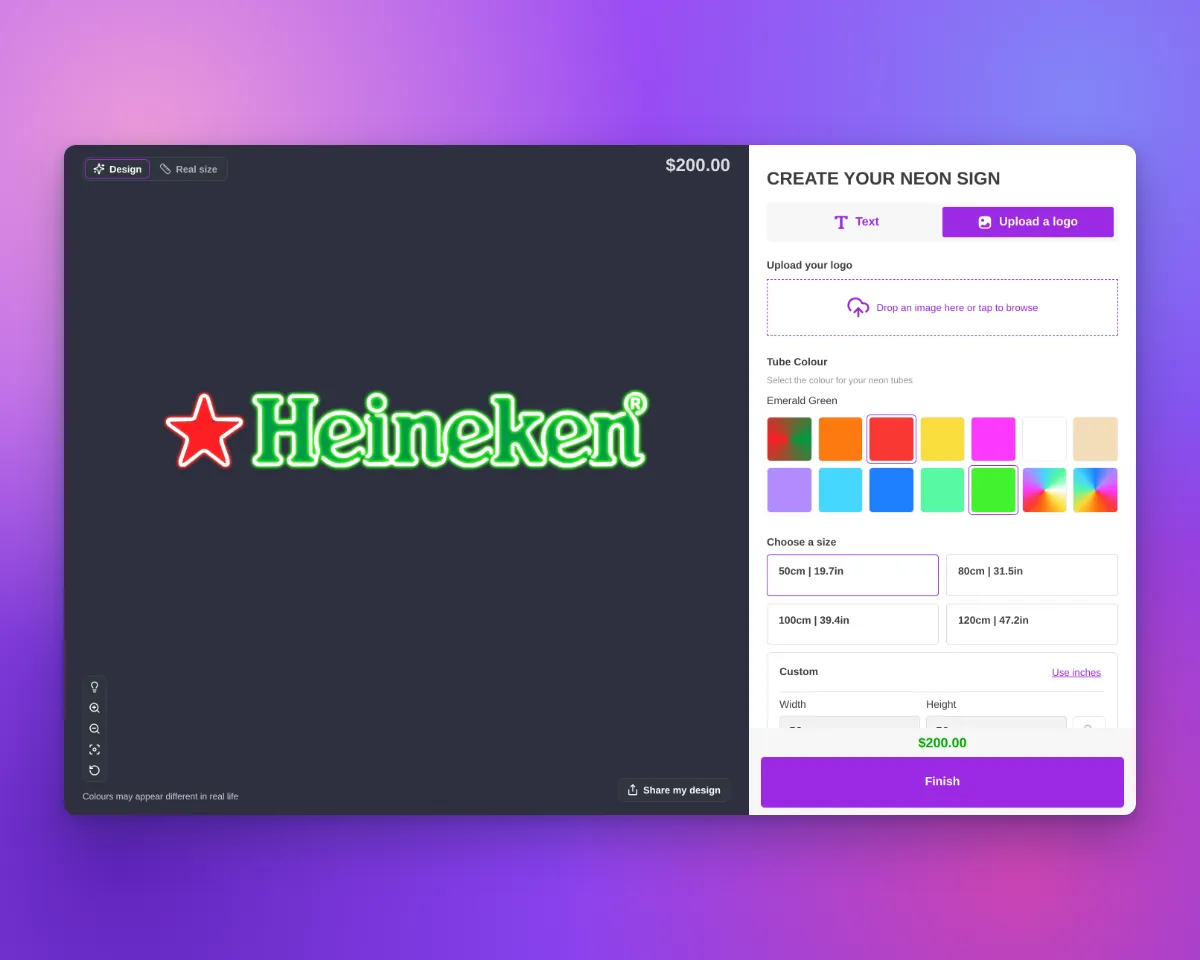
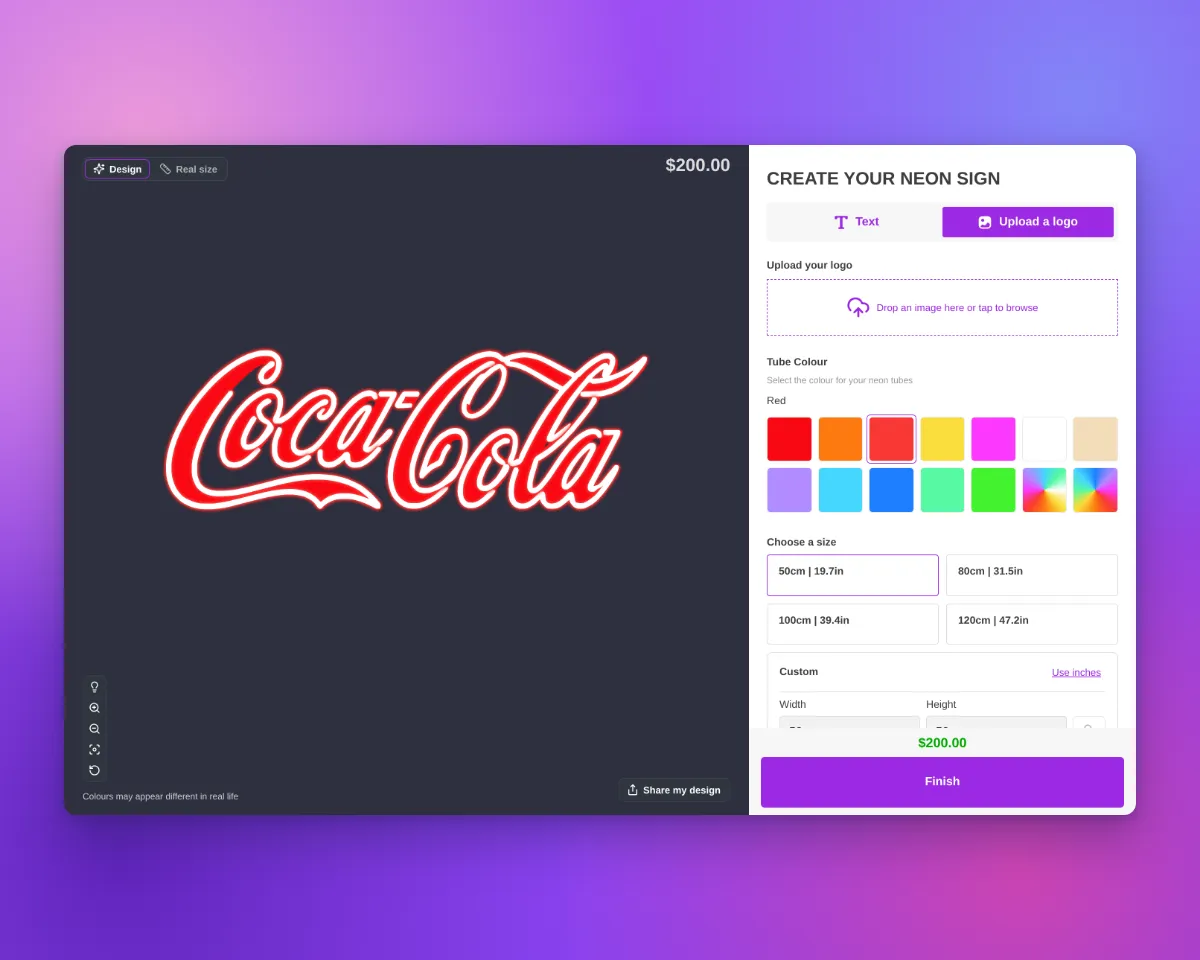
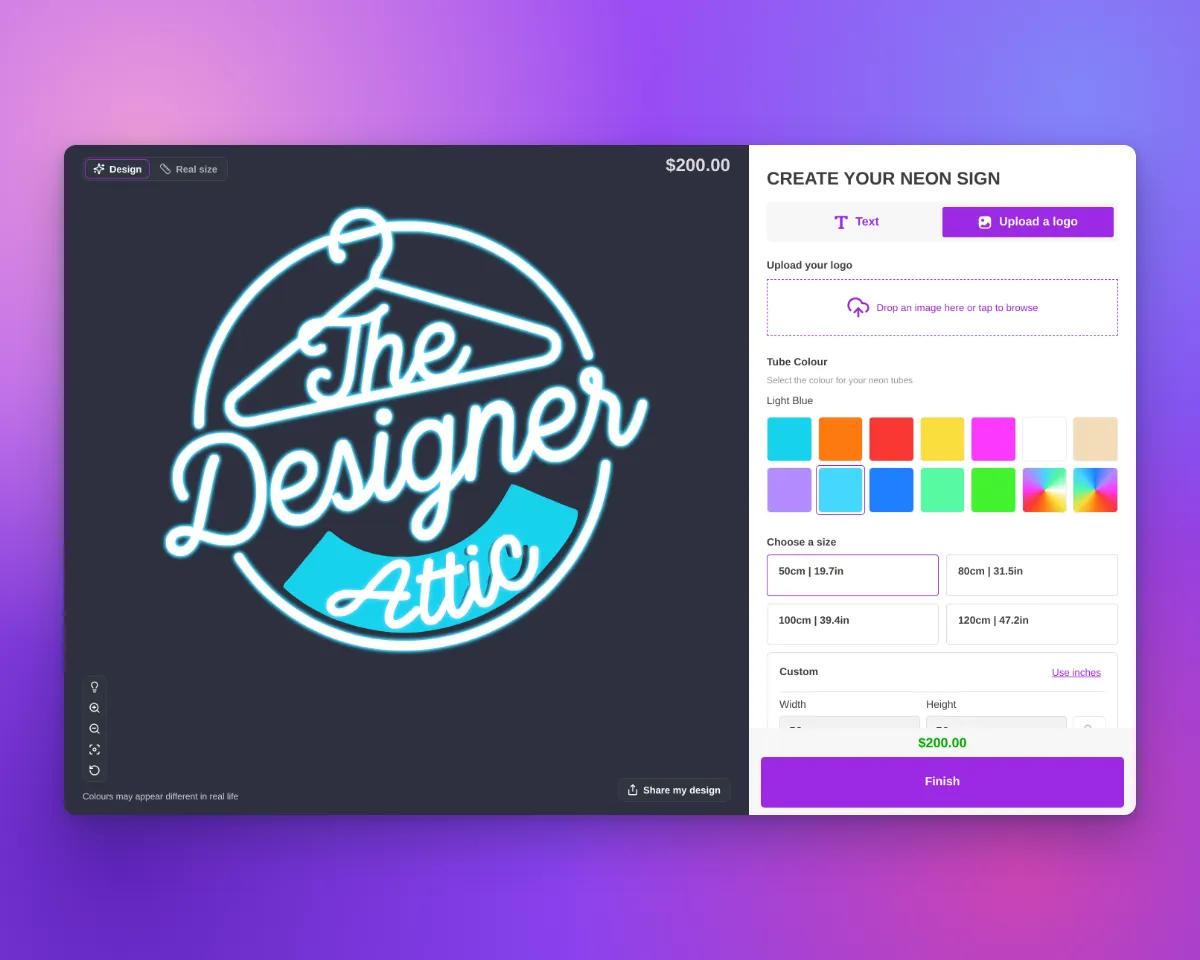
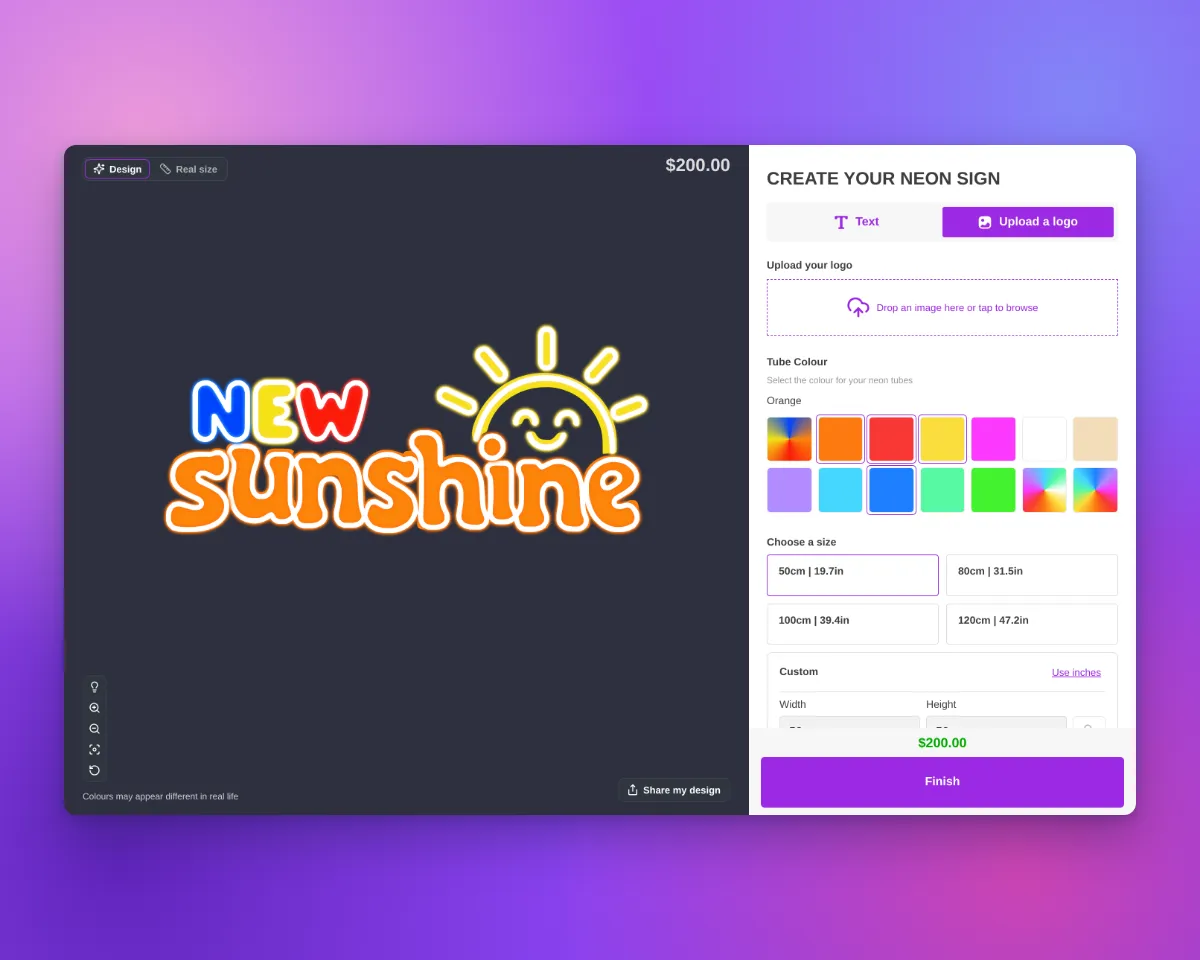
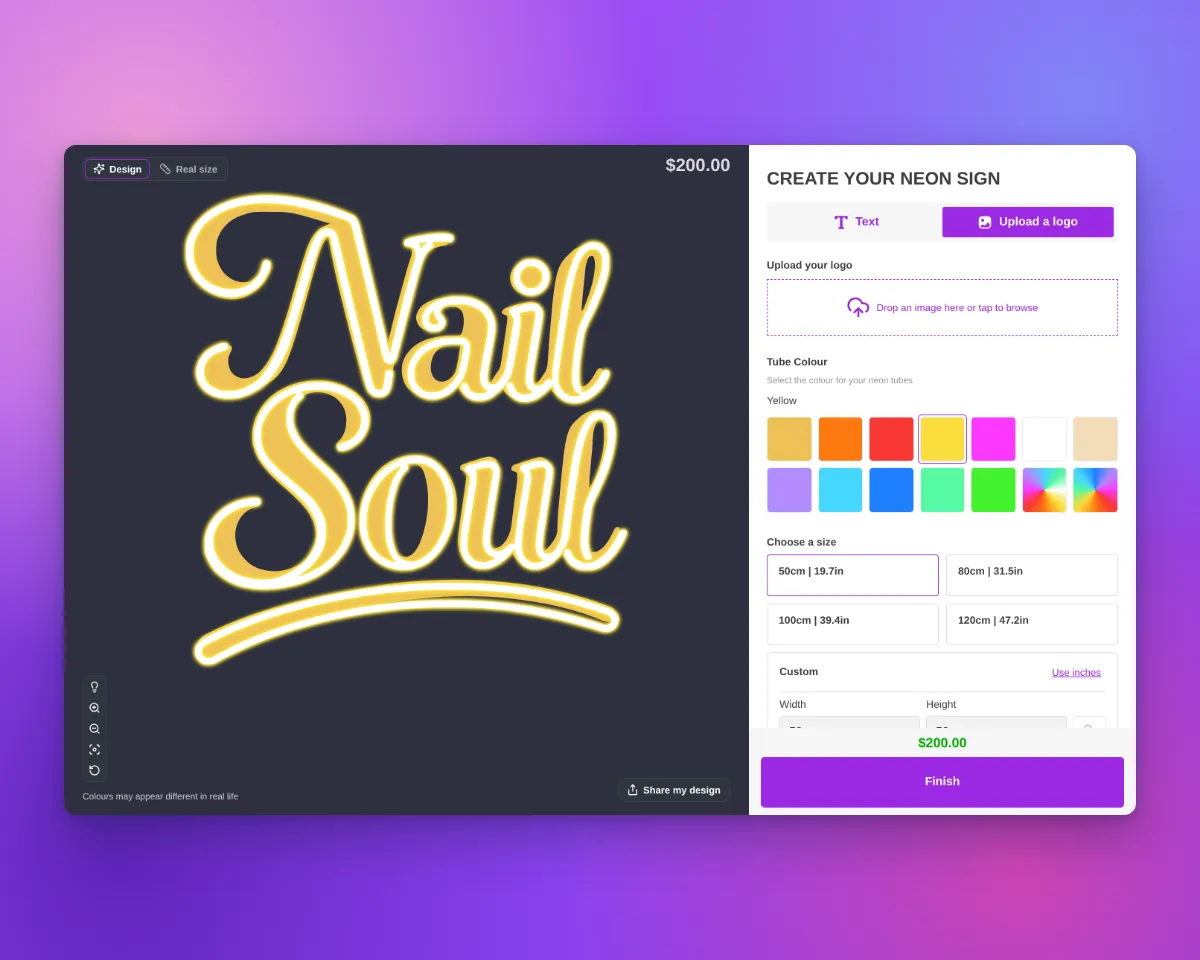
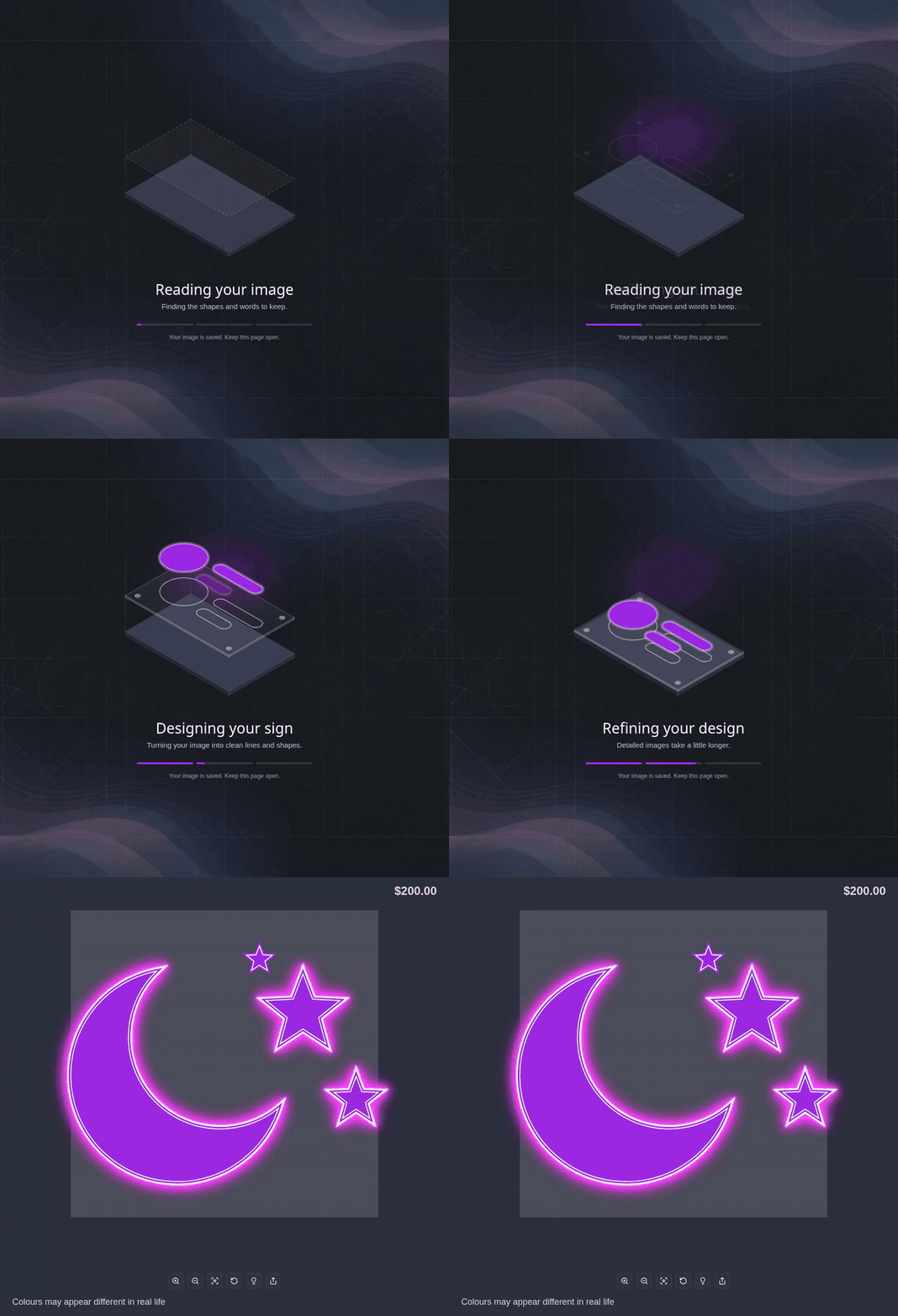
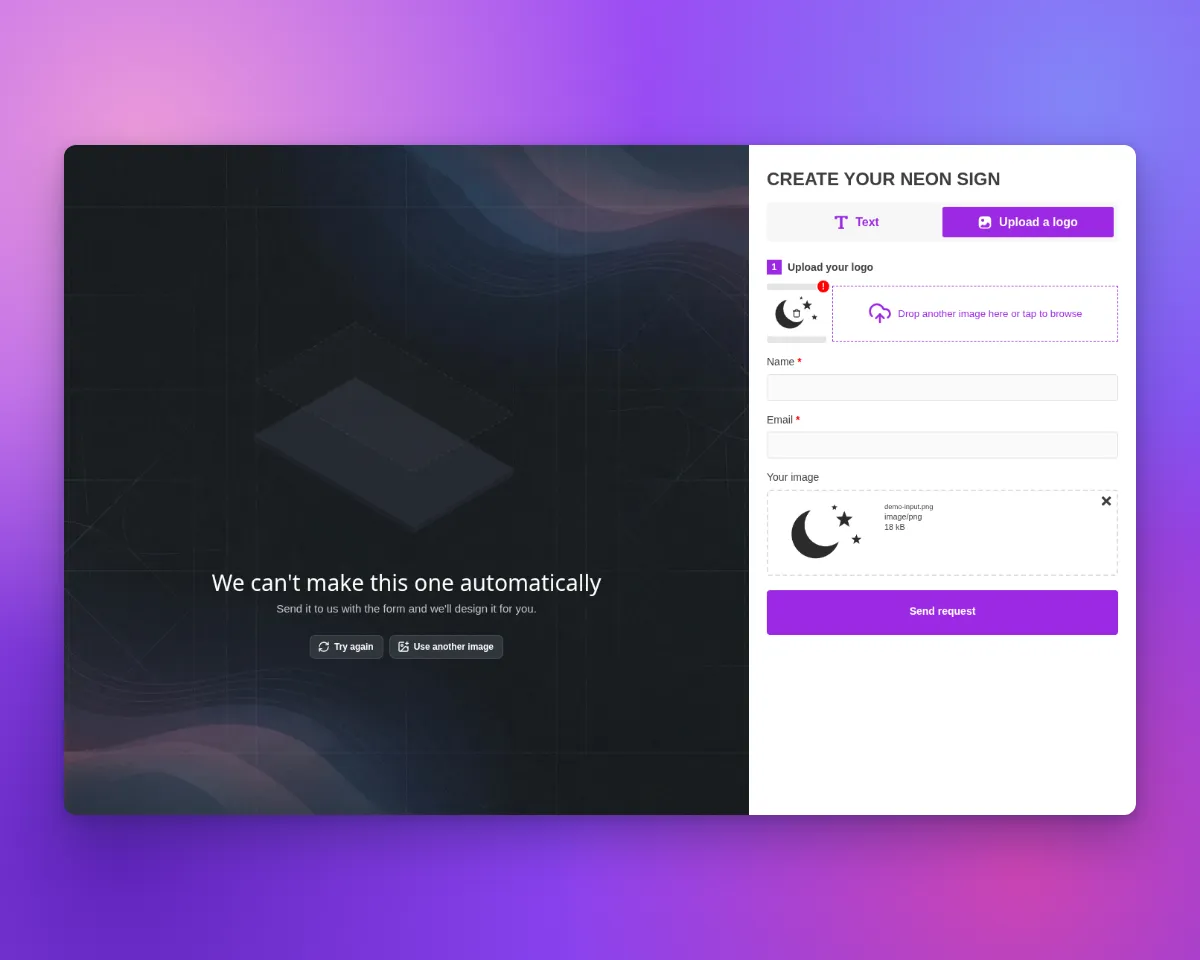
The AI Sign Designer has taken a significant step forward at converting customer-supplied logos into neon production artwork. When shoppers upload a brand logo and ask for a neon sign, the output now looks like a clean tube layout your shop could quote and build, with the original wordmark, colours, and proportions intact.

What’s Changed
- Brand typography is now preserved exactly - Wordmarks are traced from the original glyphs, so the source font weight, letter spacing, terminals, and curved baselines come through instead of being replaced by a generic neon script
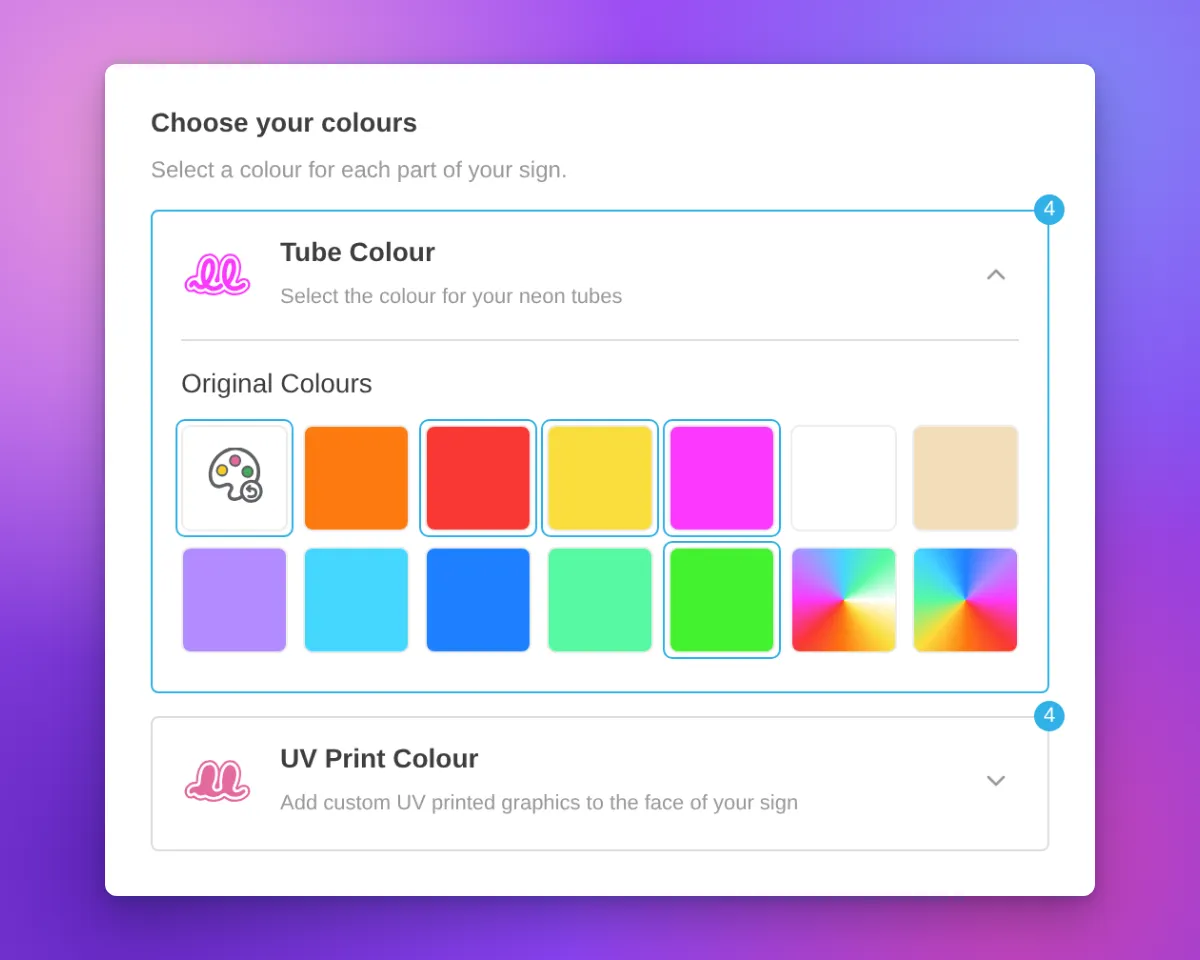
- Source colours map to tube colours - Brand reds, greens, blues, and other colours from the customer’s logo carry through to the neon tubes rather than collapsing to a single white tube
- Backboards and filled badges are stripped out - Solid discs, shields, dark colour fields, and panel backgrounds behind a logo are removed automatically, leaving only the foreground tubes and lettering a sign shop would actually fabricate
- Flat production artwork instead of a glowing preview - Outputs are now unlit, hard-edged, vector-style tube proofs with no halos, bloom, or photographic glow effects, so what you see is what you’d quote
- Taglines and small lettering survive - Thin, light, or widely spaced text is no longer fattened or regularised; small straplines like “The way to grow your business” remain readable and on the right baseline
- Cleaner separation of text and graphics - Letters stay solid filled, while icons, animals, and decorative shapes are rebuilt as sparse tube paths with negative space between them — matching how a real neon sign is built
- More consistent results from the same upload - Neon prompts now run with tighter generation settings, so re-running the same logo produces noticeably less variation between attempts
-
Show which characters a font can't render
Sign Customiser now tells customers exactly which characters in their text the chosen font can’t render, instead of a generic “invalid characters” warning. The same check has been extended across every sign type and runs again at add-to-cart, so orders with unrenderable text can no longer slip through to the merchant.
What’s Changed
- Specific character feedback - The “invalid characters” message now lists the exact glyphs the font is missing, so customers know whether to fix a typo, swap a symbol, or pick a different font
- Coverage across all sign types - Font glyph validation previously only ran for material-length pricing; it now runs for every sign that uses customer-typed text
- Add-to-cart safety net - If an unsupported character slips past the live warning, the customiser now blocks add-to-cart and surfaces the same specific message, preventing unrenderable orders from reaching the merchant
- Updated default label - The default invalid-characters label includes a
{characters}placeholder so merchants who customise the wording still see the offending characters listed in their own copy
-
Vertical writing for CJK and Mongolian signs
Sign Customiser now supports proper top-down vertical writing for multilingual signs. Merchants can configure whether vertical columns read right to left or left to right, so customers can type natural multi-line text while the preview and manufacturing output keep the intended layout.

What’s Changed
- Multi-column vertical text - Each typed line becomes its own top-down column, making vertical Japanese, Traditional Chinese, Korean, and traditional Mongolian layouts practical for customer-facing customisers
- Merchant-controlled column direction - Choose right-to-left columns for Japanese, Traditional Chinese, and Korean signs, or left-to-right columns for traditional Mongolian signs
- Natural order details - Cart details, order data, and exports keep the customer’s original typed text instead of replacing it with a generated column representation
- Pricing stays logical - Base line pricing follows the typed input lines while letter charges still apply to each visible character
- Font guidance in settings - The admin settings now remind merchants to upload fonts with the glyph coverage needed for their target language
-
Address sign numbers with vertical stacked text
Sign Customiser now supports vertical stacked text and ships with a ready-made Address Sign Numbers customiser that uses it by default. Customers can stack each digit or letter on its own line for door numbers, house plaques, and any signage where characters need to read top to bottom rather than left to right.

What’s Changed
- New Address Sign Numbers product type - Pick “Address Sign Numbers” in the customiser create flow to spin up a new acrylic-backed customiser tuned for door and house numbers, with the orientation toggle already enabled
- Vertical stacked text orientation - A new orientation control lets each character drop onto its own line, with positions, sizing, and pricing all calculated from the stacked layout rather than a horizontal row
- Three orientation modes per customiser - Lock the customiser to horizontal only, lock it to vertical stacked only, or let customers switch between the two from a Horizontal / Vertical toggle next to the text input
- Configurable default orientation - Choose whether the customiser opens with horizontal or vertical selected when both options are available, so the most common choice is just one click
- Customisable orientation labels - Override the “Horizontal” and “Vertical” labels from the Labels page to match your store’s voice or translate them into another language
-
Light and Tokyo Night theme presets for customiser colours
Sign Customiser now ships with one-click theme presets for the customiser’s colour scheme. Pick a starting point that already looks great, then tweak individual colours from there — no more building a coordinated palette from scratch every time you launch a new customiser.


What’s Changed
- Light and Tokyo Night presets - Choose between the default Light palette or a new midnight-inspired Tokyo Night palette with deep surfaces and soft accents
- One-click apply - A new Theme Preset card sits at the top of the Theme Colours page with colour swatches so you can preview each preset before applying it
- Confirmation before overwrite - Applying a preset replaces every colour selection on the page, so we now ask you to confirm first to protect any custom work in progress
- Still fully customisable - After applying a preset, every individual colour stays editable, so you can use a preset as a starting point and adjust accents, prices, or buttons to match your brand
-
EPS and Illustrator-compatible vector exports
Sign Customiser now produces EPS and Illustrator-compatible PDF files alongside the existing SVG, so the designs you hand off to your production team land in whichever format their cutters, routers, and design software expect. No more chasing conversions between finalising a sale and sending the job to fabrication.
Once enabled for a customiser, the extra formats flow through the same channels as SVG today — customer design files, product images, manufacturer emails, and the admin font tool — with no extra steps for you or your customers.
What’s Changed
- EPS downloads - Universally supported across cutting, routing, and plotting software, so files drop straight into your fabrication workflow
- Illustrator-compatible PDF - Opens cleanly in Adobe Illustrator for designers who prefer to tweak artwork before production
- Per-customiser toggles - Turn EPS and Illustrator exports on only for the customisers that need them, keeping storage lean everywhere else
- Manufacturer email links - New download links appear in the custom design email sent to your production team whenever the formats are enabled
- Admin font tool - The SVG generator in the admin now offers matching EPS and Illustrator downloads so you can pull finished artwork directly from the dashboard
- AI sign designer files - Uploaded logos processed through the AI sign designer are converted automatically once the settings are enabled
-
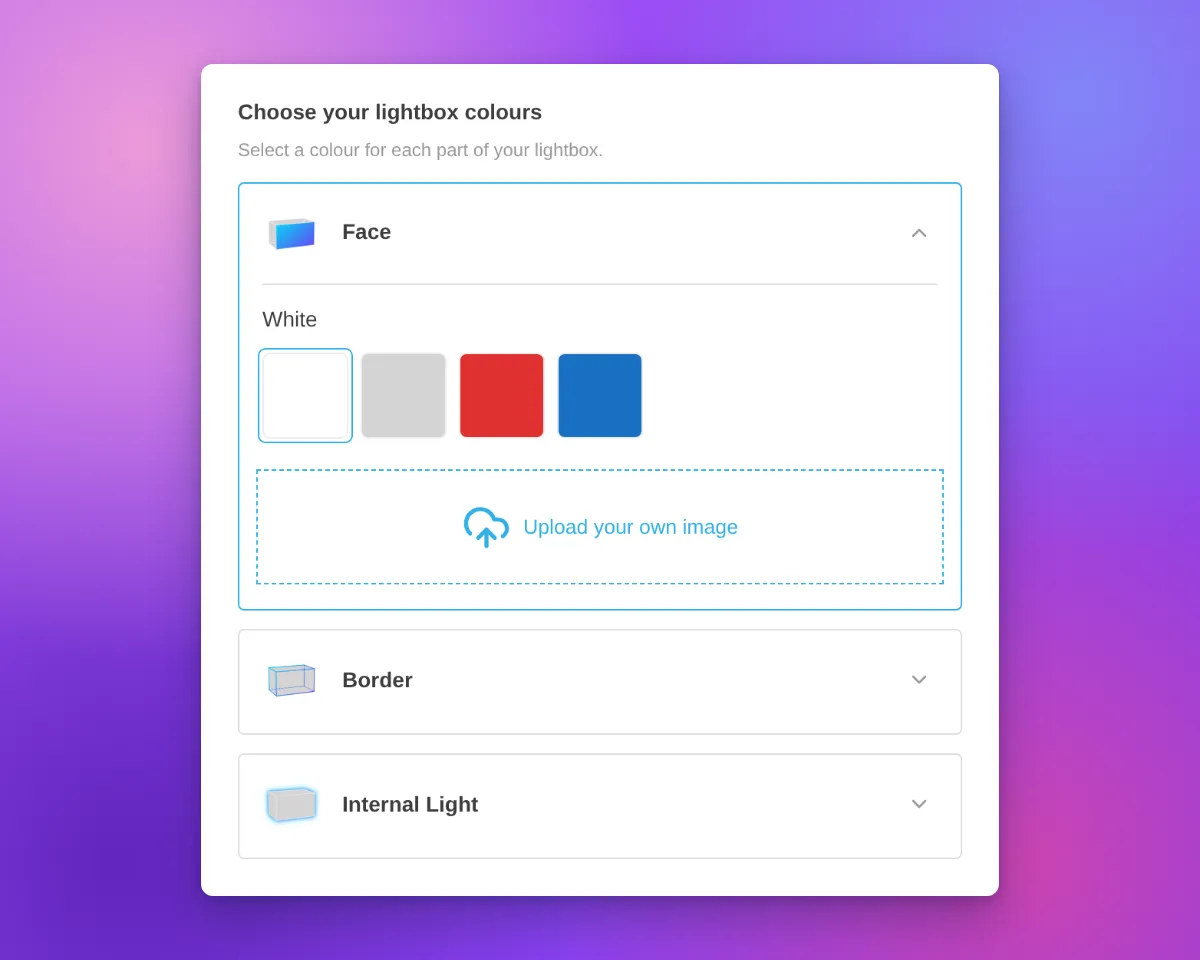
Measurement labels on the lightbox 3D preview
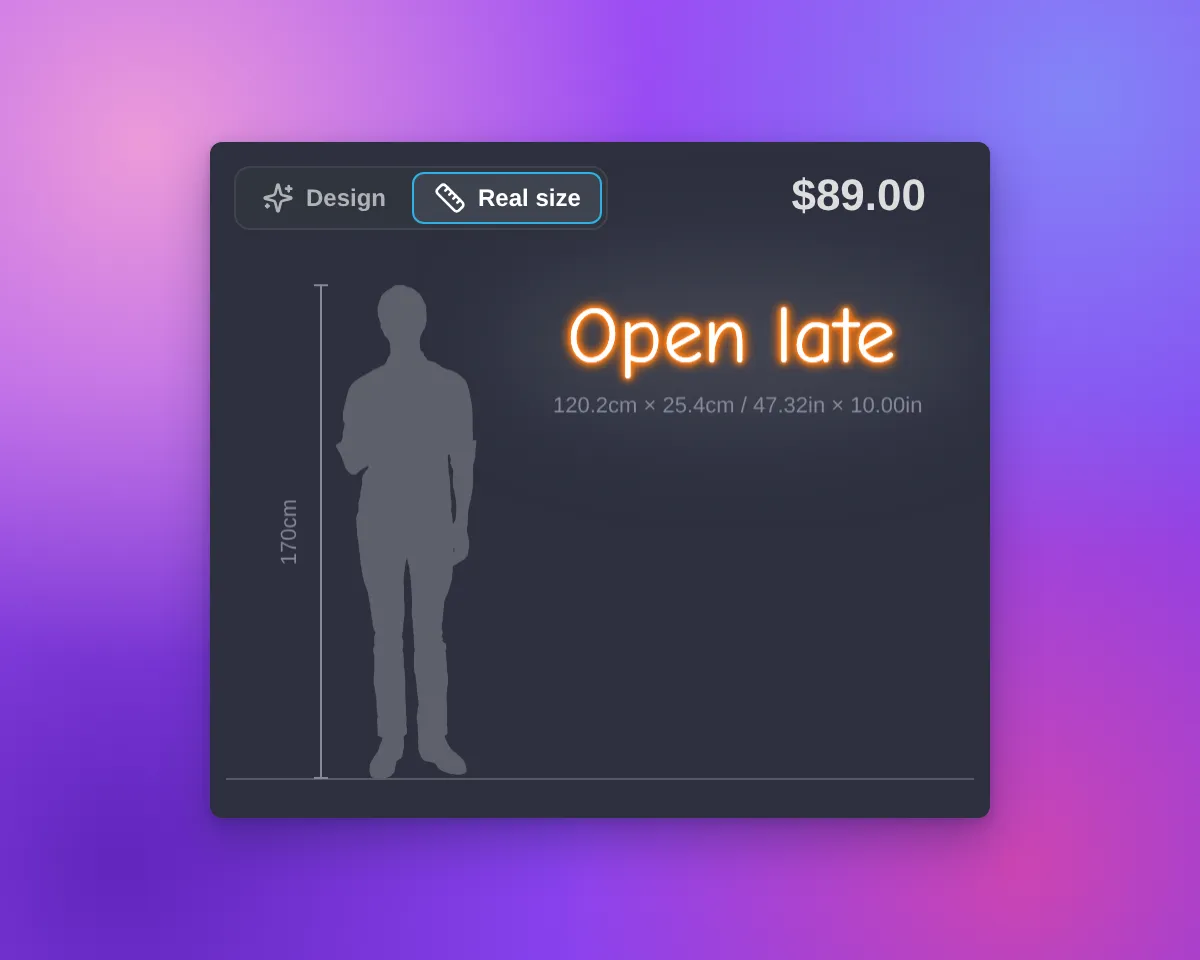
Sign Customiser now shows measurement labels on the lightbox 3D preview, so customers can see exactly how big their sign will be as they design it. Width, height, and length sit alongside the relevant edges of the sign and update in real time whenever the size changes, removing the guesswork when someone is deciding between sizes.

What’s Changed
- Live measurement labels on the 3D preview - Width, height, and length float next to the matching edges of the lightbox, so customers can see the physical size of the sign while they rotate and customise it
- Metric, imperial, or both - Labels respect the customiser’s measurement system setting and can display in centimetres, inches, or both side by side for stores that ship to mixed markets
- Individually toggleable - Each dimension can be shown or hidden on its own, so merchants can surface only the measurements that matter for their product — for example, hiding length on very slim signs
- Accurate for custom sizes - The frame-fit custom size branch now feeds the same measurements through to the preview, so bespoke dimensions appear on the labels instead of falling back to the last preset size
-
Pedestal and sign feet mounting options for lightbox signs
Sign Customiser now supports floor-standing lightbox sign installations. Two new mounting visualisations — Pedestal and Sign Feet — render the sign the way it actually stands on the ground, so customers can picture a pylon-style sign on a forecourt or a freestanding lightbox on a counter before they buy. Merchants can fine-tune the proportions to match the hardware they ship.
What’s Changed
- Pedestal mounting visualisation - A vertical pole sits behind the lightbox with a base plate extending along the ground, giving customers a realistic preview of pylon-style and freestanding floor signs
- Sign Feet mounting visualisation - Two feet mount under the lightbox, inset from each side edge, with base plates that extend in front and behind the sign for stability — ideal for countertop and tabletop lightboxes
- Configurable dimensions - Merchants can tune the pedestal pole width and base depth, or adjust the sign feet base depth, post height, and inset from the edge, so the preview matches the mounting hardware they actually sell
- Flush-mount sign feet - Setting post height to zero renders feet flush against the bottom of the sign, supporting more compact tabletop designs
- Accurate 3D preview - The new mounts render alongside the existing wall-mount and prong visualisations, giving customers a full picture of how their lightbox will look once installed
-
Official Etsy integration
Sign Customiser now officially supports Etsy. Previously Etsy sellers had to piece together their own workarounds — from today, Etsy is a first-class integration you can activate once from the Integrations page, and every customiser you own can pair with your Etsy listings. Customers design their sign on your Customiser Link, copy a neatly formatted summary of their design, paste it into the Etsy personalisation box, and check out on Etsy as normal. No Shopify store required, and no back-and-forth emails to confirm the details.

What’s Changed
- Official Etsy integration - Activate Etsy once from Integrations and it applies to every customiser you own, so there is no per-customiser toggle to manage
- Listing settings per customiser - Paste in an optional Etsy listing URL and choose whether to show the estimated price for each customiser
- Structured design summary - Customers get a clean, copy-ready summary covering size, every line of text, colours, and any selected options ready for the Etsy personalisation box
- “Return To Etsy” call to action - A prominent button takes customers straight to your configured Etsy listing to complete their order
- Optional price display - Show or hide the estimated price on the summary screen to match how you’ve priced the listing on Etsy
- Etsy card in the admin - A new Etsy card sits alongside your other integrations with step-by-step onboarding instructions
- Works with hosted pages - All customisers are automatically treated as Customiser Link compatible while Etsy is active, so you can share a single link with your Etsy buyers
Read the full walkthrough in our Etsy integration guide, or explore the Etsy integration overview to see how Sign Customiser pairs with Etsy listings.
-
Clickable links in customiser descriptions
Sign Customiser now lets you add clickable links inside the descriptions and help text that customers read while they’re designing their sign. Point customers at a mounting guide, installation video, size chart, or a “contact us” link without ever taking them out of the flow, all using a simple Markdown link format your merchants will already recognise.

This is a small quality-of-life upgrade that unlocks a lot: fewer support questions, better-informed buyers, and a cleaner way to surface the helpful content you already have on your store.
What’s Changed
- Markdown links in option descriptions - Use
[label](url)inside descriptions for colours, sizes, materials, mounting, supports, jackets, product types, and custom form fields to turn any word or phrase into a link - Links render safely for customers - Customer-facing descriptions automatically become clickable, opening external links in a new tab and keeping internal or anchor links in the same tab
- Supports the link types you actually use - Works with full URLs, your own store paths like
/pages/mounting-guide, in-page anchors,mailto:email links, andtel:phone links - Inline admin hint - Every supported field now shows a short help note with example syntax, so merchants can see at a glance how to add a link without leaving the form
- Plain text still works as before - Existing descriptions keep rendering exactly as they do today, so there’s nothing to migrate
- Markdown links in option descriptions - Use
Filter by Tag
- Home
- ›
- Changelog