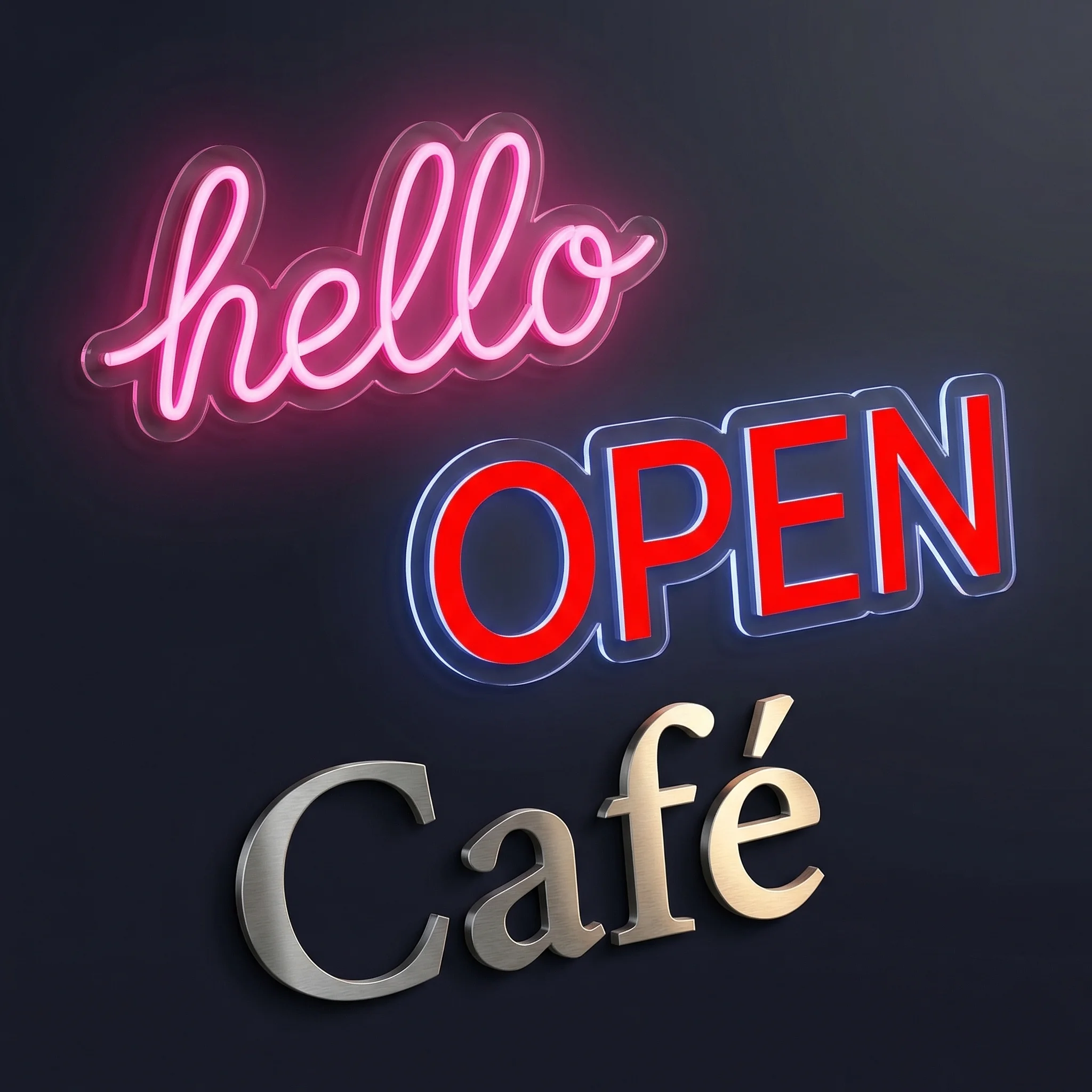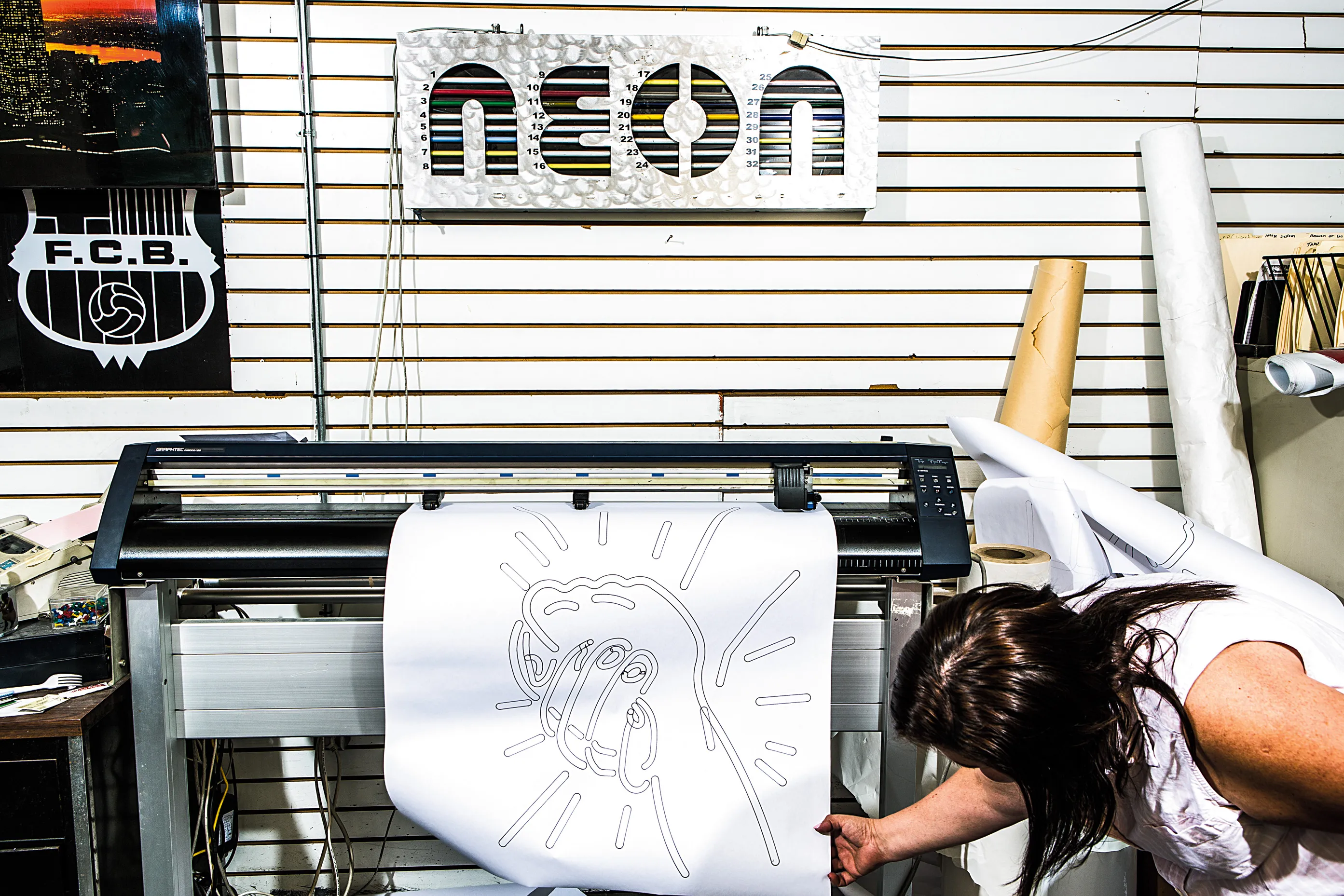
You can launch an LED sign business for under $500 and hit 60-80% gross margins on every sale. That is not marketing speak. A custom LED neon sign costs $30-80 to manufacture and sells for $150-400. The maths works.
This guide covers exactly how to start a neon sign business on Shopify: real startup costs, where to find manufacturers, how to price your signs, and the mistakes that sink new sellers.
Read the Complete Shopify Sign Store Guide
Why an LED Sign Business Works
Custom signage sits in a profitable sweet spot. Customers perceive LED neon signs as premium, personalised products worth paying for. Meanwhile, your actual costs stay low because you are not holding inventory or manufacturing anything yourself.
The market is growing 5-7% annually. LED neon specifically has exploded because of:
- Home offices became permanent fixtures, and people want them to look good
- Small businesses figured out that Instagram-worthy interiors drive foot traffic
- Weddings now expect custom signage as standard
- Content creators need backdrop pieces for videos and streams
A single custom sign sale often brings in $80-150 profit after all costs. Sell two signs a day and you are looking at $50,000+ annually in profit. Sell five and you cross six figures.
Startup Costs: The Real Numbers
Here is what you will actually spend to launch:
Essential Costs (Month One)
| Item | Cost | Notes |
|---|---|---|
| Shopify Basic | $29/month | All you need to start |
| Sign Customiser app | $49-149/month | Handles design and pricing |
| Domain name | $12/year | Use your brand name |
| Sample signs | $150-250 | Order 3-4 from your manufacturer |
| Total | $300-500 | Everything to go live |
Optional Costs
| Item | Cost | Notes |
|---|---|---|
| Logo from Fiverr | $50-150 | Skip if budget is tight |
| Product photography | $0-200 | Use renders initially |
| Paid ads | $0 | Start organic |
You do not need inventory. You do not need manufacturing equipment. You do not need a warehouse. Every sign is made to order by your manufacturing partner.
Step 1: Pick a Niche That Pays
“LED neon signs” is too broad. You will get buried by established competitors. Niche down.
Wedding Signs
Average order value: $200-500. Couples share photos on social media, driving referrals. Seasonal peaks in spring and summer. Examples: “Better Together”, custom couple names, hashtag signs.
The wedding niche works because buyers are already spending thousands. A $300 sign is a rounding error in a $30,000 wedding budget.
Bar and Restaurant Signage
Business buyers are less price-sensitive than consumers. They need signs that say “Open”, “Cocktails”, or their bar name. Repeat orders happen when they open new locations.
B2B sales cycle is longer, but average order values are higher and negotiations are straightforward.
Gaming and Streaming
Gamertags, Twitch handles, LED backdrops for streaming setups. This demographic is active on social media and influences purchasing decisions in their communities.
Growing fast. Younger buyers, lower average order value ($100-200), but high volume potential.
Home Decor
Inspirational quotes, names, bedroom wall art. Lower price points but higher volume. Gift-giving occasions (birthdays, Christmas, moving house) drive sales year-round.
Pick something you can write about and photograph consistently. You will be creating content around signs for months.
Step 2: Find a Manufacturing Partner
You have two models: dropshipping or white-label manufacturing. Both work. Each has trade-offs.
Dropshipping
Customer orders. You forward the order to your manufacturer. They produce and ship directly to the customer.
Pros:
- Zero inventory risk
- No upfront capital for stock
- Test products without commitment
- Focus entirely on marketing
Cons:
- Lower margins (manufacturer takes their cut)
- Shipping takes 2-4 weeks typically
- Limited quality control
- You are dependent on their reliability
Expect 40-50% margins with dropshipping. Still profitable, but tighter.
White-Label Manufacturing
You partner with a manufacturer who produces under your brand. Signs ship in your packaging with your branding.
Pros:
- Better margins (50-70%)
- Branded customer experience
- More quality control
- Volume pricing as you scale
Cons:
- May require minimum order commitments
- More back-and-forth on specifications
- Slightly more operational overhead
Where to Find Manufacturers
Alibaba: Search “LED neon sign manufacturer” and filter by verified suppliers. Look for suppliers with trade assurance and at least 3 years in business. Message 10 suppliers. Expect 5 to reply properly.
Trade shows: ISA Sign Expo is the major US event. You will meet manufacturers, see quality firsthand, and negotiate deals in person.
Sign maker communities: Facebook groups like “LED Neon Sign Makers” have manufacturer recommendations. People share experiences openly.
Order samples from 3-4 manufacturers before committing to one. Quality varies dramatically. A bad manufacturer will sink your business through returns and negative reviews.
Step 3: Set Up Your Shopify Store
For detailed store setup, see the complete Shopify sign store guide. Here is the quick version:
Store Setup Checklist
Theme: Use Dawn (free) or a clean minimal paid theme. Signs are visual products. Let them stand out.
Pages you need:
- Homepage with hero sign image
- Product pages for each sign type
- About page with your story
- FAQ page covering shipping, returns, customisation
- Contact page
Apps to install:
- Sign Customiser for design and pricing
- Review collection (Judge.me or Loox)
- Email marketing (Klaviyo or Shopify Email)
Payment setup: Enable Shop Pay, Apple Pay, and credit cards. More payment options means fewer abandoned carts.
Shipping: Calculate real costs from your manufacturer. Offer free shipping over a threshold ($150 works well) to increase average order value.
Step 4: Price Your Signs Correctly
Pricing wrong kills businesses. Too low and you cannot afford to acquire customers. Too high and you will not convert.
Fixed Width Pricing
Simple approach for beginners. Set price tiers by size:
- Small (up to 40cm): $149
- Medium (40-60cm): $199
- Large (60-80cm): $279
- Extra Large (80-100cm): $349
Customers understand size-based pricing intuitively. Easy to explain, easy to buy.
Material Length Pricing
More accurate for LED neon. Price based on actual LED tube length required:
- Base price: $75
- Per metre of LED: $45
- Complex fonts with curves need more material and cost more
This model rewards simple fonts and penalises scripts. It reflects actual manufacturing costs. The Sign Customiser app calculates material length automatically based on font paths.
Calculate Your Floor Price
Work backwards from costs:
- Manufacturing: $50
- Shipping to customer: $20
- Transaction fees (3%): $8 (on $250 sale)
- App costs (amortised): $5
- Break-even: $83
For 60% gross margin, sell at $207. Round to $199 or $219 for cleaner pricing.
Never price below break-even “to get reviews”. You will train customers to expect unsustainable prices.
Step 5: Create Products That Sell
Even with a customiser that lets customers type anything, you need hero products that demonstrate what is possible.
Core Product Types
“Custom Neon Sign”: Your main product. Customers type their text, pick colours, see price. Most orders will be these.
Pre-designed templates: Popular phrases ready to go. “Good Vibes Only”, “Open”, “Cheers”. Lower decision friction for gift buyers.
Logo signs: Custom quote required. Higher complexity, higher margins. Attracts business buyers.
Product Page Essentials
- Hero image showing the sign lit up in a realistic setting
- Lifestyle photos in context (bedroom, bar, wedding venue)
- Size guide with real-world references
- Materials and specifications
- Mounting and power requirements
- Customer photos and reviews
A product page without social proof converts at half the rate. Get those first reviews fast.
Step 6: Drive Traffic
A store without visitors makes zero sales. Here is where to focus:
Organic Traffic (Free)
Pinterest: Neon signs are inherently Pinterest-friendly. Create boards for “Wedding Neon Signs”, “Bedroom LED Signs”, “Bar Decor”. Pin customer photos and product images. Link to your shop.
Instagram: Post daily. Customer features, behind-the-scenes, sign reveals. Use hashtags: #neonsign #ledneonsign #customsign #weddingsign. Collaborate with micro-influencers in your niche.
TikTok: Sign reveal videos perform well. “Unboxing my custom sign” format. Behind-the-scenes manufacturing clips. Satisfying LED lighting shots.
SEO: Blog about sign-related topics. Target long-tail keywords. “Best wedding sign ideas 2026”, “How to hang a neon sign”. Build backlinks through guest posts.
Paid Traffic (When Ready)
Meta Ads: Start at $15/day. Target interests like interior design, weddings, home decor. Retarget website visitors.
Google Shopping: Shows your products in search results. Higher intent traffic. Requires product feed setup.
Pinterest Ads: Often cheaper than Meta. Good for visual products. Strong for customers in planning stages.
Start organic. Prove you can convert traffic before paying for it.
Step 7: Fulfil Orders Smoothly
When orders come in, this is your workflow:
- Order notification lands in Shopify
- Review the customer’s design for issues (spelling, inappropriate content)
- Send specifications to manufacturer
- Track production status (typically 3-7 days)
- Get shipping confirmation and tracking number
- Update customer with tracking
- Follow up 7 days after delivery for review request
Automation Worth Setting Up
- Order forwarding: Auto-email specs to manufacturer when orders come in
- Tracking updates: Shopify handles this natively
- Review requests: Automated email 7 days post-delivery
- Abandoned cart recovery: Automated emails to recover lost sales
Every manual step is a chance for things to fall through. Automate what you can.
Common Mistakes That Kill Sign Businesses
Underpricing
New sellers price low to “be competitive”. This leaves no room for paid acquisition, customer service issues, or any unexpected costs. Start at market rates. You can always discount later.
Too Many Options
Fifty fonts and thirty colours overwhelm customers. Decision paralysis kills conversions. Start with 8-10 fonts and 10-12 colours. Add more once you have sales data.
Skimping on Samples
Ordering one sample is not enough. Quality varies between batches. Order from multiple manufacturers. Order different sizes. Order different colours. Know what you are selling.
Slow Customer Service
Sign purchases are emotional. Weddings have deadlines. Gifts need to arrive on time. Respond to enquiries within hours, not days. One bad experience becomes a bad review that tanks your conversion rate.
No Social Proof
Empty stores do not convert. Your first 20 sales need to generate reviews. Offer a small discount for photo reviews. Feature customer photos prominently. Social proof is the difference between 1% and 3% conversion rate.
Scaling Your Custom Sign Business
Once you are consistently profitable, here is how to grow:
Expand product types: Add acrylic signs, metal signs, lightbox signs. Increase average order value.
Enter adjacent niches: A wedding sign store can add baby shower signs, birthday signs, anniversary signs. Same customer, different occasions.
B2B sales: Target interior designers, event planners, hospitality groups. Longer sales cycle, larger orders.
Wholesale: Offer bulk pricing for resellers. Lower margins, higher volume.
International: Partner with manufacturers in different regions to reduce shipping times and costs.
Frequently Asked Questions
Next Steps
Starting an LED sign business on Shopify combines low startup costs with high margins. The model works. Thousands of sign stores prove it daily.
Your move: pick a niche, order samples from manufacturers, and set up your store. You can be taking orders within two weeks.
Install Sign Customiser and Start Today
For the complete walkthrough on configuring your store, see the Shopify sign store setup guide. For details on product customisation options, read the product customiser guide.