
Neon Art at a Glance
- Origins: Neon moved from commercial signage to fine art in the 1960s
- Famous artists: Tracey Emin, Bruce Nauman, Dan Flavin pioneered the medium
- Types: Text-based, abstract, figurative, and interactive installations
- For your home: Affordable options from £50-500; custom commissions from £200+
Neon Art: A Complete Guide to Light as a Medium
Neon has transcended its origins as humble storefront signage to become one of contemporary art’s most captivating mediums. From Tracey Emin’s confessional text pieces to Dan Flavin’s transcendent light installations, neon art occupies a unique space where commercial craft meets fine art.
Whether you’re an art enthusiast, collector, or simply someone who appreciates that distinctive glow, this guide explores neon art in all its forms - from museum-worthy installations to pieces you can hang in your own home.
This is part of the neon sign library.
The History of Neon Art
Understanding neon art requires knowing how it evolved from advertising tool to artistic medium.
The invention of neon (1910s)
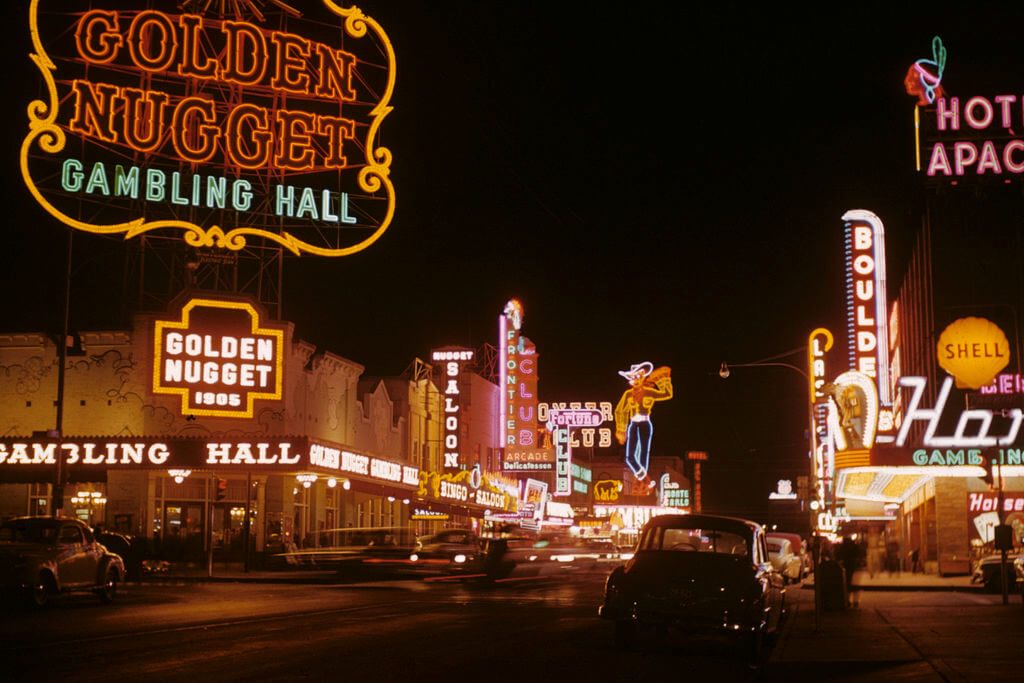
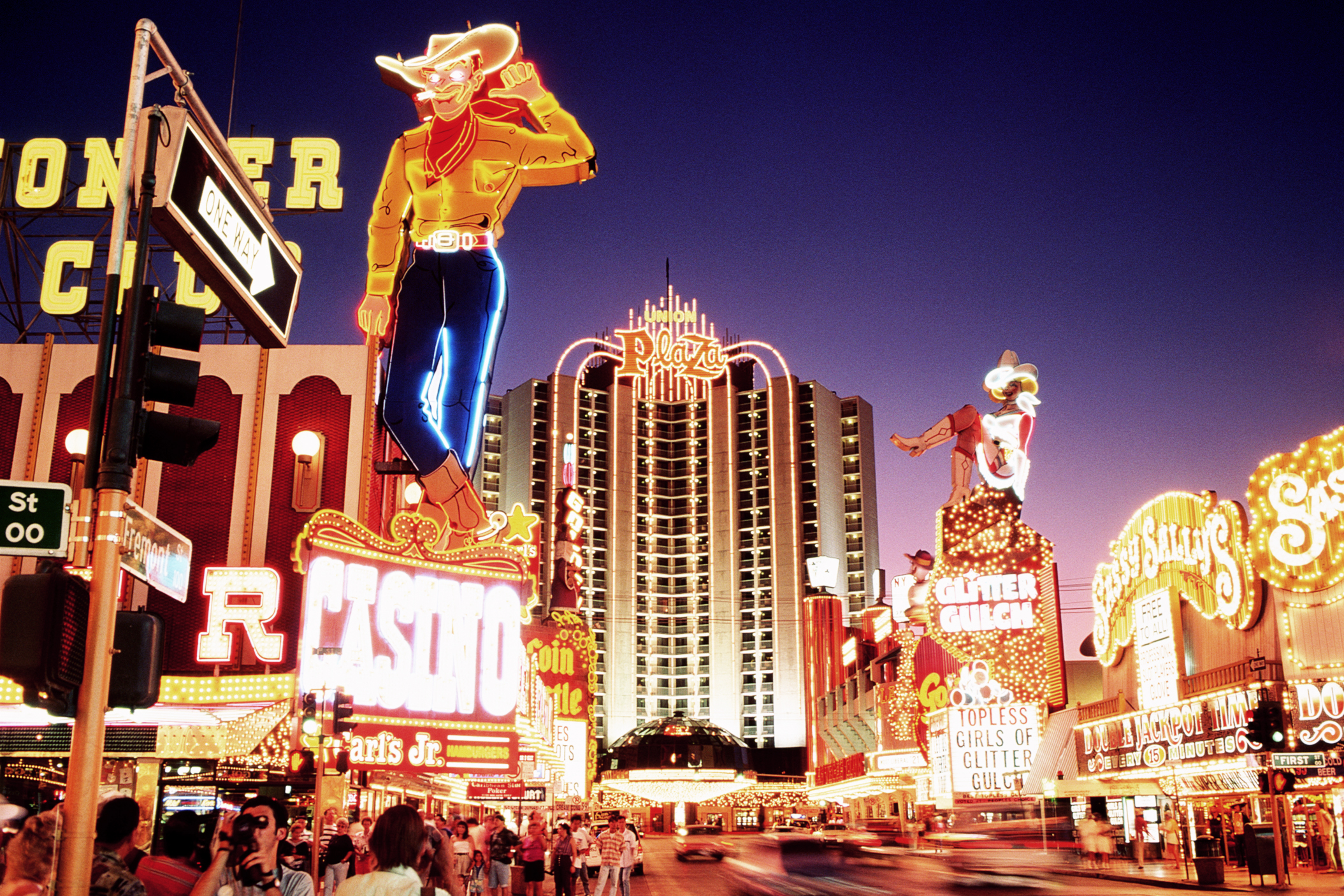
French engineer Georges Claude developed the first commercial neon lamp in 1910, demonstrating it at the Paris Motor Show in 1910. By 1912, neon signs appeared on the Parisian boulevard, and the technology quickly spread worldwide. For decades, neon remained firmly in the commercial realm - the province of shop fronts, cinemas, and Vegas casinos.
From signage to fine art (1960s)
The 1960s saw artists begin to recognise neon’s artistic potential. Key moments include:
Lucio Fontana (1951): The Italian-Argentine artist created one of the earliest neon artworks - a large abstract neon structure for the Milan Triennale. This preceded the major neon art movement by a decade.
Dan Flavin (1963): Flavin began his “Monuments” series using commercial fluorescent light fixtures as minimalist sculptures. While technically fluorescent rather than neon, his work opened the door for light as a valid artistic medium.
Bruce Nauman (1965): Nauman started using neon in word-based works that played with language and meaning. His spiralling text pieces became iconic examples of conceptual art.
The conceptual era (1970s-1990s)
As conceptual art flourished, neon became increasingly popular for its ability to communicate text and ideas with visual impact. Artists appreciated how neon could:
- Present words as physical, glowing objects
- Create atmosphere and emotional resonance
- Reference commercial culture whilst subverting it
- Occupy space with light rather than solid material
Tracey Emin’s text-based neon works emerged during this period, bringing confessional, personal content to the medium and cementing neon’s place in contemporary art.
Contemporary neon art (2000s-present)
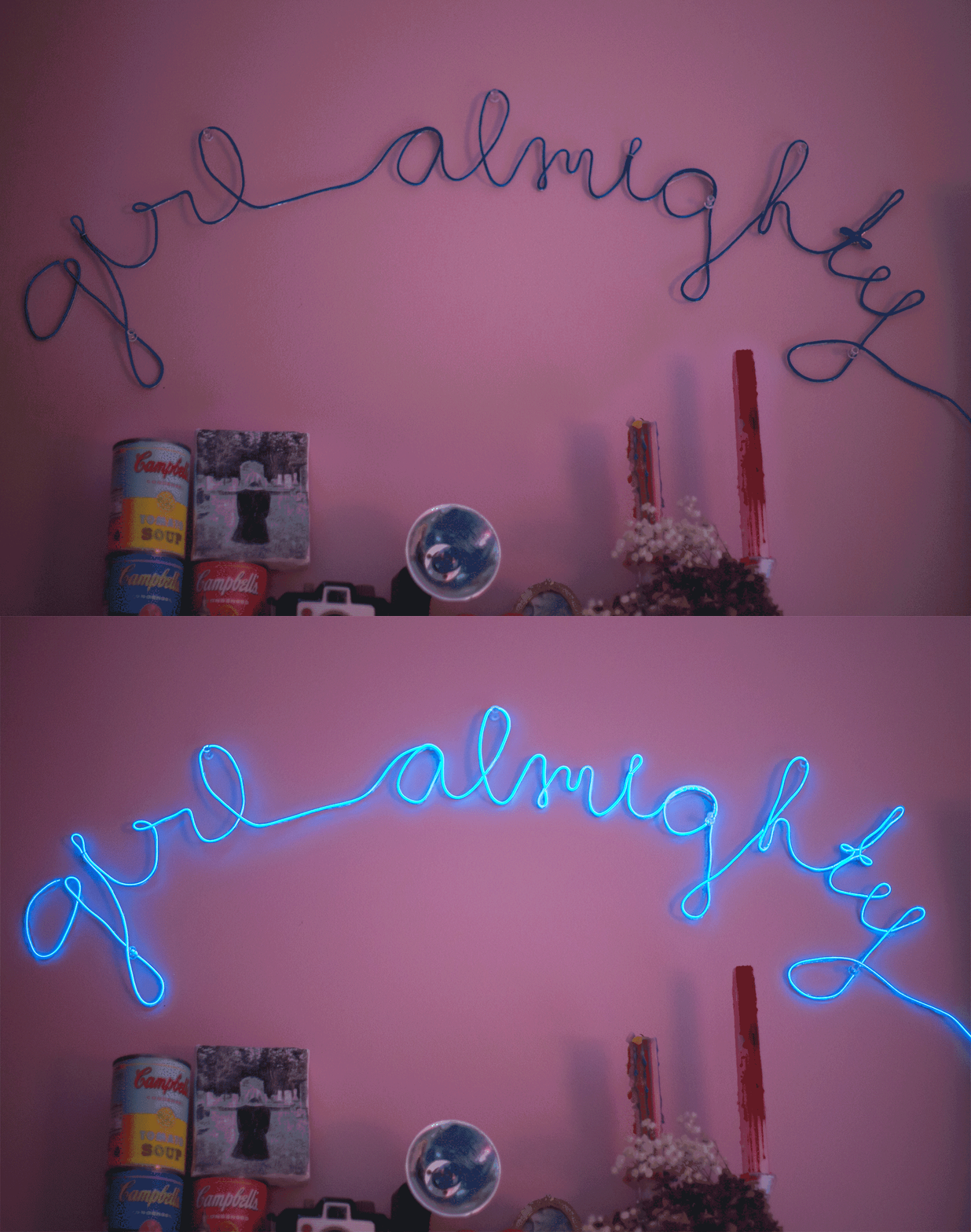
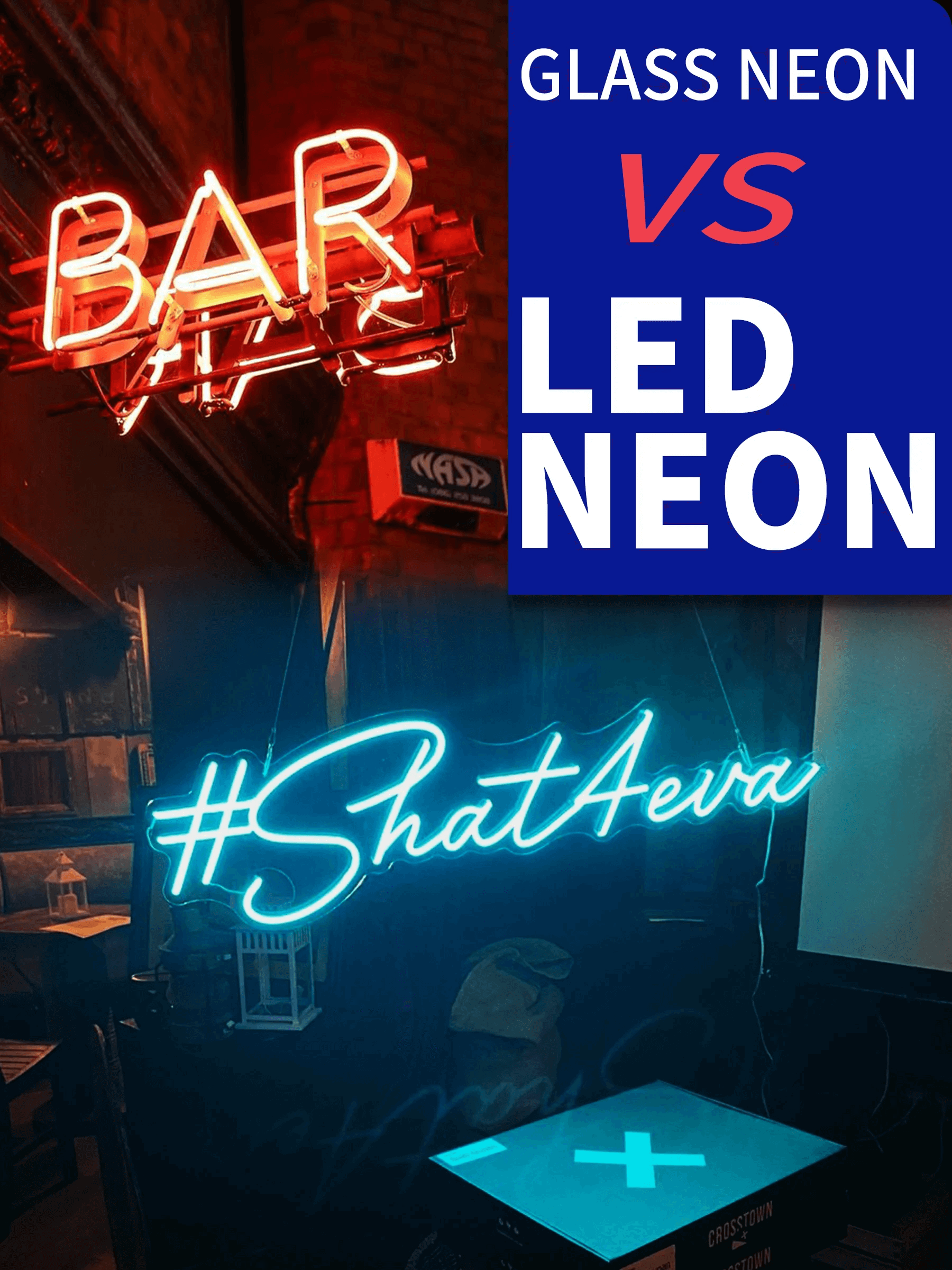
Today, neon art is more popular than ever. Contemporary artists continue to push boundaries whilst a new generation discovers neon through social media. The rise of LED neon has also democratised the medium, making neon-style art accessible to emerging artists and home collectors alike.
Learn more: LED neon signs: the modern evolution
Famous Neon Artists
Several artists have defined neon as an artistic medium. Understanding their work helps appreciate the art form’s depth.
Tracey Emin
British, born 1963
Perhaps the most recognisable name in neon art, Emin uses neon to create confessional text pieces that feel like handwritten notes rendered in light. Her distinctive scrawling script gives her work an intimate, personal quality.
Notable works:
- “I Promise to Love You” (2008)
- “You Loved Me Like a Distant Star” (2012)
- “My Heart is With You Always” (2015)
What makes it significant: Emin transformed neon from commercial medium to deeply personal expression. Her works feel like diary entries or love letters given physical, glowing form. The contrast between the cold industrial medium and warm emotional content creates compelling tension.
Prices: Emin’s neon works sell for £30,000-500,000+ at auction.
Bruce Nauman
American, born 1941
Nauman pioneered conceptual neon art in the 1960s, using the medium to explore language, the body, and perception. His works often feature spiralling or overlapping text that requires active reading.
Notable works:
- “The True Artist Helps the World by Revealing Mystic Truths” (1967)
- “One Hundred Live and Die” (1984)
- “Human/Need/Desire” (1983)
What makes it significant: Nauman was among the first to use neon as a fine art medium, demonstrating that commercial signage materials could convey complex conceptual ideas. His work influenced generations of text-based artists.
Prices: Major works sell for £1 million+ at auction.
Dan Flavin
American, 1933-1996
While using fluorescent tubes rather than traditional neon, Flavin’s minimalist light sculptures were pioneering works that elevated light itself to artistic medium. His installations transform spaces through pure colour and illumination.
Notable works:
- “Monument” for V. Tatlin series (1964-1982)
- “Untitled (to you, Heiner, with admiration and affection)” (1973)
- Numerous site-specific installations
What makes it significant: Flavin proved that light alone could be sculpture. His work with industrial materials challenged distinctions between art and utility whilst creating transcendent visual experiences.
Other notable neon artists
- Joseph Kosuth - Conceptual artist known for text-based neon works
- Cerith Wyn Evans - Creates complex neon installations
- Tavares Strachan - Explores identity through neon text
- Glenn Ligon - Uses neon to address race and identity in America
- Martin Creed - Known for simple but powerful neon statements
- Ivan Navarro - Creates immersive neon installations
Types of Neon Art
Neon art takes many forms beyond the classic text-based work.
Text-based neon art
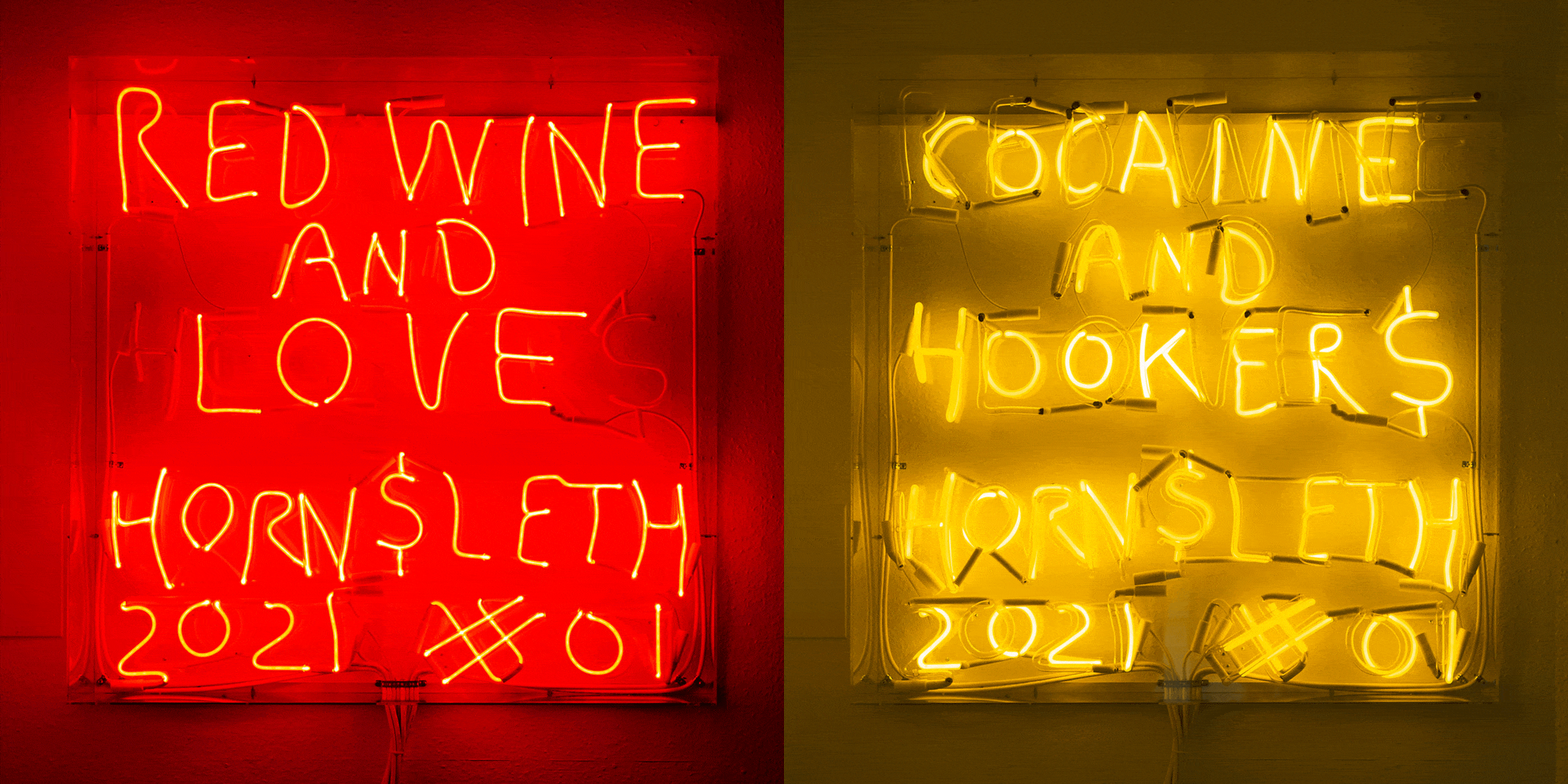
The most common and recognisable form. Text works range from single words to full sentences, using neon to give language physical, luminous presence.
Subcategories:
Confessional text: Personal statements, love declarations, emotional expressions. Think Tracey Emin’s intimate scrawled messages.
Conceptual text: Words chosen for their meaning, ambiguity, or philosophical weight. Bruce Nauman’s explorations of language and truth.
Quotations: Famous quotes, song lyrics, literary references. Popular for both art galleries and home decor.
Simple statements: Single words or short phrases. “YES,” “NOW,” “DREAM.” Minimal but impactful.
Abstract neon designs
Moving beyond words, abstract neon art uses pure form and colour.
Geometric: Lines, circles, triangles, and other shapes. Can range from minimalist to complex layered compositions.
Organic: Flowing, curved forms suggesting natural shapes. Waves, clouds, flames rendered in light.
Architectural: Neon integrated into or responding to architectural space. Site-specific installations.
Figurative neon
Representational images rendered in the neon medium.
Portraits: Faces and figures outlined in neon. Stylised rather than realistic.
Objects: Everyday items - coffee cups, flowers, hands - given new life in glowing tubes.
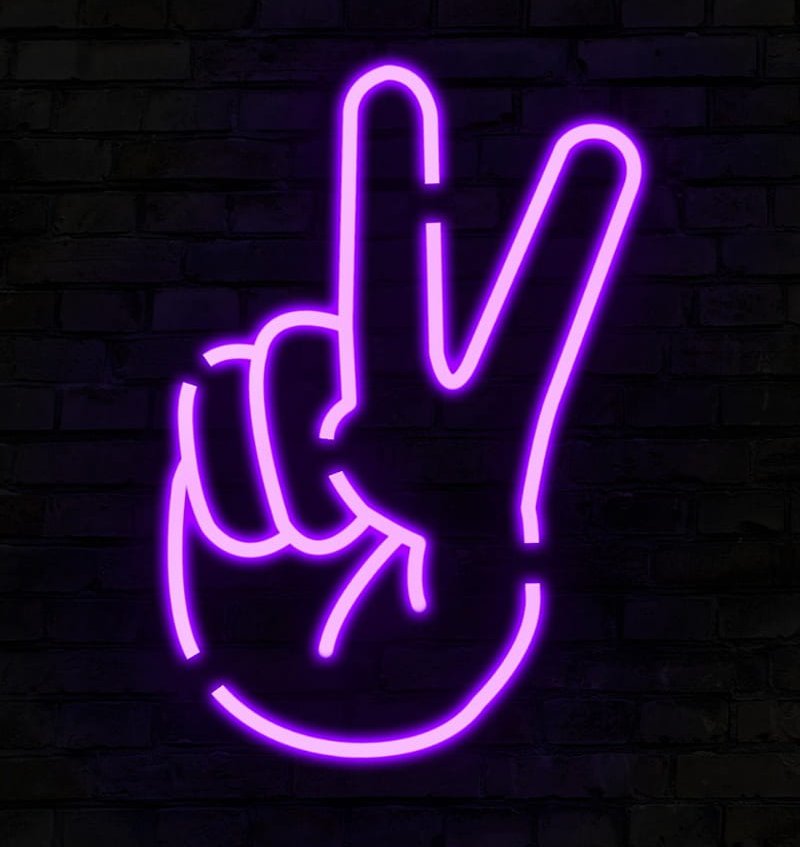
Symbols: Hearts, stars, peace signs, and other symbolic imagery.
Interactive installations
Contemporary artists increasingly create neon works that respond to viewers or environment.
Motion-reactive: Sensors detect movement, triggering changes in lighting patterns.
Sound-responsive: Audio input affects neon behaviour - brightness, colour, or animation.
Participatory: Viewers interact physically with neon elements.
Neon Art for Your Home
You don’t need a gallery budget to enjoy neon art at home. Here’s how to find the right piece for your space.
Affordable options (£50-200)
Pre-made designs:
- Online retailers offer thousands of designs
- Popular phrases and images ready to ship
- LED neon keeps prices accessible
- Quality varies - read reviews carefully
Small custom pieces:
- Simple words or initials
- Basic shapes and symbols
- 30-50cm sizes
- Local sign makers may offer art-focused options
What to expect at this level:
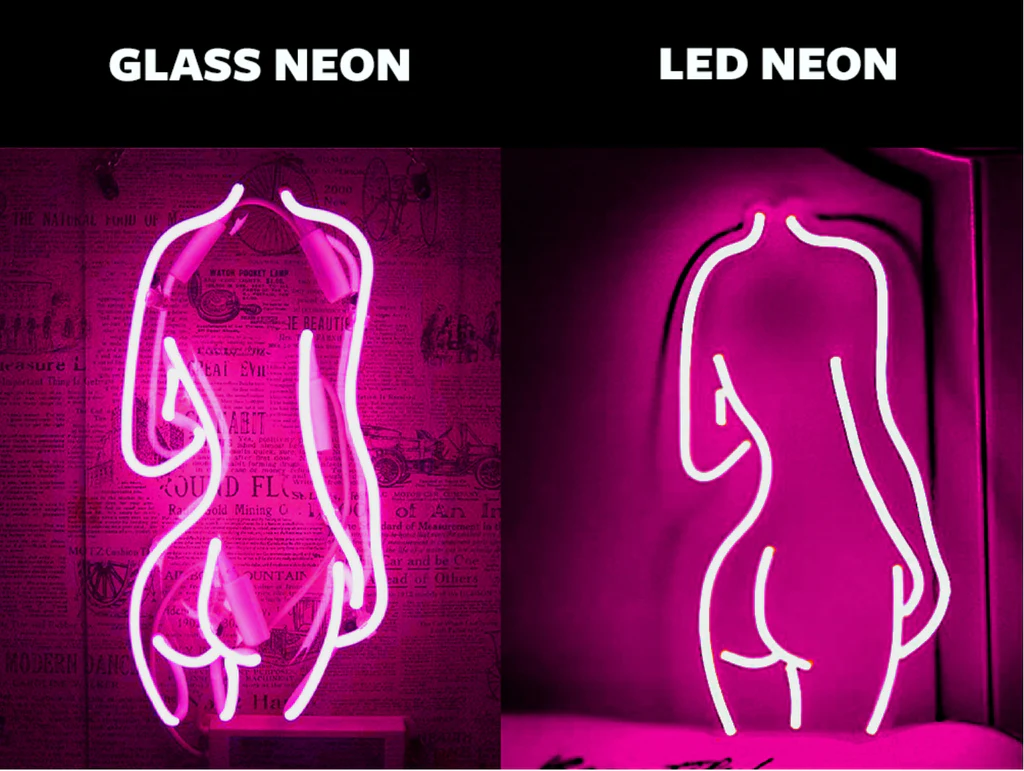
- LED neon (not traditional glass)
- Factory-made rather than handcrafted
- Standard colour options
- Basic mounting solutions
Mid-range options (£200-1000)
Custom designs:
- Your own text or design
- Choice of colours and sizes
- Better quality materials and construction
- Personalised to your specification
Limited editions:
- Artist-designed pieces in larger runs
- Signed and numbered editions
- Proper documentation
- Collectible value
What to expect:
- Higher quality LED or occasionally glass neon
- Better craftsmanship
- More colour and size options
- Professional mounting solutions
Investment pieces (£1000+)
Original artworks:
- One-of-a-kind pieces
- Created by recognised artists
- Gallery representation
- Documentation and provenance
Custom commissions:
- Bespoke work by skilled artisans
- Traditional glass neon craftsmanship
- Complex or large-scale designs
- Collaborative design process
What to expect:
- Traditional glass neon or premium LED
- Exceptional craftsmanship
- Full artistic documentation
- Investment potential
Tips for buying neon art
- Know your space - Measure carefully; neon needs room to breathe
- Consider power - Where’s the nearest outlet?
- Match your aesthetic - Neon should complement, not clash
- Research sellers - Check reviews and return policies
- Understand materials - LED vs glass, quality differences
- Ask about lifespan - Quality pieces last decades
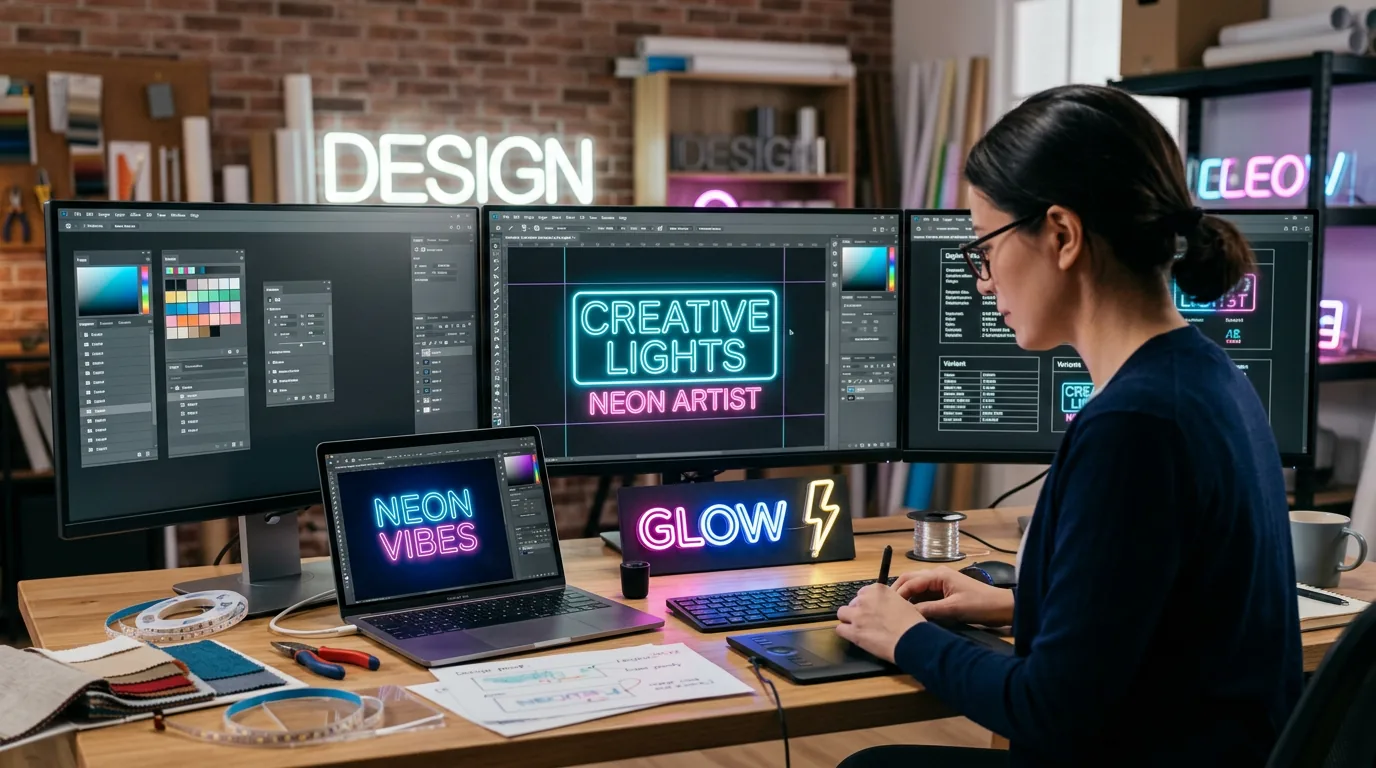
Design your own: Use our free neon sign maker to visualise custom neon art.
Creating Your Own Neon Art
Want to try your hand at neon art? Here are your options.
Using our design tool
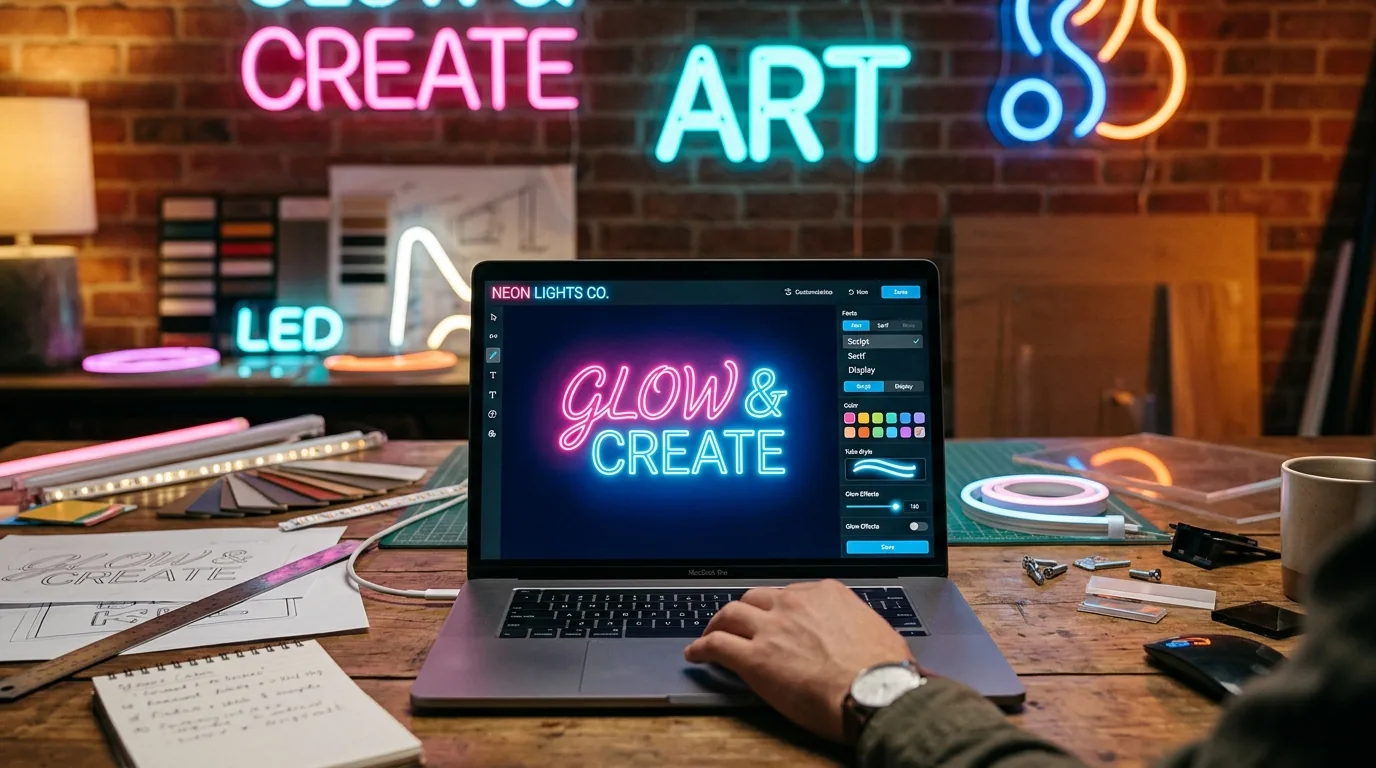
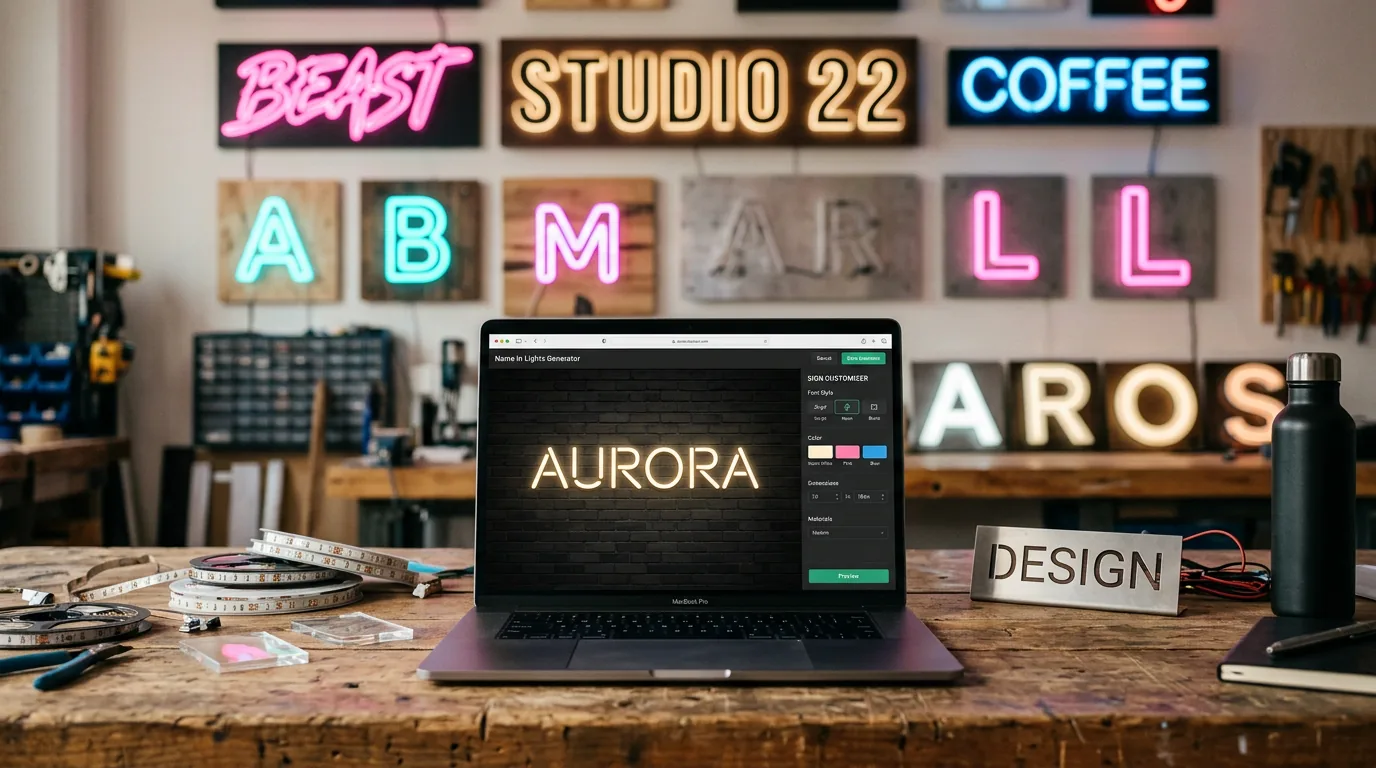
The quickest path to custom neon art starts with design visualisation. Our free tool lets you:
- Type any text and see it in neon
- Choose from multiple fonts and colours
- Adjust size and proportions
- Preview how it will look
- Get an instant quote
Try it: Neon sign maker
DIY with LED neon flex
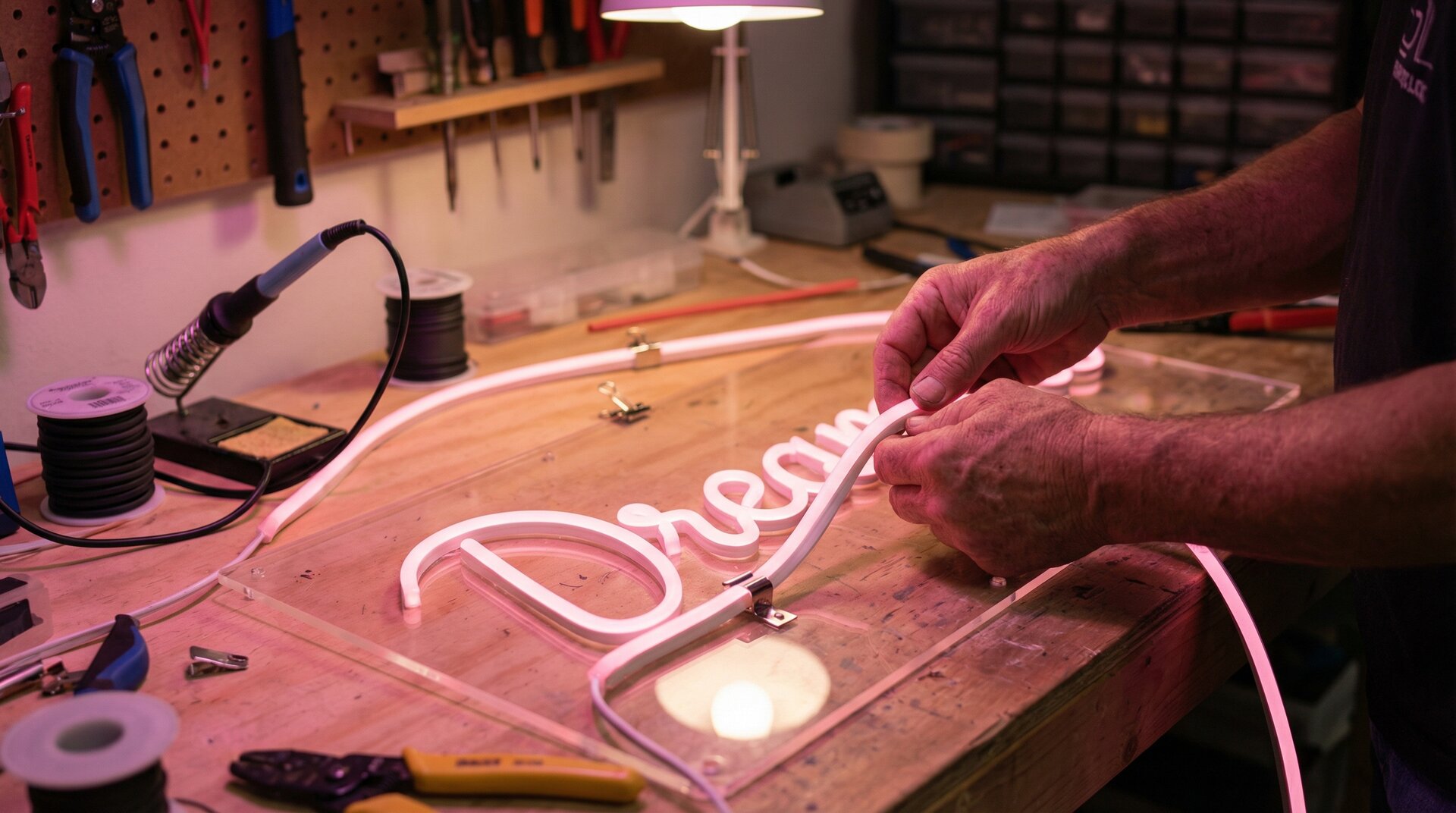
For the hands-on creative, making your own LED neon art is achievable with patience and basic skills.
Advantages:
- Complete creative control
- Lower cost (£30-80 for materials)
- Satisfying craft project
- Can create unique designs
Challenges:
- Requires time and patience
- Learning curve for technique
- Limited to simpler designs
- Quality depends on skill
Learn how: DIY neon sign tutorial
Commissioning custom work
For complex or large-scale pieces, commissioning from an artist or specialist maker ensures professional results.
Finding the right maker:
- Look at portfolios carefully
- Check reviews and references
- Discuss your vision in detail
- Understand timeline and costs
- Ask about materials and techniques
The commission process:
- Initial consultation and design discussion
- Concept sketches and quote
- Design approval
- Fabrication (2-4 weeks typically)
- Installation guidance or service
Learn more: Custom neon signs: the complete guide
Where to Display Neon Art
Placement affects how neon art is perceived. Consider these guidelines.
Gallery-style display
Characteristics:
- Clean, uncluttered wall
- Neutral background (white ideal)
- Sufficient surrounding space
- Sign as focal point
Best for:
- Statement pieces
- Text-based works meant for reading
- High-quality originals
Integrated decor
Characteristics:
- Part of a gallery wall
- Alongside complementary artwork
- Within an overall design scheme
Best for:
- Smaller pieces
- Decorative rather than “art for art’s sake”
- Personal spaces rather than galleries
Atmospheric lighting
Characteristics:
- Sign provides ambient illumination
- Creates mood rather than demanding attention
- Works with rather than against other lighting
Best for:
- Bedrooms and relaxation spaces
- Bars and entertainment areas
- Background presence
Architectural integration
Characteristics:
- Built into architectural features
- Highlights structural elements
- Site-specific placement
Best for:
- Custom installations
- Commercial spaces
- High-end residential projects
Learn more: How to hang neon signs
Neon Art in Popular Culture
Neon art has become a cultural phenomenon extending far beyond galleries.
Instagram and social media
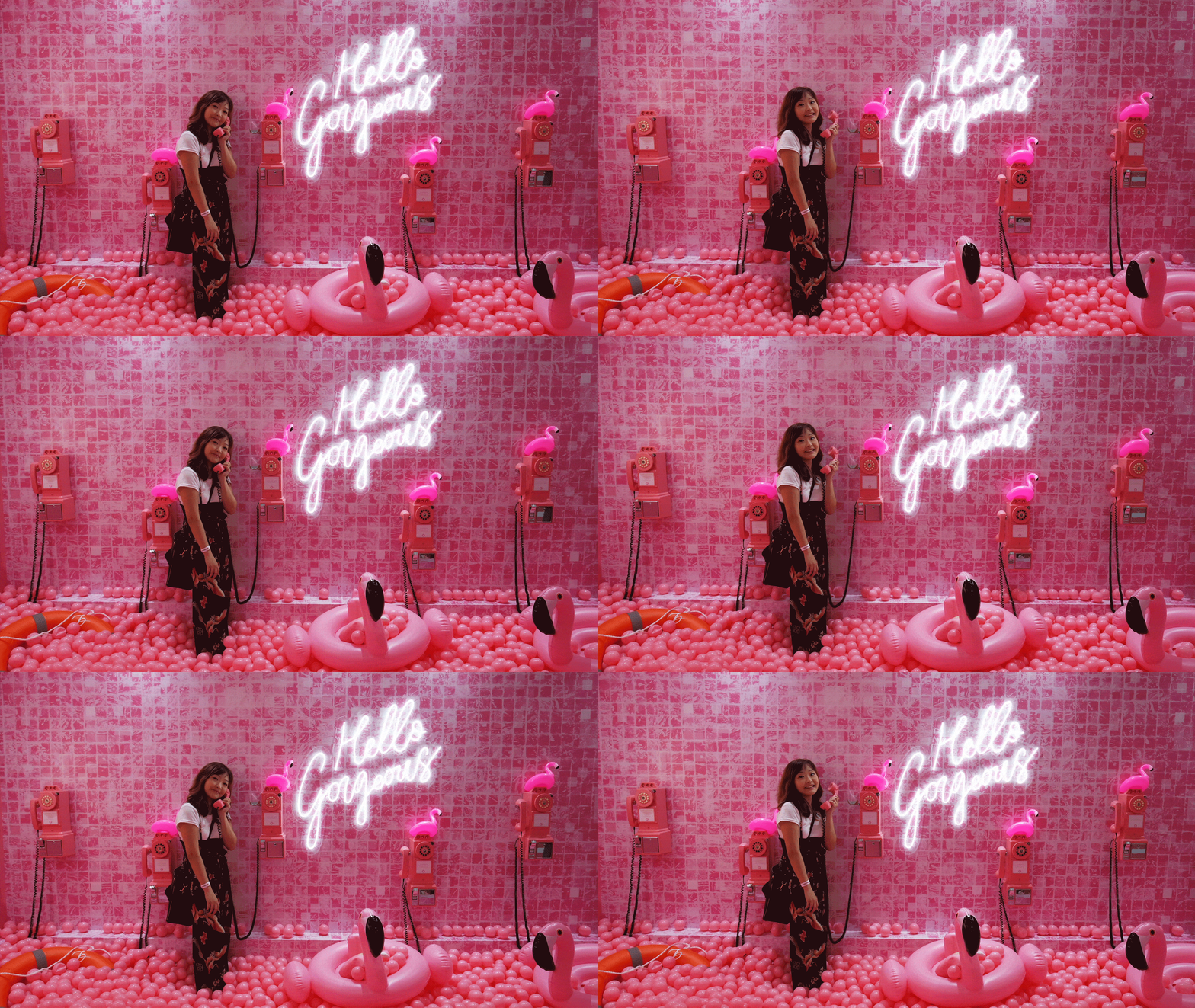
Neon signs are among the most photographed decor items on social media. The distinctive glow photographs beautifully and signals a certain aesthetic sensibility. Neon-lit spaces regularly go viral, driving both commercial and personal adoption.
Film and television
From Blade Runner’s neon-drenched cityscapes to boutique hotel lobbies in rom-coms, neon sets a mood instantly recognisable to audiences. The medium has become visual shorthand for:
- Urban nightlife
- Retro nostalgia
- Romantic atmosphere
- Alternative culture
Music and events
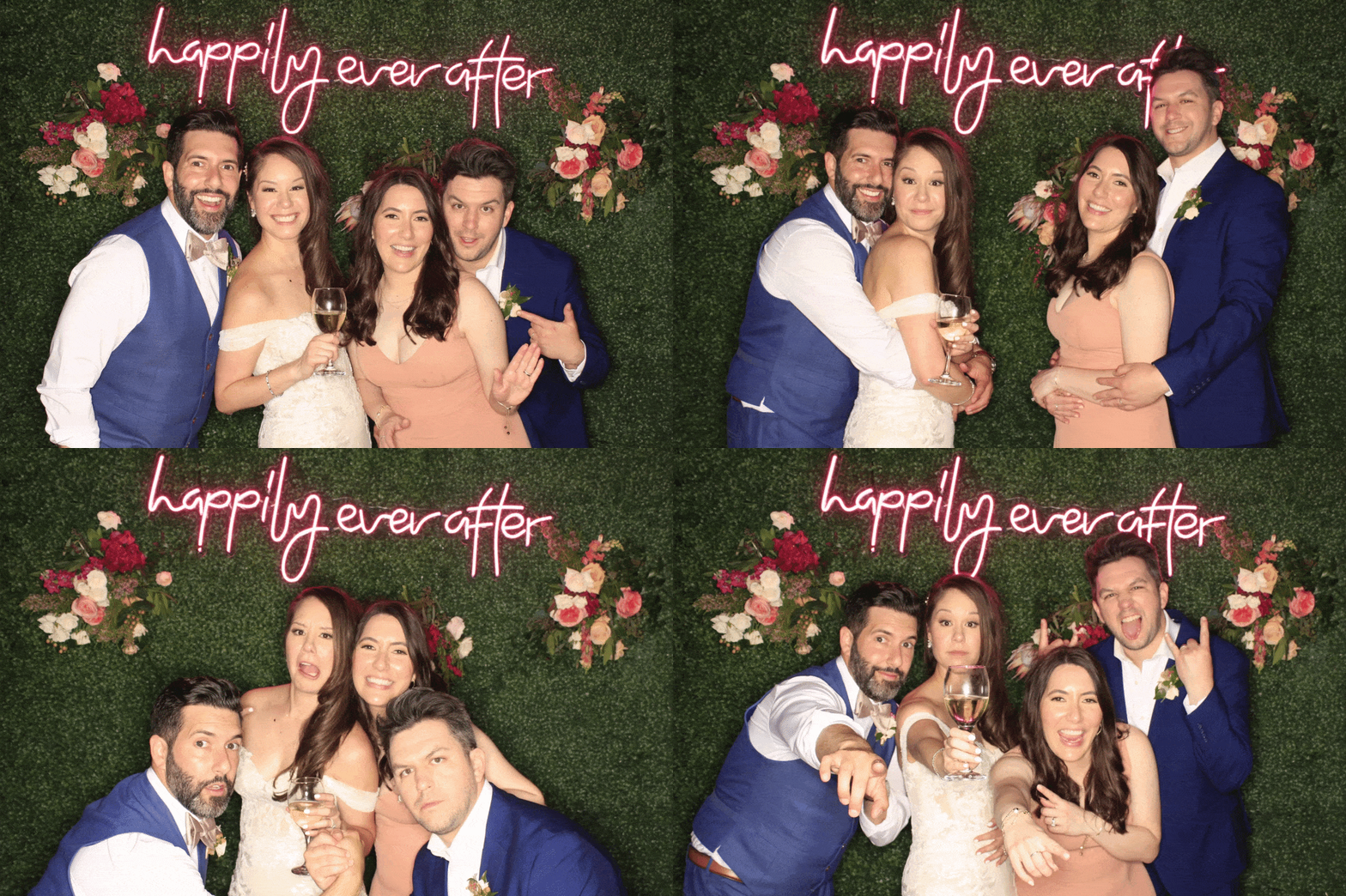
Musicians from Drake to The 1975 have incorporated neon into stage designs, album artwork, and music videos. Wedding and event planners now routinely offer neon signs as premium decor options.
The “neon quote” phenomenon
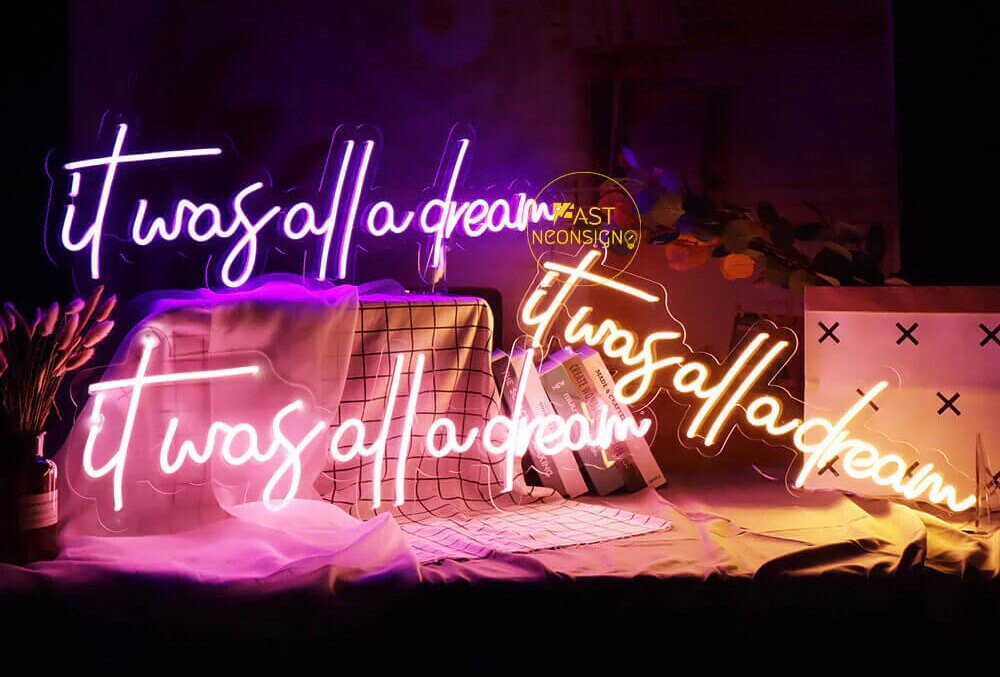
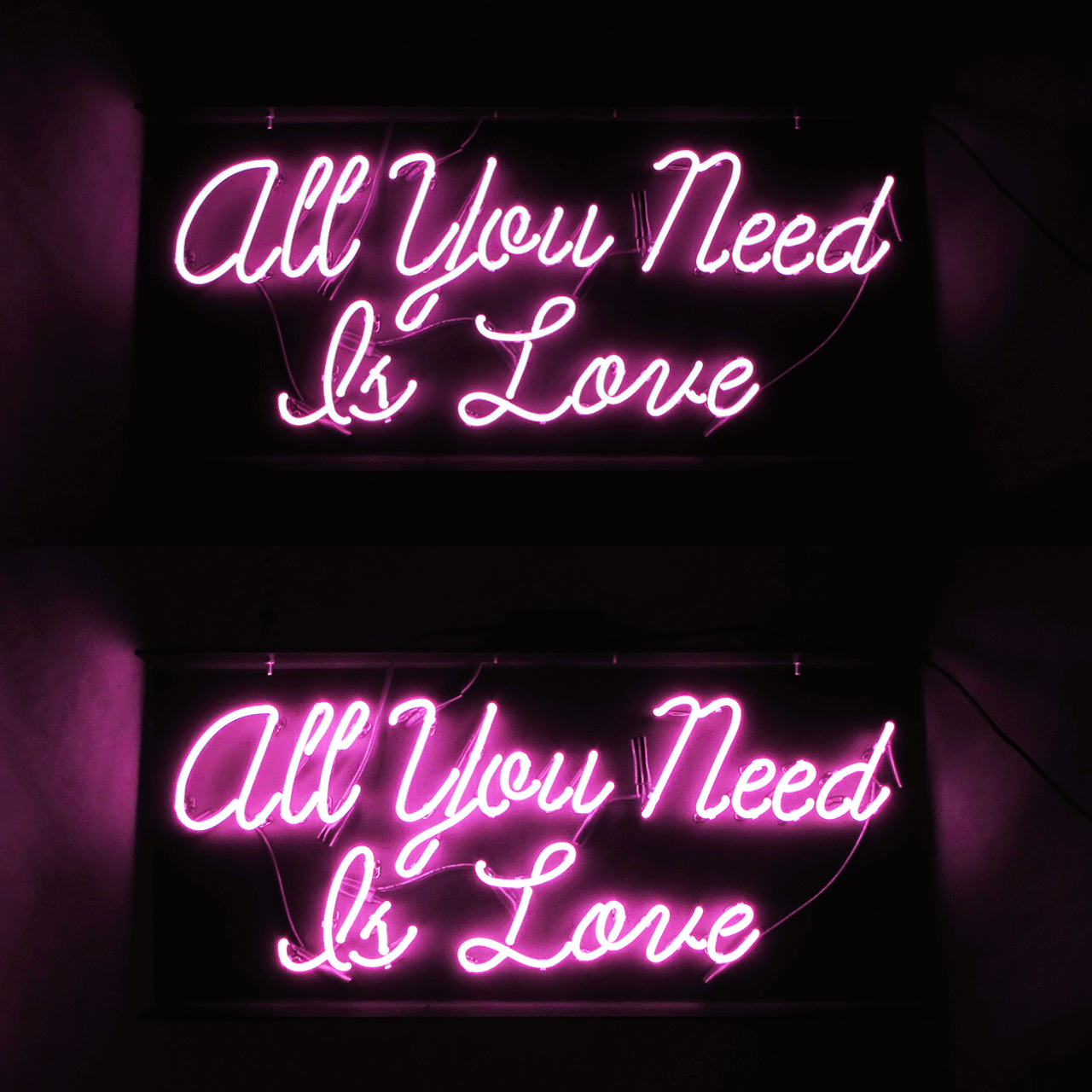
A particular subset of neon art has exploded in popularity: motivational or romantic quotes in stylised script. While art purists might critique this as decoration rather than art, it’s brought neon into millions of homes and normalised the medium for everyday spaces.
Caring for Neon Art
Proper care ensures your neon art lasts for decades.
Traditional glass neon
Handling:
- Extremely fragile - handle with care
- Never pressure tubes directly
- Support the backing, not the neon
- Professional installation recommended
Cleaning:
- Dust with soft, dry cloth only
- Never use liquids near tubes
- Compressed air for delicate areas
- Annual professional cleaning for valuable pieces
Maintenance:
- Professional repair only
- Specialist neon benders needed
- Gas may need refreshing after decades
- Keep spare transformer if possible
Lifespan: 8-15 years with proper care; longer with limited use
Learn more: Neon sign repair guide
LED neon
Handling:
- More durable than glass
- Flexible tubes resist breakage
- Still avoid excessive bending
- Can handle normal home conditions
Cleaning:
- Dust regularly with soft cloth
- Can use slightly damp cloth if needed
- Dry thoroughly after any moisture
- Clean power connections occasionally
Maintenance:
- Minimal maintenance required
- Check connections annually
- Replace power adapter if failing
- Generally not repairable (replace entire unit)
Lifespan: 30,000-50,000 hours (10+ years of daily use)
The Future of Neon Art
What’s next for this luminous medium?
Sustainability developments
Traditional neon uses significant energy and some glass tubes contain mercury. LED neon addresses environmental concerns whilst maintaining the aesthetic. Expect continued innovation in eco-friendly light art materials.
Technology integration
Smart controls, colour-changing capabilities, and reactive elements are becoming more accessible. Future neon art may respond to viewers, environment, and data in ways current works cannot.
Accessibility
As LED technology improves and costs decrease, neon art becomes more accessible. Emerging artists and everyday consumers can now participate in what was once an exclusive medium.
New artistic directions
Contemporary artists continue finding fresh applications for neon. Virtual and augmented reality may create new contexts for experiencing light-based art, whilst installations grow ever more ambitious in scale and interactivity.
Frequently Asked Questions
What is the most famous neon art piece?
Tracey Emin’s “I Promise to Love You” (2008) is arguably the most recognisable contemporary neon artwork. For earlier works, Bruce Nauman’s “The True Artist Helps the World by Revealing Mystic Truths” (1967) was pioneering. Both have influenced countless artists and are widely reproduced.
How much does real neon art cost?
Original works by established artists sell for £10,000-500,000+. Limited editions from recognised artists range from £2,000-20,000. Affordable home neon art starts around £50 for pre-made LED designs or £100-500 for simple custom pieces.
Is neon art a good investment?
Works by established artists (Emin, Nauman, etc.) have shown strong appreciation. However, like all art, investment should be secondary to appreciation of the work itself. For emerging artists, buy what you love rather than speculating.
How long does neon art last?
Traditional glass neon lasts 8-15 years with proper care. LED neon lasts 30,000-50,000 hours (10+ years of heavy daily use). Both can last significantly longer with occasional use and proper maintenance.
Can I make my own neon art?
Yes, using LED neon flex. It’s accessible to beginners with patience. Traditional glass neon bending requires years of training and specialised equipment. For simple words and shapes, DIY LED neon is a viable option.
What’s the difference between neon signs and neon art?
The distinction is often subjective. Generally, neon art is created with artistic intent, displayed in art contexts, and valued for conceptual or aesthetic merit rather than commercial function. However, many argue that well-designed commercial signs can also be art.
Conclusion
Neon art represents a fascinating intersection of commercial craft and fine art, accessible to both serious collectors and casual admirers. From the pioneering conceptual works of the 1960s to today’s Instagram-friendly home decor, neon continues to captivate with its distinctive glow.
Key takeaways:
- Neon moved from signage to art in the 1960s, pioneered by artists like Nauman and Flavin
- Text-based, abstract, figurative, and interactive forms all flourish
- Affordable options make neon art accessible to everyone
- LED neon democratises the medium for DIY and emerging artists
- Proper care ensures decades of enjoyment
Whether you’re drawn to the conceptual depth of museum pieces or simply love that warm neon glow in your bedroom, there’s neon art for every budget and taste.
Ready to create your own neon art? Design your vision with our free tool:
Create Your Neon Art
Related guides: