Faux Neon Signs: The Modern Alternative to Glass Neon
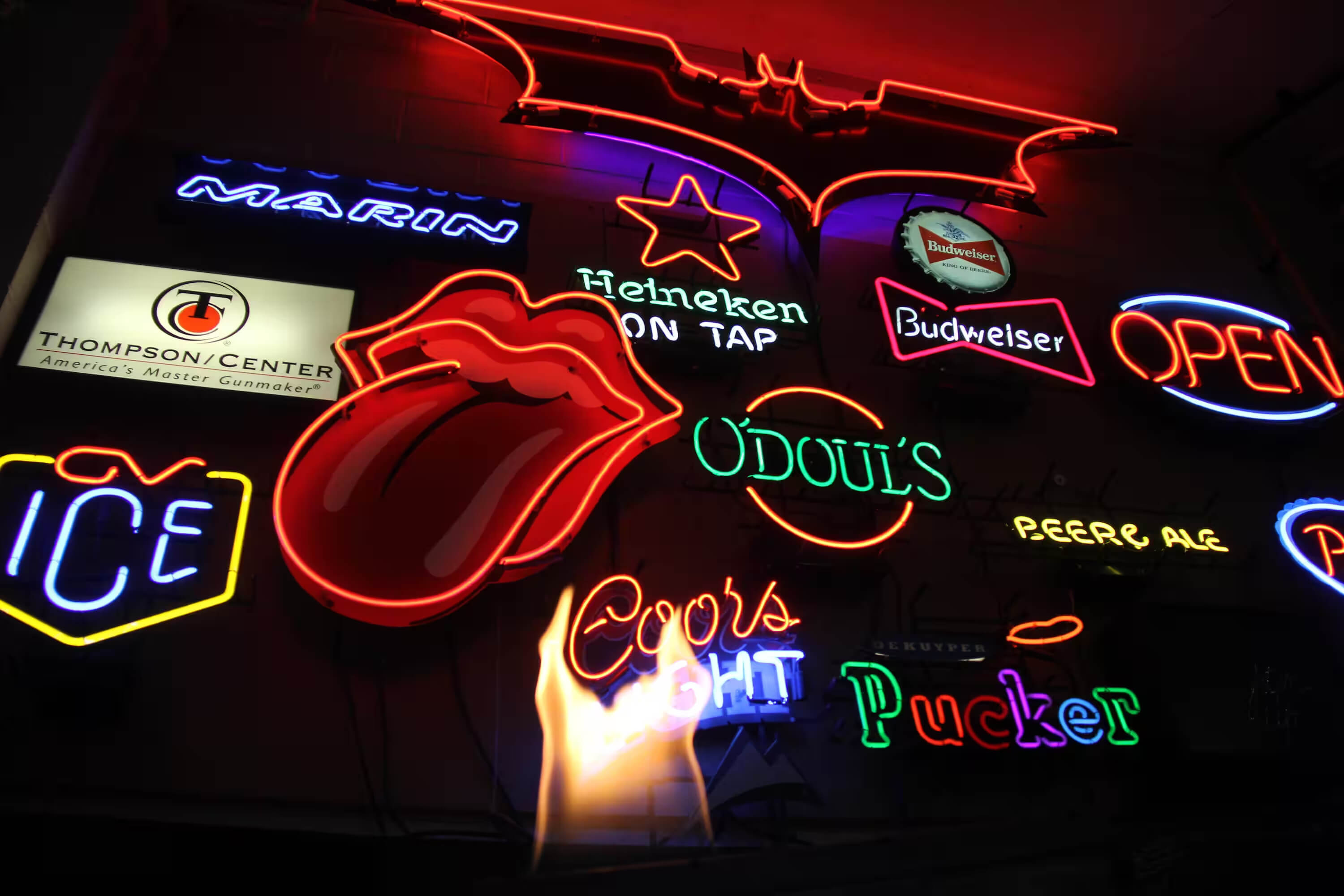
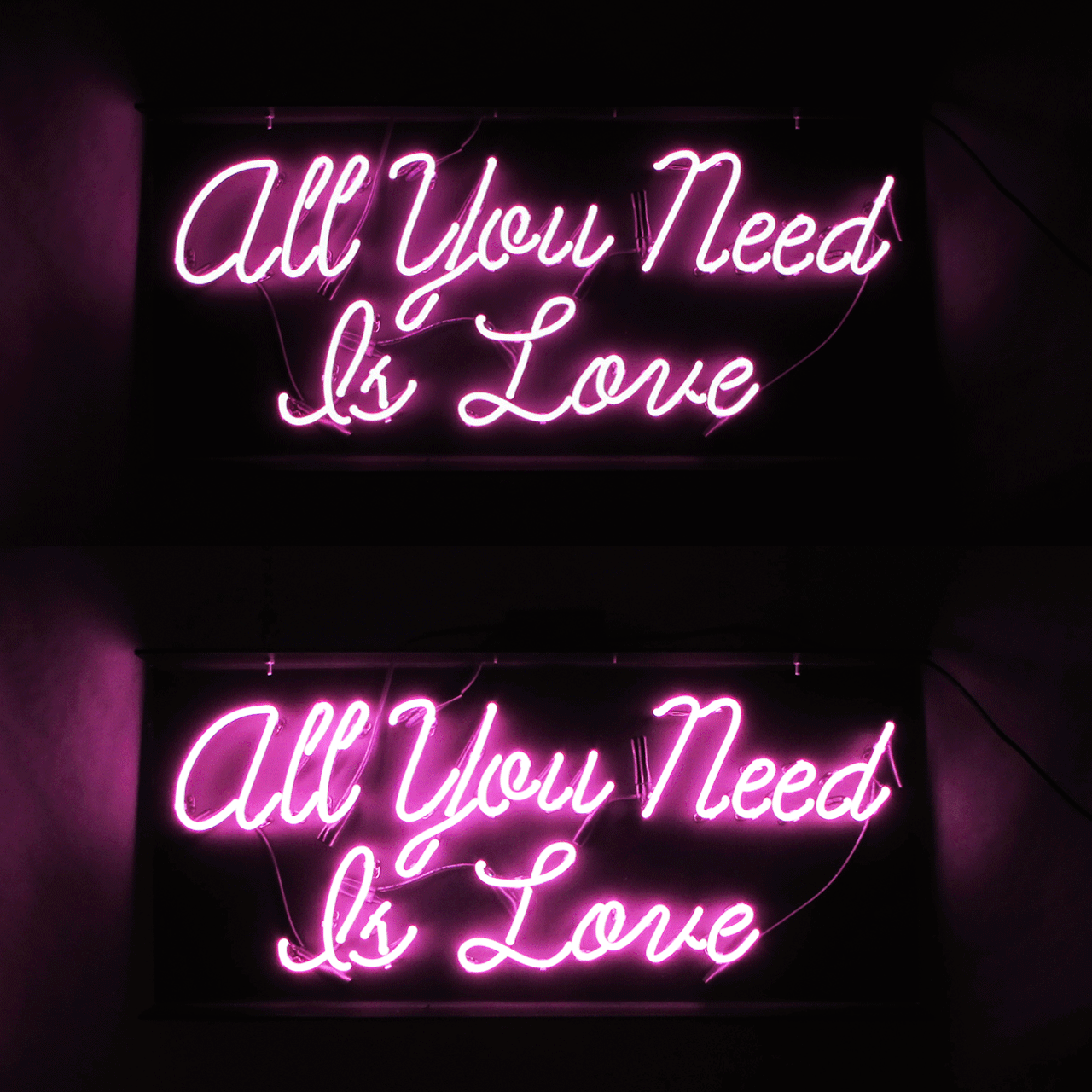
“Faux neon” is the industry term for LED neon signs—flexible LED strips inside silicone tubing that mimic the look of traditional glass neon. They’ve largely replaced glass neon in the sign industry because they’re cheaper to produce, safer to ship, and easier to install.
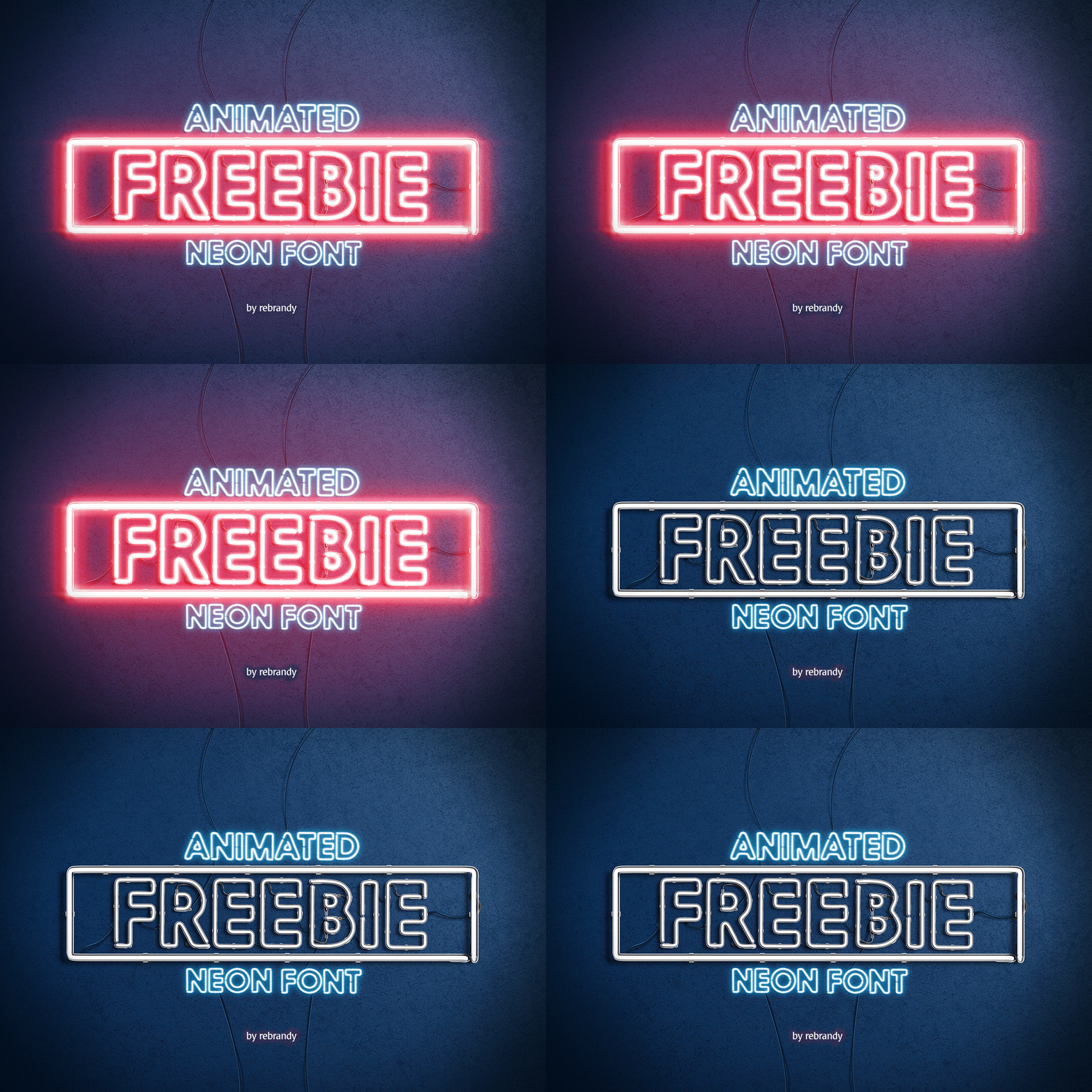
For sign shop owners, LED neon offers significantly better margins than glass neon. For customers, they get the neon aesthetic at 30-50% lower prices. This guide covers what faux neon is, how it compares to traditional neon, and why it’s become the standard choice for most neon sign orders.
This is chapter 10 in the neon sign library
Types of faux neon signs
Several technologies create the “neon look” without glass tubes:
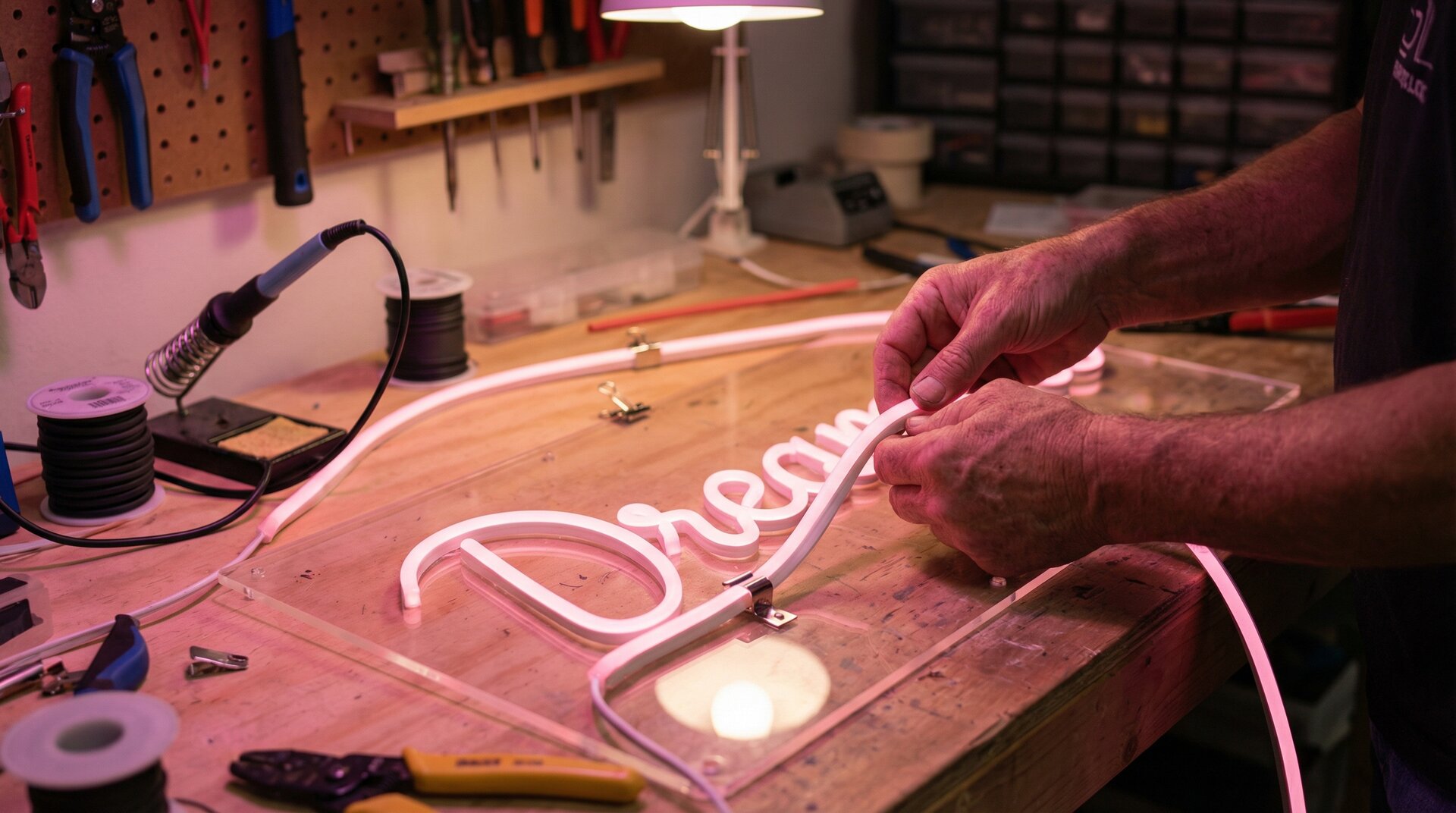
LED neon flex is the industry standard. Flexible silicone tubing houses LED strips, bent to shape and mounted on acrylic backing. This is what most “neon signs” sold today actually are.
Rope lights are a budget option—PVC tubing with LEDs inside. Less bright than LED neon flex and limited to straight lines or gentle curves.
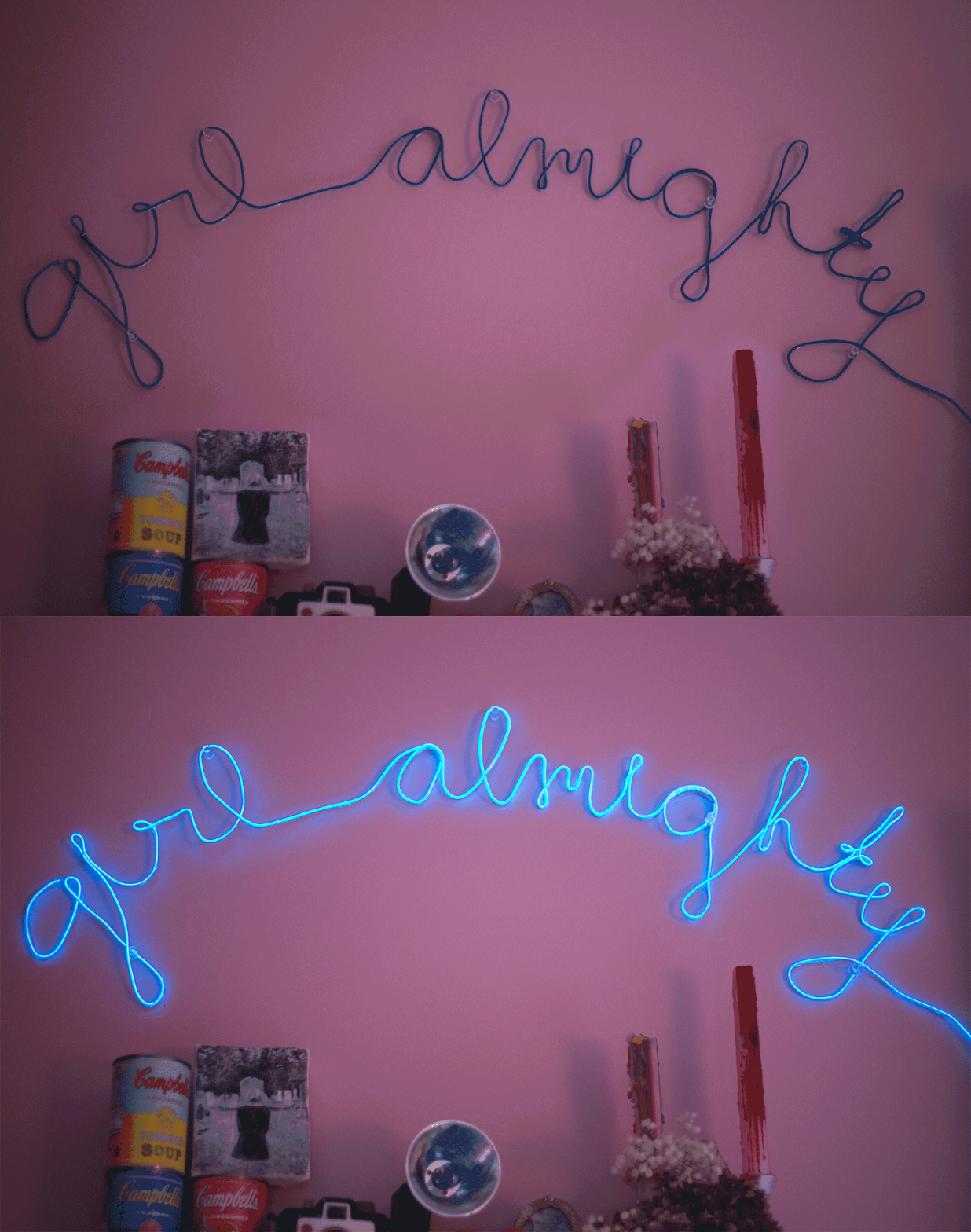
EL wire (electroluminescent wire) glows along its length. Very thin and flexible but dim—works for costumes and crafts, not commercial signage.
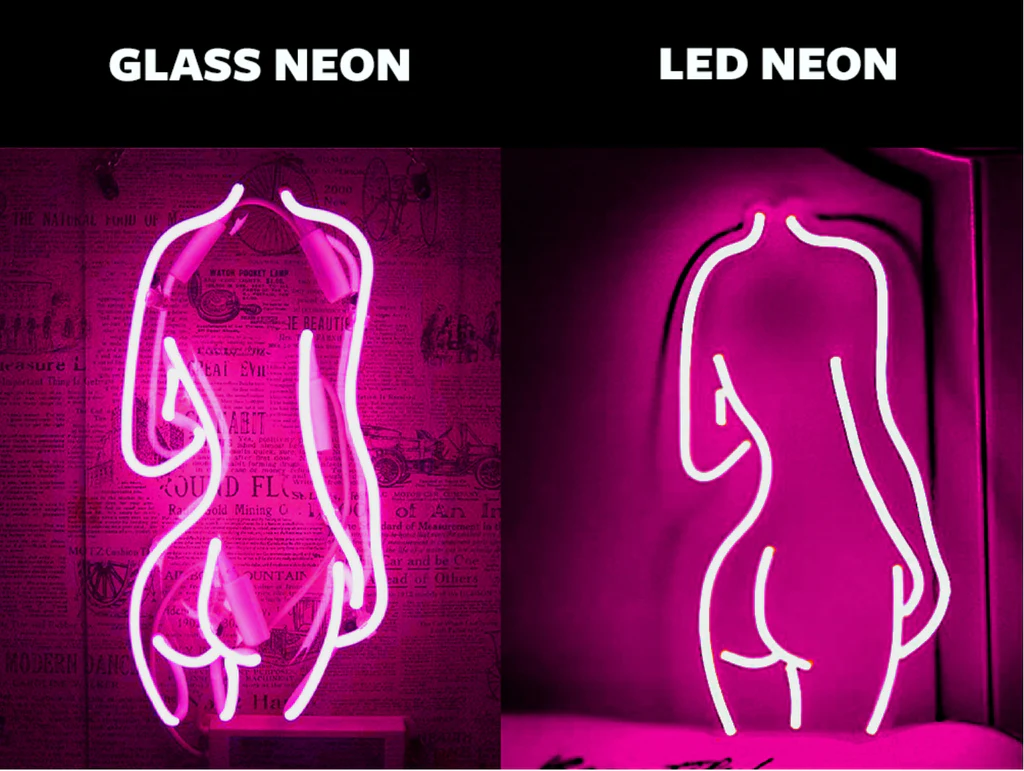
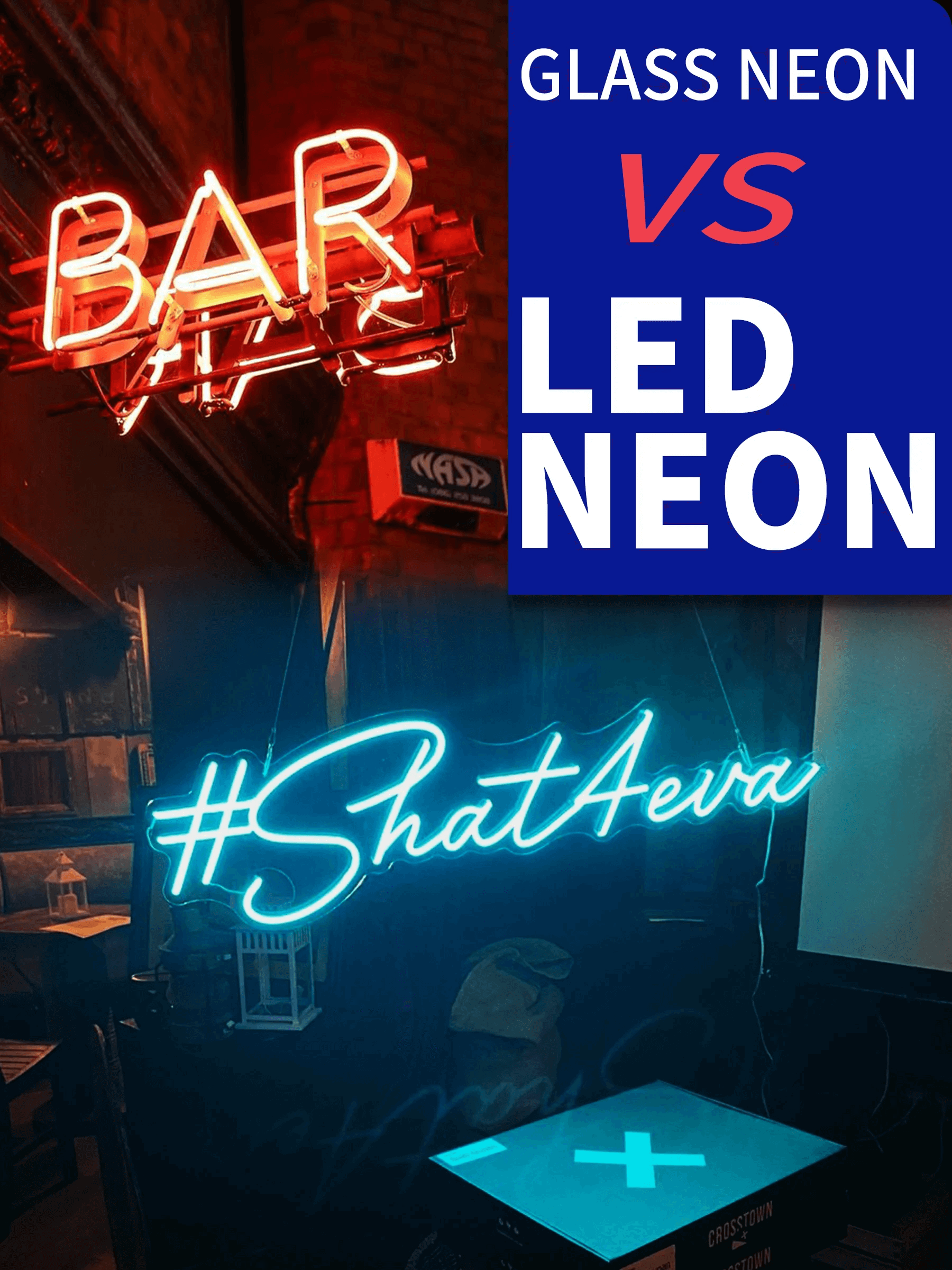
LED neon vs glass neon: quick comparison
| Factor | LED Neon (Faux) | Glass Neon |
|---|---|---|
| Price | £80-300 | £200-800+ |
| Production time | 1-3 days | 1-2 weeks |
| Shipping risk | Low | High (breakage) |
| Installation | DIY possible | Professional |
| Lifespan | 30,000-50,000 hours | 8,000-15,000 hours |
| Power consumption | 5-15W typical | 50-100W typical |
| Colour options | RGB available | Limited by gas |
For detailed comparison, see Neon versus LED: an in-depth neon sign comparison.
What is faux neon made from?
Modern LED neon signs use three main components:
Silicone tubing houses the LEDs and creates the “glow” effect. Higher-quality signs use pure silicone (UV-resistant, flexible at low temperatures). Budget signs use PVC, which yellows over time and cracks in cold weather.
LED strips sit inside the tubing. Quality varies significantly—cheap strips have visible “dots” while premium strips create smooth, even illumination.
Acrylic backing provides the mounting surface. Usually clear or black, 5-10mm thick, laser-cut to the sign shape.
Material quality tiers
| Tier | Tubing | LEDs | Price Point | Use Case |
|---|---|---|---|---|
| Budget | PVC | Standard | £60-120 | Events, temporary |
| Mid-range | Silicone | Quality | £120-250 | Home, retail |
| Premium | Pure silicone | High-density | £250-500 | Commercial, outdoor |
Learn more: Are acrylic neon signs the future of business signage?
Why sign shops choose LED neon
For business owners selling neon signs, LED neon makes more sense than glass neon in almost every scenario:
Profit margin comparison
| Factor | Glass Neon | LED Neon |
|---|---|---|
| Material cost | £80-200 | £20-60 |
| Labour time | 4-8 hours | 1-2 hours |
| Shipping cost | High (fragile) | Standard |
| Breakage rate | 5-15% | < 1% |
| Typical margin | 30-50% | 50-70% |
Business advantages
Faster turnaround: LED neon production takes hours, not days. Same-week delivery is standard.
Lower skill barrier: No gas-bending expertise needed. Train staff in days, not years.
Safer shipping: No glass means no breakage claims, no customer disappointment, no remake costs.
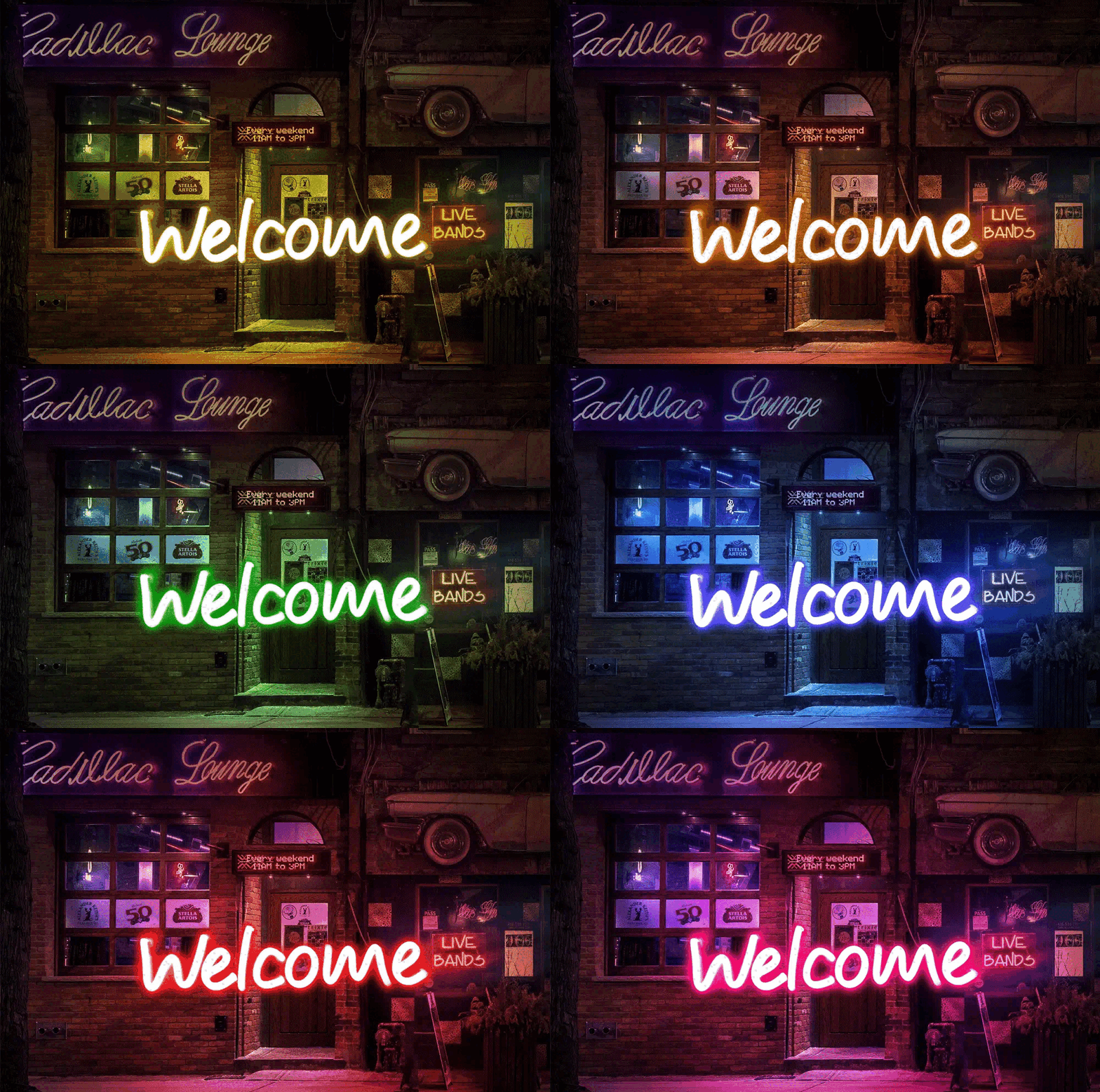
More customisation: RGB LEDs offer colour-changing options impossible with glass. Dimming is built-in.
Easier installation: Customers can mount LED neon themselves. Glass neon requires professional installation.
When glass neon still makes sense
- Vintage restoration projects
- Customers specifically requesting authentic neon
- Ultra-premium brand experiences
- Outdoor signs in extreme temperatures (glass handles heat better)
How to make a faux neon sign
Crafting a faux neon sign is a thrilling and gratifying undertaking that can delight the senses. To undertake this endeavor, there exist various techniques at one’s disposal, such as LED lights, rope lights, and EL wire. The method chosen is contingent on the intended effect and available funds, each having its own benefits and drawbacks.
Beginning with LED lights, selecting the appropriate LED strip is the foremost step. These strips are offered in diverse colors and are modifiable to suit any configuration or dimension. Once you have obtained your LED strip, the next step entails affixing it to a backing board or surface, which can be accomplished by utilizing silicone sealant or adhesive.
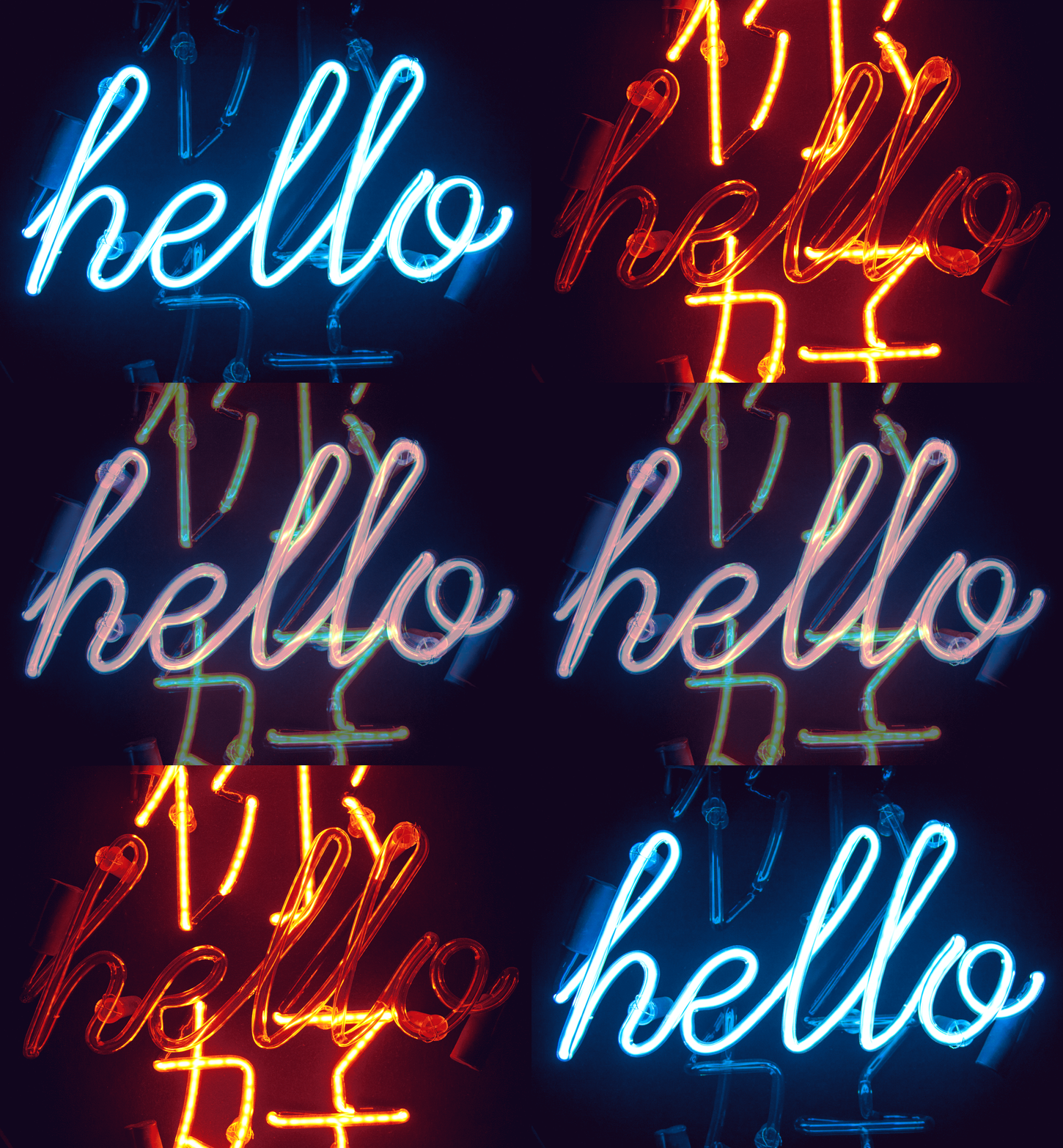
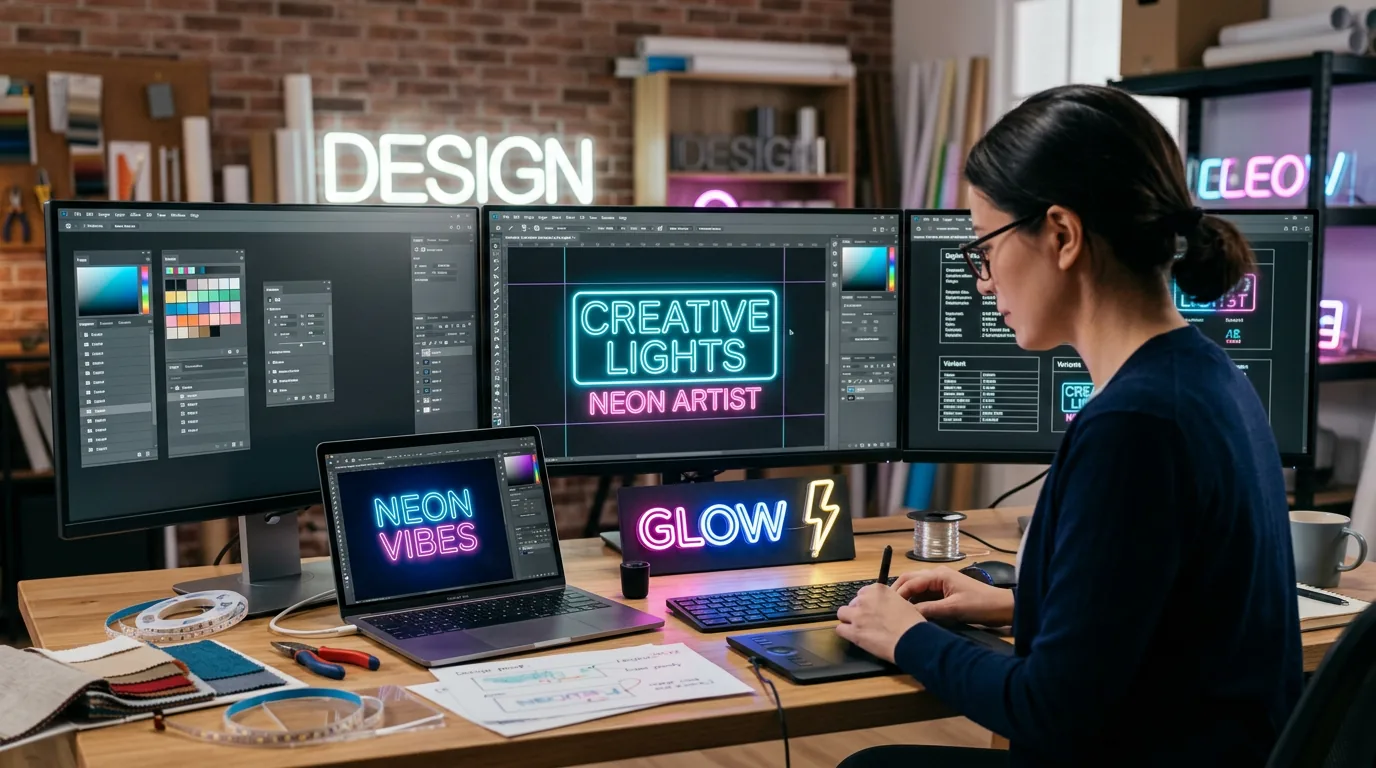
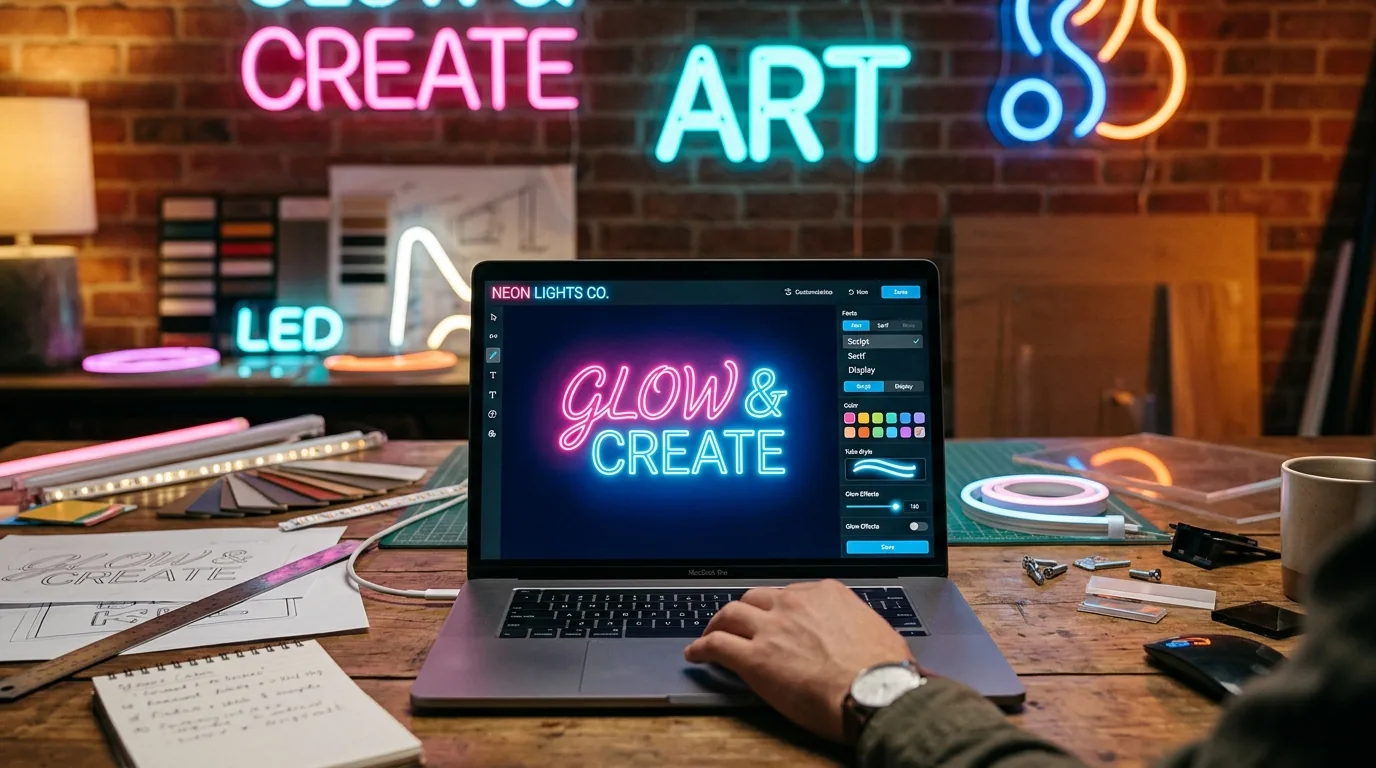
How to make an LED neon sign in personalized handwritting
Alternatively, for those opting for rope lights, choosing the appropriate size and color is crucial. Rope lights come in varying thicknesses, ranging from ¼ inch to ½ inch, and can be tailored to any form or size. To achieve a faux neon sign utilizing rope lights, affixing them to a backing board or surface using clips or adhesive is necessary.
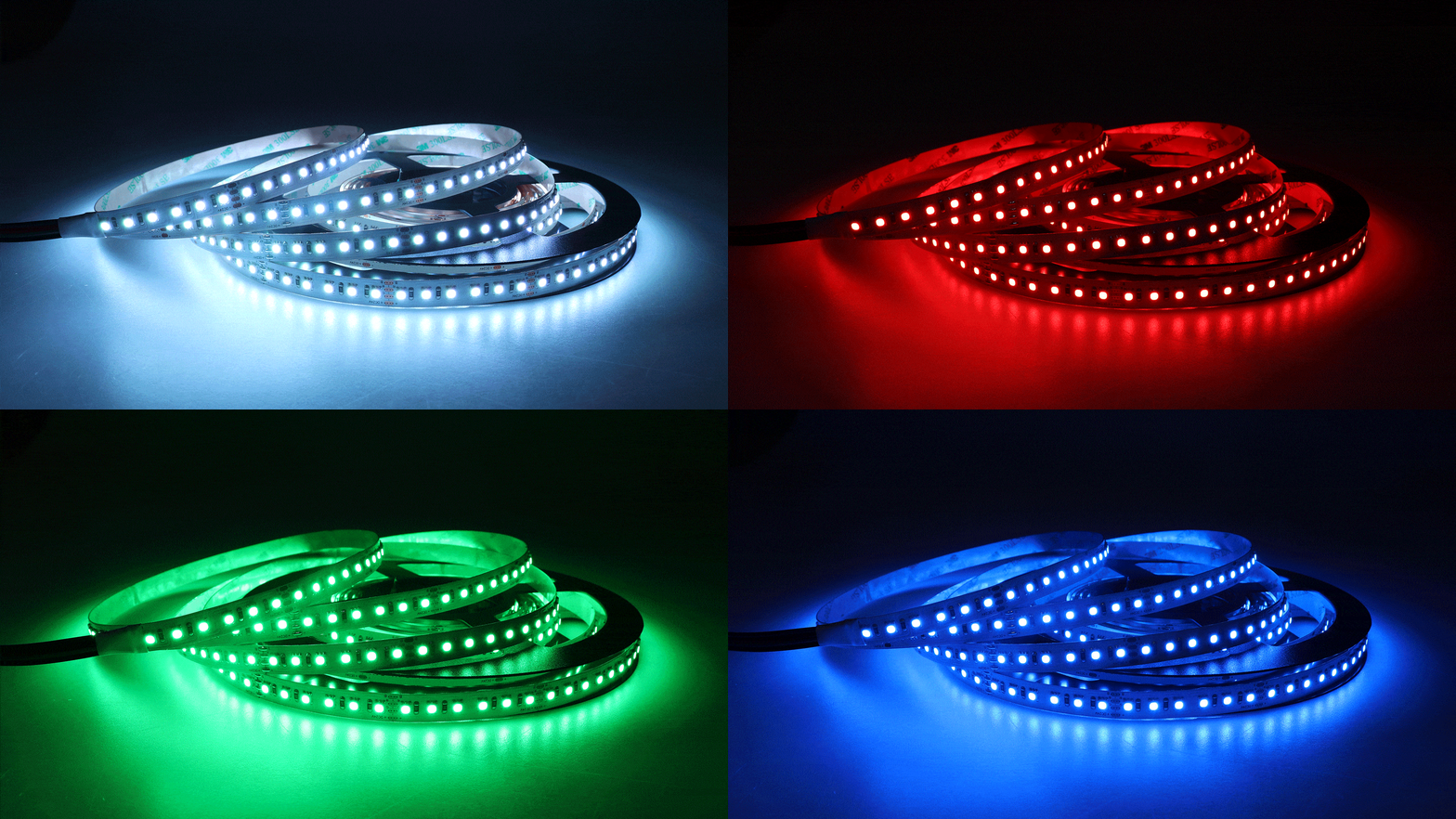
Lastly, selecting the appropriate color and thickness of EL wire is a prerequisite for making a faux neon sign using this method. EL wire is obtainable in numerous colors and can be modified to fit any magnitude or contour. To assemble a faux neon sign utilizing EL wire, affixing the wire to a backing board or surface using clips or adhesive is a requirement.
How to make faux neon sign
Cost of making a faux neon sign
Creating a faux neon sign is an optimal strategy for enhancing the aesthetic appeal of your home, business, or event in a budget-friendly manner. The price can be various from hundred dollars to thousand dollars up to many factors such as size, material and design, etc. Nevertheless, it’s imperative to fathom the costs involved in this endeavor before plunging in headfirst.
Calculating the total cost of creating a faux neon sign necessitates considering the size, complexity, and materials you plan to employ. Some online faux neon sign makers furnish cost calculators to facilitate estimating expenses. Apart from materials, labor costs may also need to be accounted for if you plan to delegate the task of crafting and installing the sign to a professional.
To curtail expenses when fashioning a faux neon sign, certain measures can be undertaken. One such measure is opting for less expensive materials or a more straightforward design. You can also economize by crafting and installing the sign yourself if you possess the necessary skill set and tools. Additionally, buying materials in bulk can serve as a cost-saving strategy in the long haul.
How to tell LED neon from glass neon
LED neon has become so good that many people can’t tell the difference. Here’s how to identify each:
Glass neon indicators:
- Visible glass tubes (you can see the tube structure)
- Slight flicker at 50/60Hz
- Warm to touch when operating
- Audible buzz from transformer
- Higher brightness, especially whites
LED neon indicators:
- Flexible silicone tubing
- Completely silent operation
- Cool to touch
- Even, consistent glow
- May show slight “dotting” on close inspection
Traditional glass neon signs also carry UL certification marks and require professional installation due to high-voltage transformers.
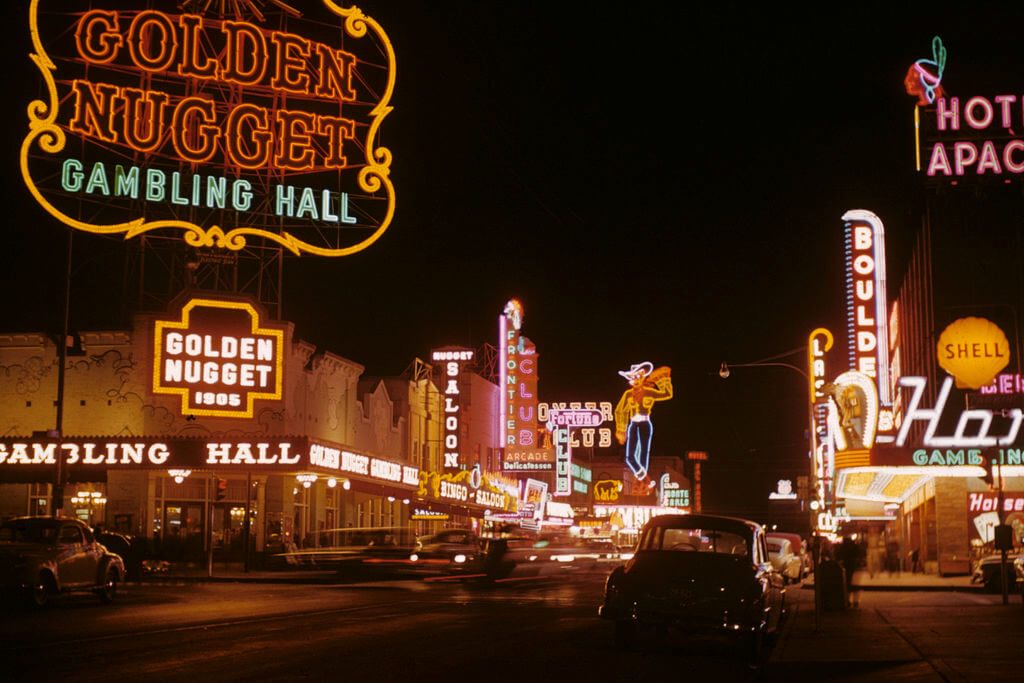
How to mimic neon?
If you’re yearning to replicate the striking, luminous ambiance of a neon sign, but desire to sidestep the use of actual neon, there exist a multitude of techniques at your disposal. One such technique is the utilization of paint or gel filters, which offer the ability to produce a neon-esque aesthetic. These materials are customarily transparent, and they are obtainable in an array of colors, rendering the creation of the brilliant and audacious appearance of a neon sign a breeze.
How i paint awesome 3D neon light effects
To begin, you must select the ideal paint or gel filters for your venture. Opt for products that are exclusively engineered for the purpose of generating a neon effect, as they will provide the most satisfactory outcomes. Once you have acquired your materials, you may proceed to apply them to your surface.
To engender a neon-like effect with paint, start by painting your surface with a foundational coat in the color of your choosing. Subsequently, employ a small brush to apply the paint in thin, even layers. Progressively build up the layers until you attain the desired degree of brightness and saturation.
Gel filters are an additional option for mimicking neon. These thin, pliant sheets can be trimmed to size and adhered to your surface using adhesive. To generate a neon-like effect, select a filter in the color of your preference and affix it to your surface. Additional filters in varying colors may then be added to formulate a more intricate design.
When endeavoring to simulate neon, it is of the essence to pay scrupulous attention to details such as the placement and spacing of your lines. By meticulously devising and executing your design, you can achieve a more convincing neon effect.
To procure the most desirable outcomes, it is recommended that you hone your skills on a smaller scale before attempting a more extensive project. And don’t be apprehensive to experiment with an array of techniques and materials until you discover the one that is optimal for your requisites.
Learn more: Looking for unique decor? Try these 30+ NEON SIGN IDEAS!
How to make a drawing look like a faux neon sign?
The process of transforming a drawing into a faux neon sign can be an exciting and imaginative endeavor. There are various methodologies that you can utilize to accomplish this task, relying on your preferences and resources available to you.
One alternative is to utilize neon effect applications that allow you to digitally apply neon effects to your drawing. These applications come with numerous styles and color options, and you can regulate the intensity of the neon effect to your liking.
Should you opt to utilize a neon effect app, the initial step is to select an application that suits your requirements. Numerous free and paid applications are available in app stores, each equipped with its distinct set of features. After selecting an app, upload your drawing and opt for the neon effect option. You can then adjust the color, style, and intensity of the effect until you are content with the outcome. Some apps may also enable you to incorporate animation into your faux neon sign.
Alternatively, you can hand paint your drawing to create a faux neon appearance. Although this method may require more time and effort, it can result in a distinct and personalized piece of artwork.
If you prefer to hand paint your drawing, you will require materials such as acrylic paints, a brush, and a surface to paint on. Begin by sketching your design onto the surface using a pencil. Then, use your brush and paint to fill in the sketch with the desired colors. To create a faux neon effect, use brighter colors for the outlines and darker colors for the inner parts of your design. You can also add shadows and highlights to create depth and dimension. Once you have finished painting, allow it to dry entirely before displaying or mounting it.
When creating a faux neon sign from a drawing, it’s crucial to pay attention to details to achieve the best possible outcome. Choose a design that is simple yet visually appealing, and ensure that the colors and shapes complement each other. If you are using a neon effect app, experiment with different settings until you find the perfect combination. If you are hand painting your design, take your time and be patient to get the best possible outcome.
Learn more: What are THE BEST NEON SIGN QUOTE IDEAS? Find Out Now!
How to make something look like faux neon?
If you are seeking to create a faux neon effect, there are a multitude of techniques that you may utilize. One prevalent approach involves silk screening to achieve a similar aesthetic. Silk screening necessitates using a stencil to apply ink onto a surface, resulting in a printed image.
- To produce a faux neon sign with silk screening, you must begin by fabricating a stencil of your design. This may be accomplished either by hand or by employing a computer.
- Once you have your stencil, you must apply it to the surface and utilize a squeegee to apply ink onto the surface, taking care to fill in all of the spaces in the stencil.
- After the ink has dried, you may integrate LED lights or rope lights behind the stencil to produce a neon-like radiance.
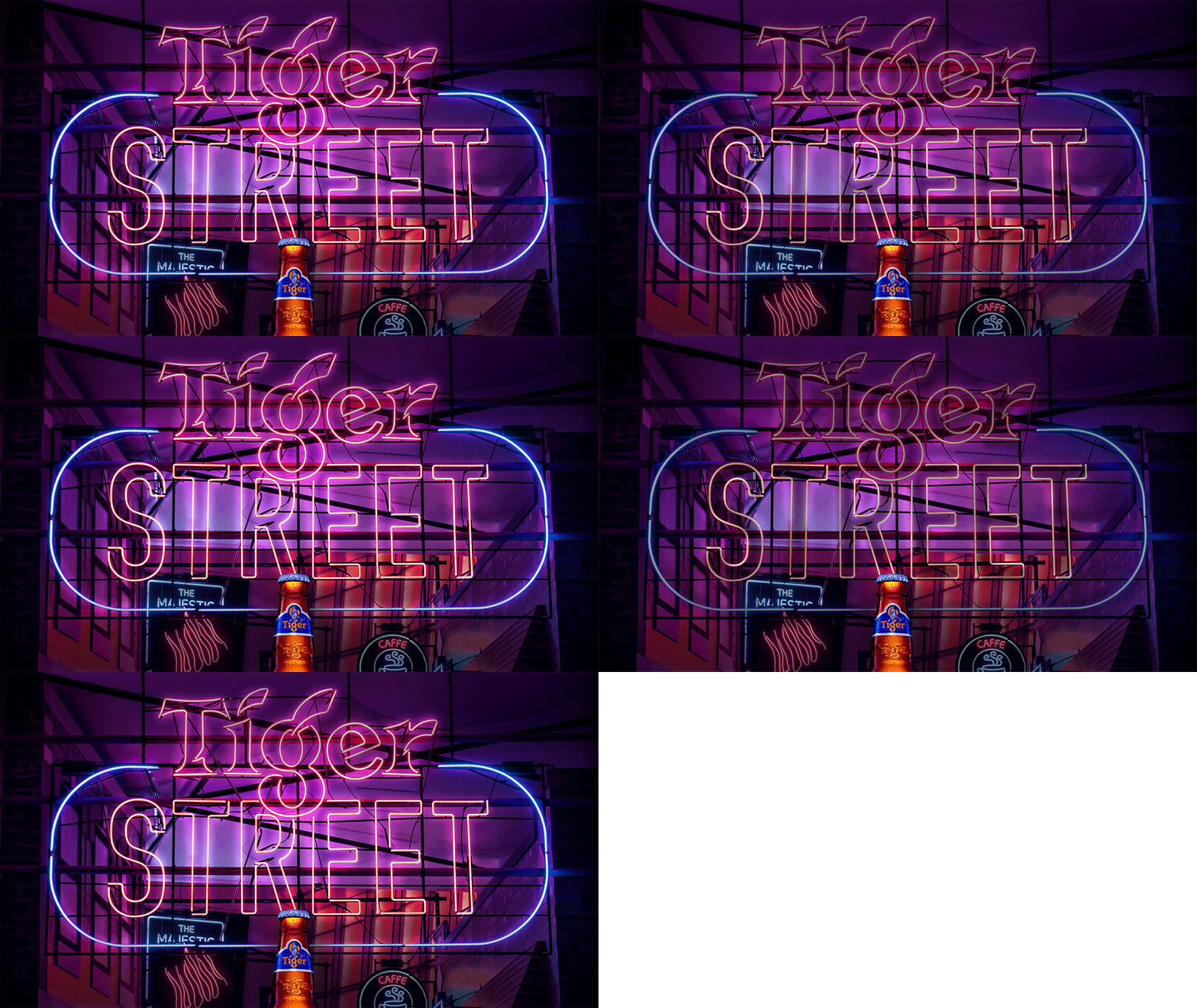
Neon light effects when printing in vinyl
To attain optimal outcomes while attempting to create a faux neon look, it is essential to select the appropriate materials and techniques for your project. When working with vinyl or silk screening, it is crucial to employ high-quality materials and adhere to the instructions scrupulously. Moreover, it is recommended that you experiment with various lighting alternatives to identify the most effective combination for your design.
Other illuminated sign options
If LED neon isn’t right for your project, consider these alternatives:
Lightboxes
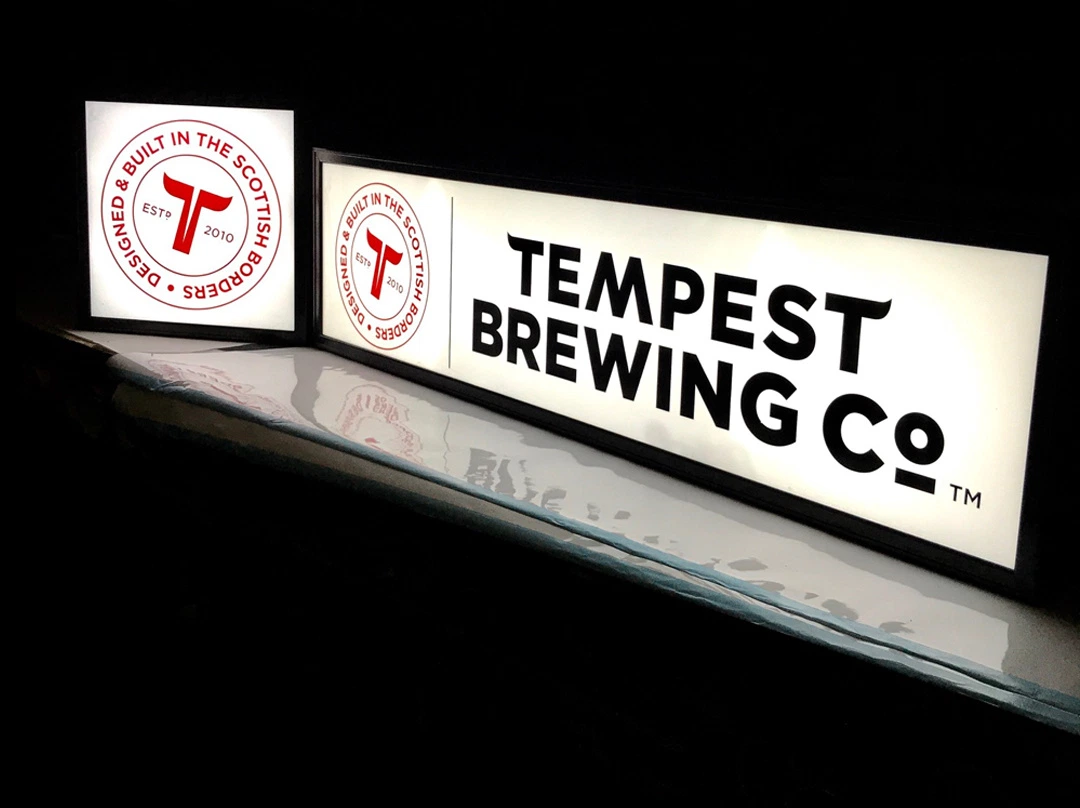
Printed graphics backlit by LEDs. Best for: logos, photographs, complex designs. Price range: £100-400. Production: 3-5 days.
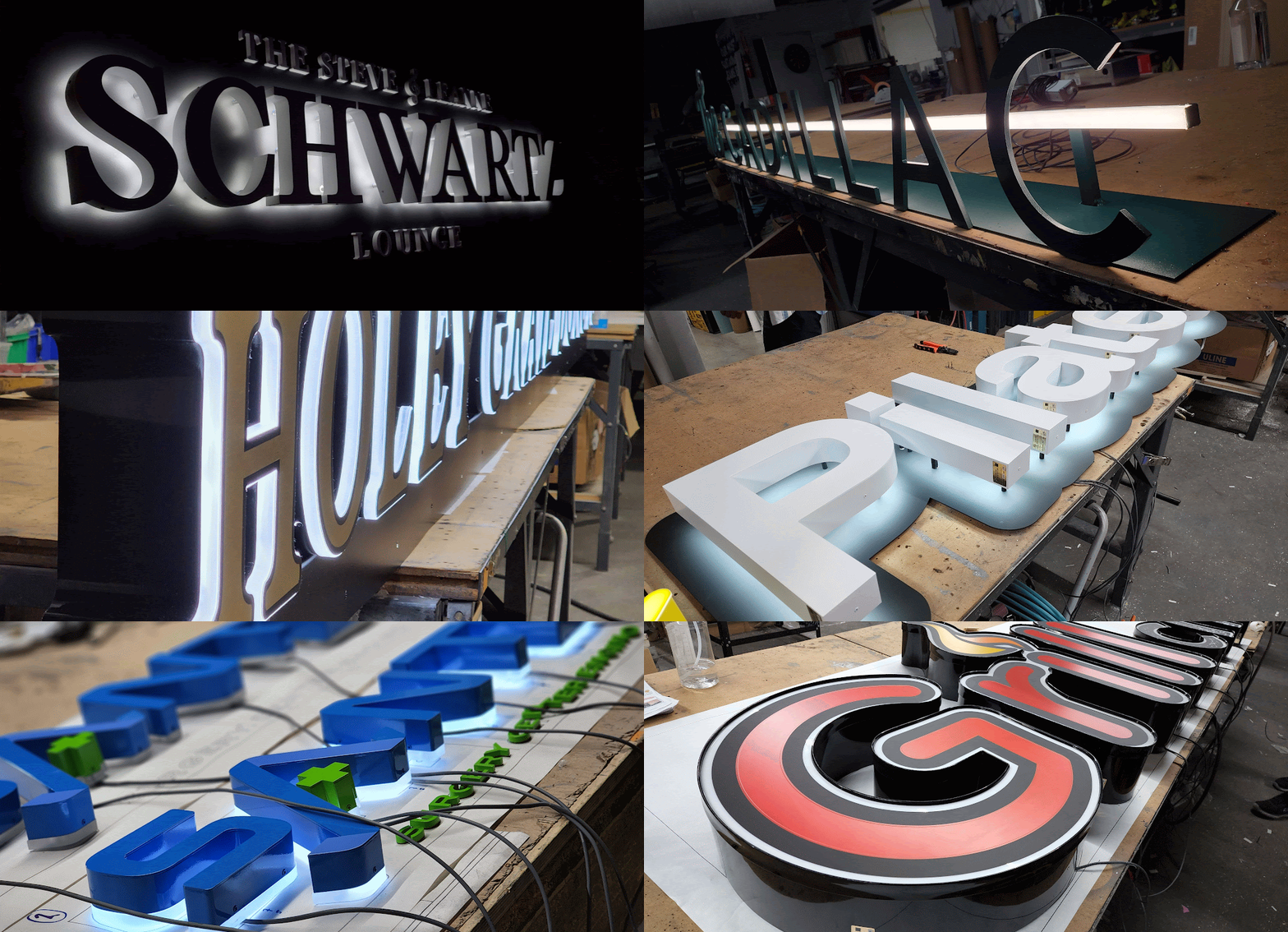
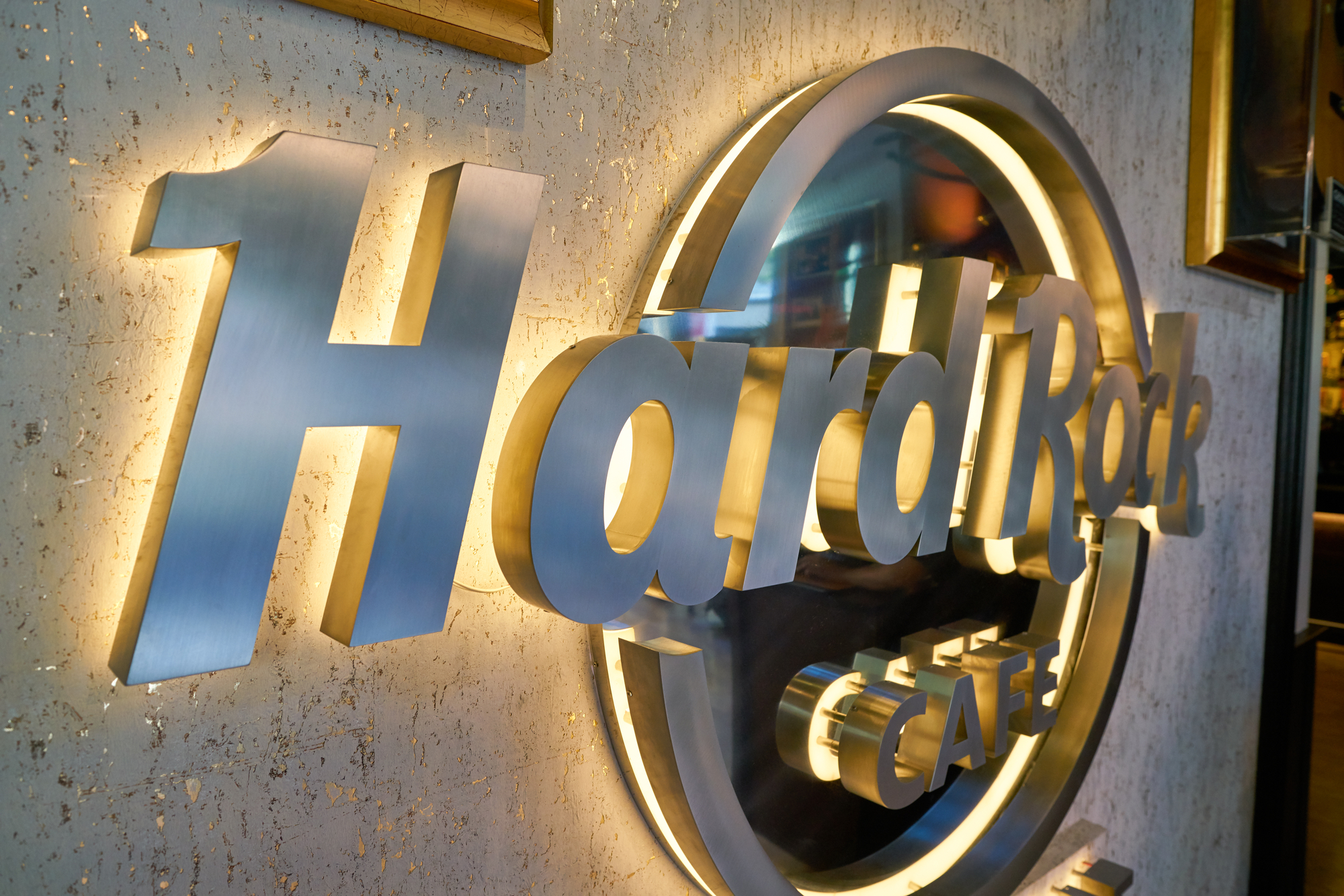
Channel letters
3D metal letters with internal LED illumination. Best for: storefront signage, corporate branding. Price range: £300-1,500+. Professional installation required.
Edge-lit acrylic
LEDs shine through the edge of clear acrylic, creating a glowing effect. Best for: modern/minimalist designs. Price range: £80-250. DIY-friendly.
Comparison for sign shops
| Type | Margin | Production Time | Skill Level |
|---|---|---|---|
| LED neon | 50-70% | 1-3 days | Low |
| Lightbox | 40-60% | 3-5 days | Low |
| Channel letters | 30-50% | 5-10 days | High |
| Edge-lit | 50-65% | 2-4 days | Low |
For neon sign repair and maintenance, LED neon is significantly easier than glass.
Learn more: How to hang neon signs LIKE A PRO? The ultimate guide
Selling LED neon with Sign Customiser
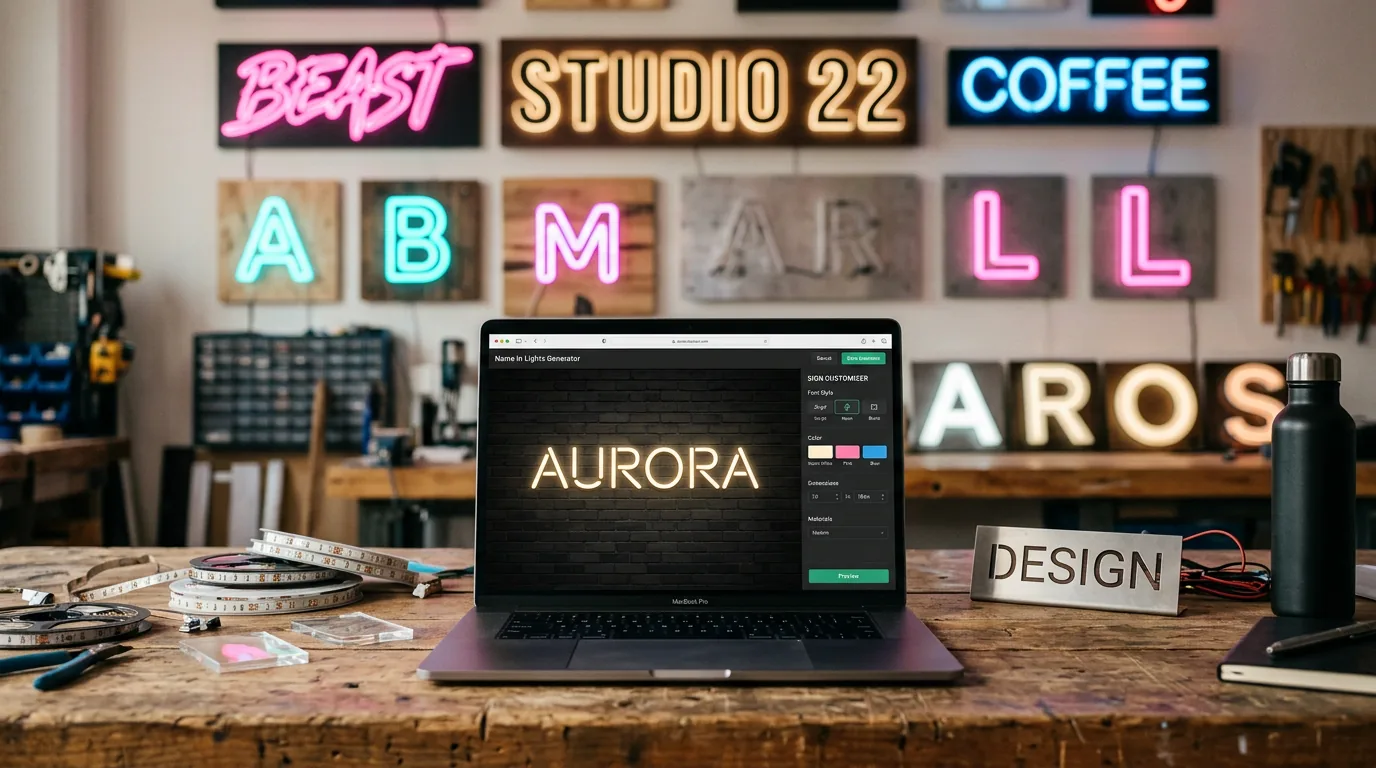
Sign Customiser makes selling LED neon signs online straightforward:
- Configure pricing rules based on text length or sign dimensions
- Let customers preview their design with colour and font options
- Capture production specs automatically—no back-and-forth emails
- Show instant pricing—customers know costs before ordering
Most neon sign businesses use Sign Customiser to handle 70-80% of enquiries without manual quoting.
Summary
LED neon (faux neon) has become the standard for most neon sign orders. For sign shops, it offers better margins, faster production, and lower risk than glass neon. For customers, it delivers the neon aesthetic at accessible prices.
The technology continues improving—2026 LED neon is brighter, more colour-accurate, and more durable than versions from just a few years ago. Unless a customer specifically requests traditional glass neon, LED is the right recommendation for most applications.
Related guides: