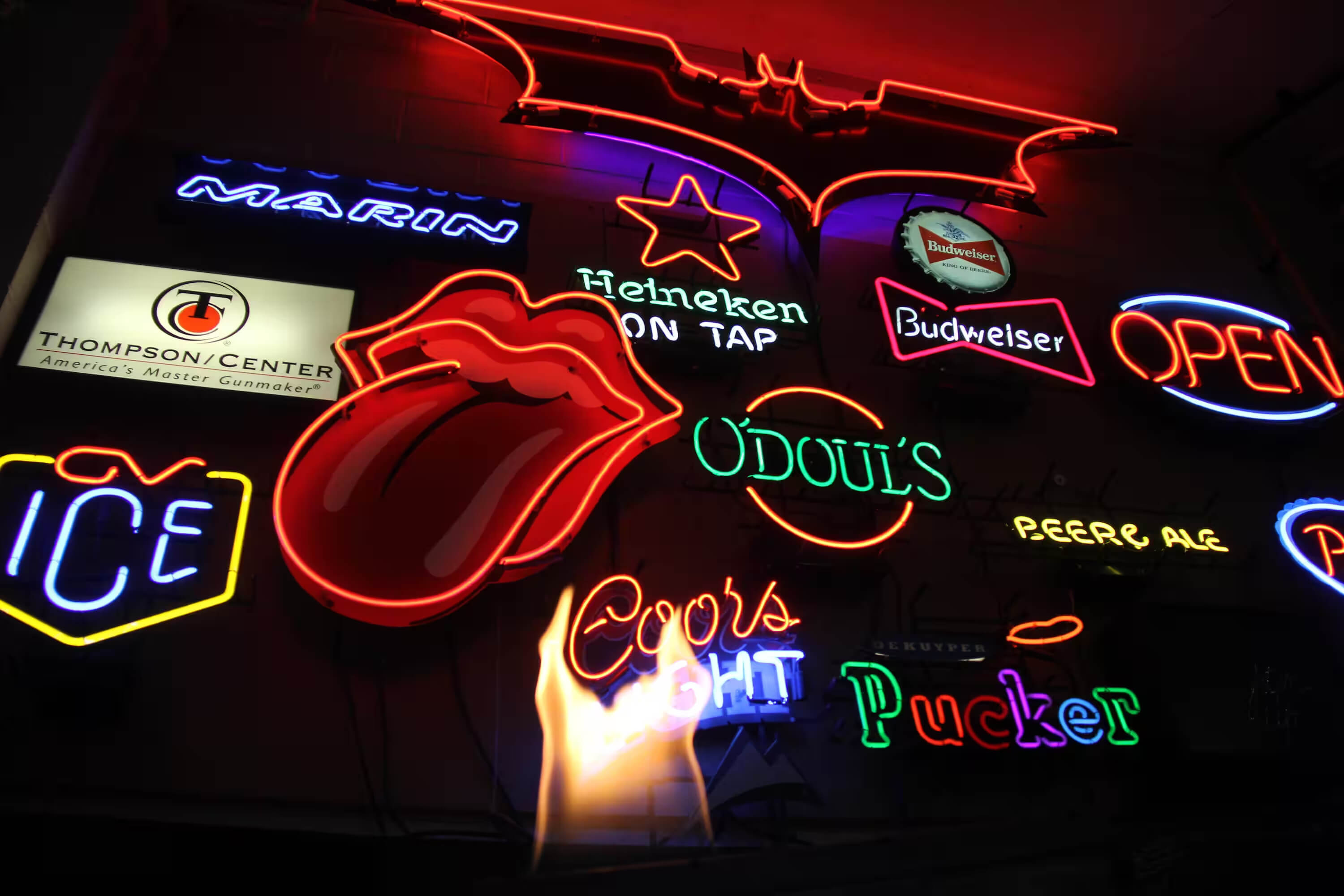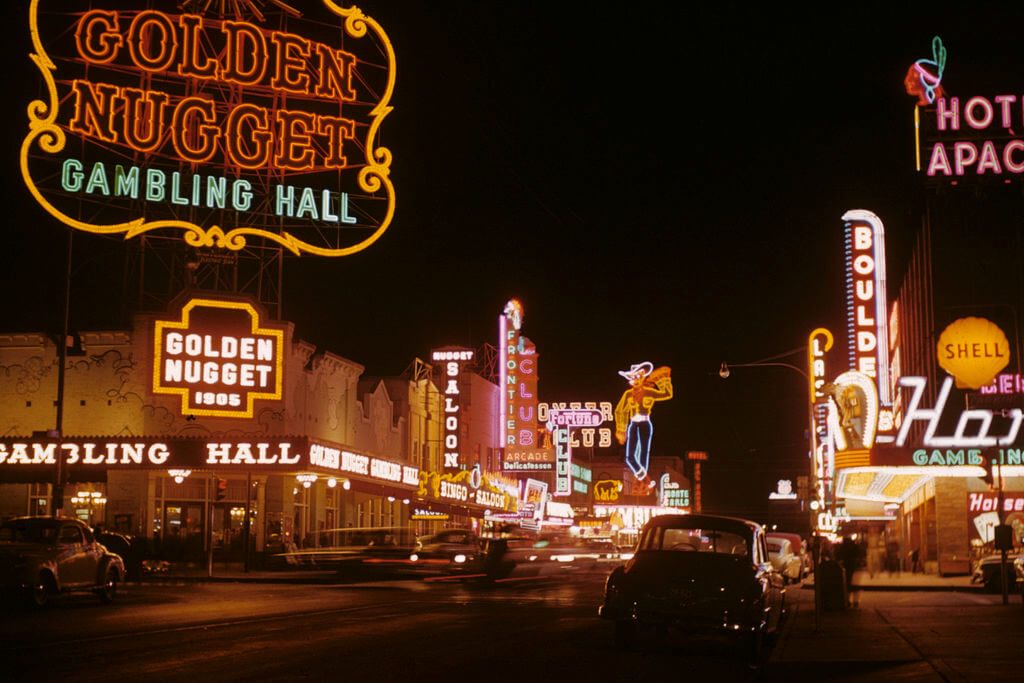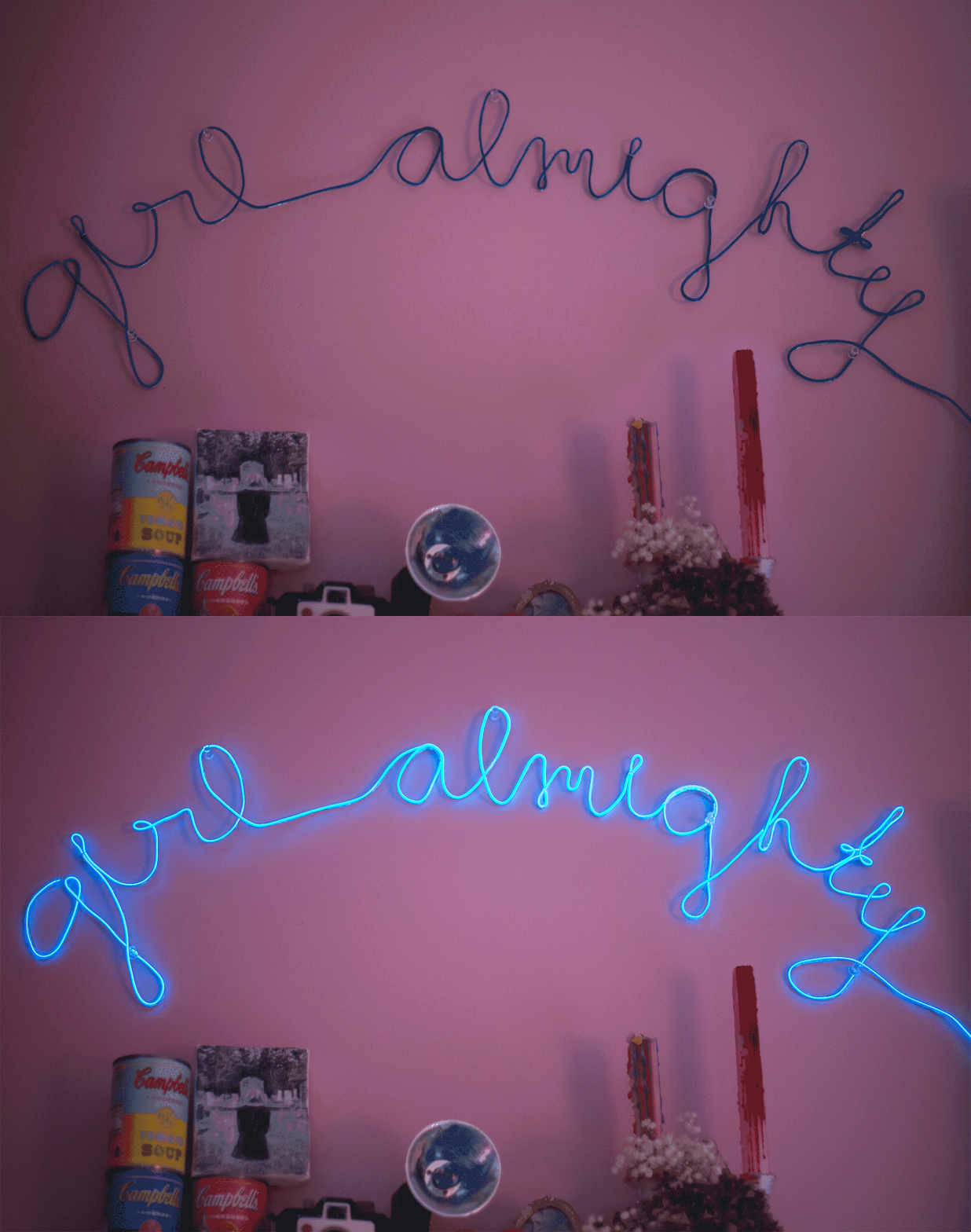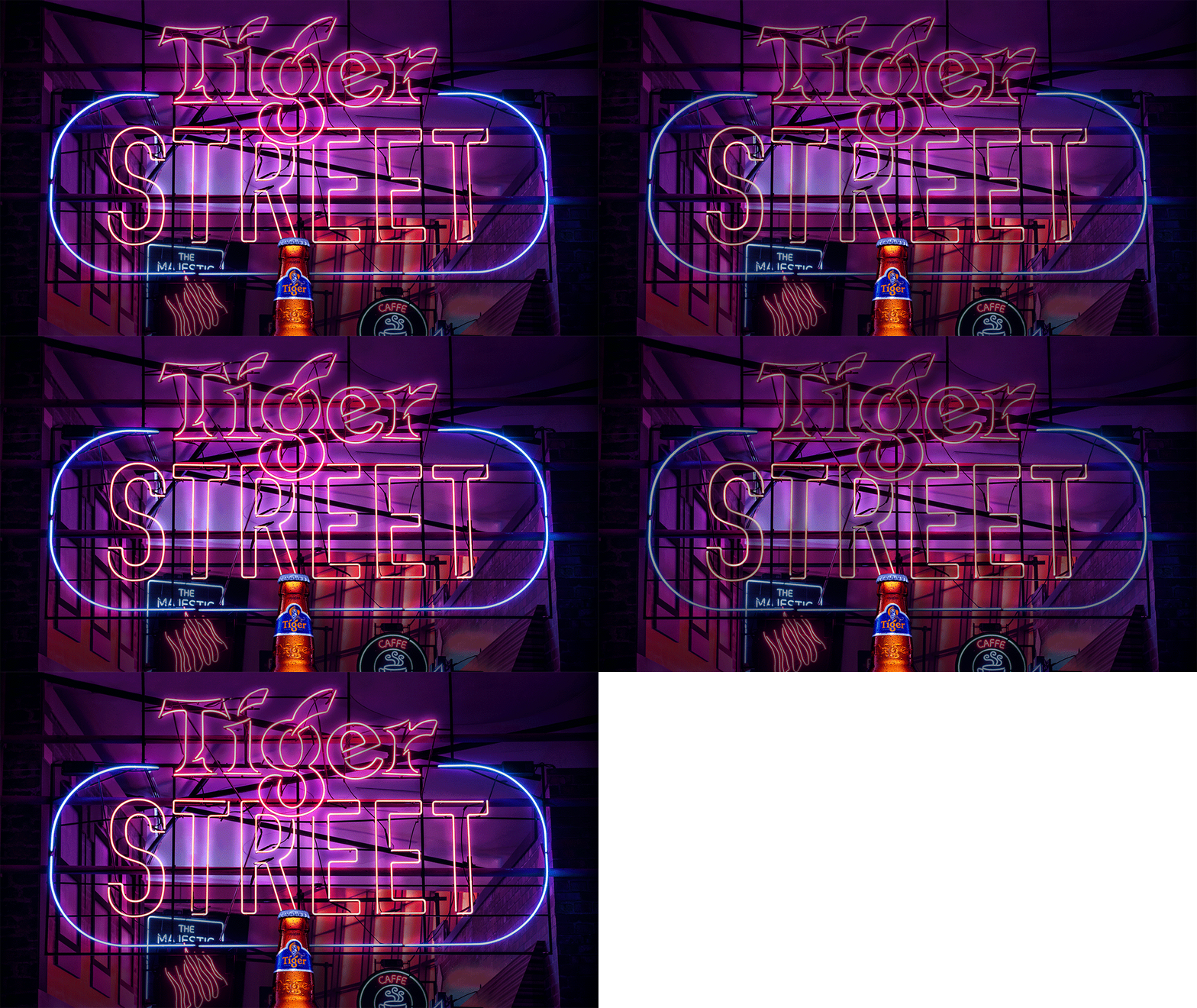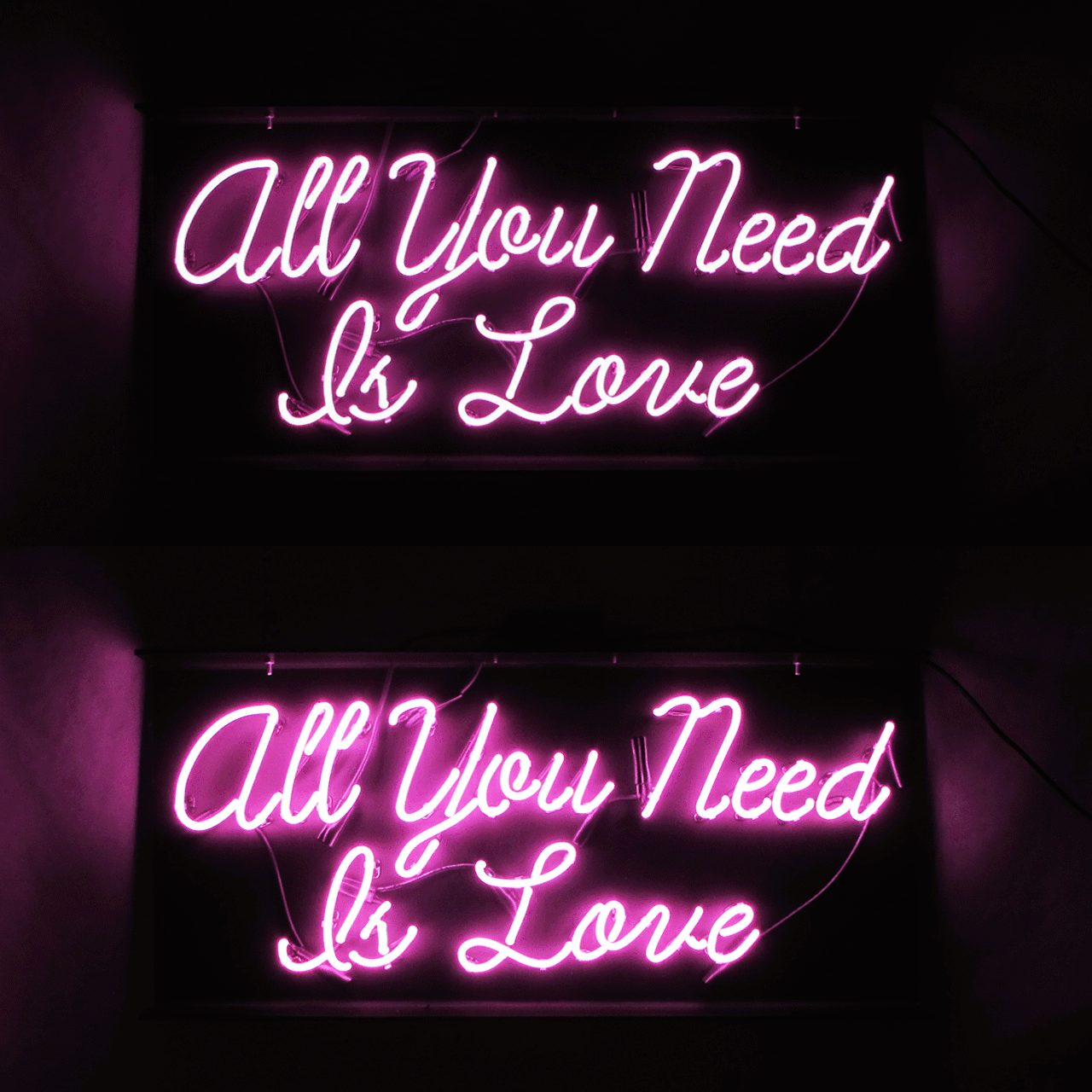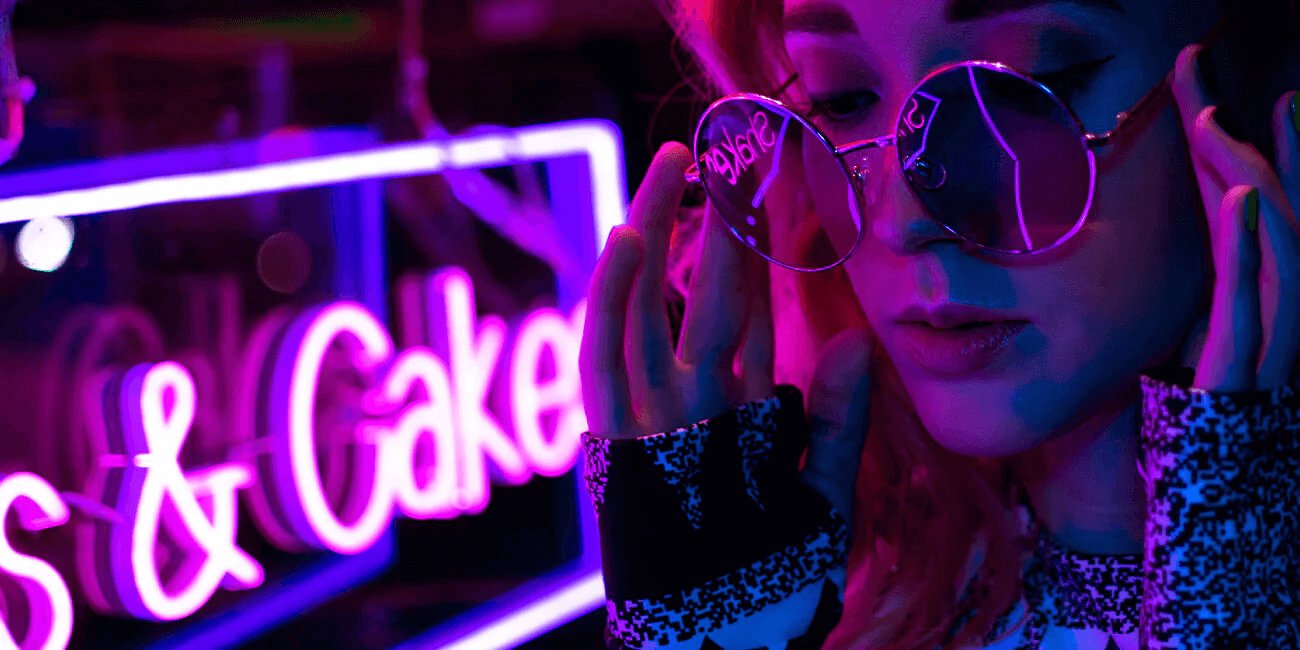
Neon art is art made with light from sealed glass tubes of glowing gas. A bender heats the glass and bends it by hand to follow the artist’s drawing, fits an electrode at each end and fills the tube with neon, which glows orange-red, or argon and mercury, which glow blue. Artists have made neon art since the 1940s.
The neon artists named most often include Bruce Nauman, Tracey Emin, Joseph Kosuth, Lucio Fontana and Keith Sonnier; the table of famous neon artists below lists their key works and where to see them. The name “neon art” has two other uses. Shops sell “neon art” made from LED neon flex, which copies the look with LEDs in a silicone strip and has no gas and no glass. And it can mean painting or digital art in bright neon colours. This guide covers glass neon first, then LED neon.
We make Sign Customiser, software that lets a sign shop’s customers design and price neon and other signs on the shop’s own website. We do not bend glass or make signs. Our customers turn drawings into neon every day, so this guide explains neon art from the workshop side.
On this page:
- Famous neon artists and their works
- Where neon art came from
- How neon art is made
- Why neon art looks the way it does
- Who bends the glass: workshops and artist-benders
- Auction prices for neon art
- Glass neon or LED neon
- Where to see neon art
- From a drawing to a neon design online
- Frequently asked questions
Famous neon artists and their works
Bruce Nauman and Tracey Emin are the two neon artists named most often. Nauman began making neon in the 1960s and used it for words and ideas rather than advertising. Emin, born in 1963, has made neon in her own handwriting since the mid-1990s.
The table lists key neon artworks, what each is made of and where to see it today. Where a museum or source record is online, the title links to it. Where a work exists in more than one version, the table says so.
| Artist | Work | Year | Made of | Where to see it |
|---|---|---|---|---|
| Gyula Kosice | Estructura lumínica Madí 6 | dated 1946 | neon; one of the earliest artworks to use neon | Museum of Fine Arts, Houston |
| Lucio Fontana | Struttura al neon per la IX Triennale di Milano | 1951 | about 100 m of white neon | A 2010 reconstruction in the Museo del Novecento, Milan |
| Chryssa | Times Square Sky | 1962 | neon, stainless steel, lead solder and zinc alloy | Walker Art Center, Minneapolis |
| Chryssa | The Gates to Times Square | 1964–66 | neon and other materials | Buffalo AKG Art Museum |
| Joseph Kosuth | Five Words in Green Neon | 1965 | neon | Whitney Museum of American Art, New York |
| Bruce Nauman | The True Artist Helps the World by Revealing Mystic Truths | 1967 | neon | Versions are in the Philadelphia Museum of Art and the Kröller-Müller Museum, Otterlo |
| Keith Sonnier | Neon Wrapping Incandescent | 1969 | neon and light bulbs | Museum of Fine Arts, Houston |
| Bruce Nauman | Human/Need/Desire | 1983 | neon on glass tubing frames | MoMA, New York |
| Bruce Nauman | One Hundred Live and Die | 1984 | neon | Benesse House Museum, Naoshima |
| Tracey Emin | Is Anal Sex Legal | 1998 | neon | Tate, London |
| Martin Creed | Work No. 232: the whole world + the work = the whole world | 2000 | neon | Tate, London |
| Mario Merz | Il volo dei numeri | 2000, permanent since 2018 | red neon Fibonacci numbers | The dome of the Mole Antonelliana, Turin |
| Glenn Ligon | Warm Broad Glow | 2005 | neon and blackout paint | An example is at MoMA, New York |
| Cerith Wyn Evans | Forms in Space… by Light (in Time) | 2017 | almost 2 km of neon | Tate Britain Commission, 2017 (closed) |
Two names on many neon art lists need a note. Dan Flavin made his light works from standard fluorescent tubes, not neon: the nominal three (to William of Ockham) (1963) and “monument” 1 for V. Tatlin (1964) are fluorescent light. And Tracey Emin’s 20-metre pink I Want My Time With You at St Pancras International (2018) is made with LED, not glass neon, although it is in her handwriting like her neons.
Where neon art came from
Neon lighting was first shown in public in December 1910, when Georges Claude lit two tubes about 12 metres long on the colonnade of the Grand Palais at the Paris Motor Show. The first neon advertising sign is said to have been made for a Paris barber in 1912, but no photograph of it is known, as the neon historian Dydia DeLyser wrote in Signs of the Times in April 2014. In the United States, Earle C. Anthony’s Packard neon signs in Los Angeles are traditionally dated 1923, but DeLyser found from aerial photographs and permits that the Los Angeles sign was not up until late 1924 or early 1925.
Artists took it into sculpture after the Second World War. Gyula Kosice in Argentina made light sculptures with neon gas from 1946, and Lucio Fontana hung about 100 metres of hand-bent white neon from steel cables at the Milan Triennale in 1951. In the 1960s, neon became a medium for light art, text art and conceptual art: Chryssa made Times Square Sky (1962) from neon tubing and stainless steel, Joseph Kosuth made neon that describes itself (Five Words in Green Neon is five words in green neon), and Bruce Nauman hung a sentence in neon in the window of his San Francisco studio, a former shop. Keith Sonnier started using neon in 1968. The same sign-shop tube now carried ideas instead of brand names.
How neon art is made
A neon artwork in a museum and an “OPEN” sign in a shop window go through the same workshop steps. A bender makes each piece in seven steps:
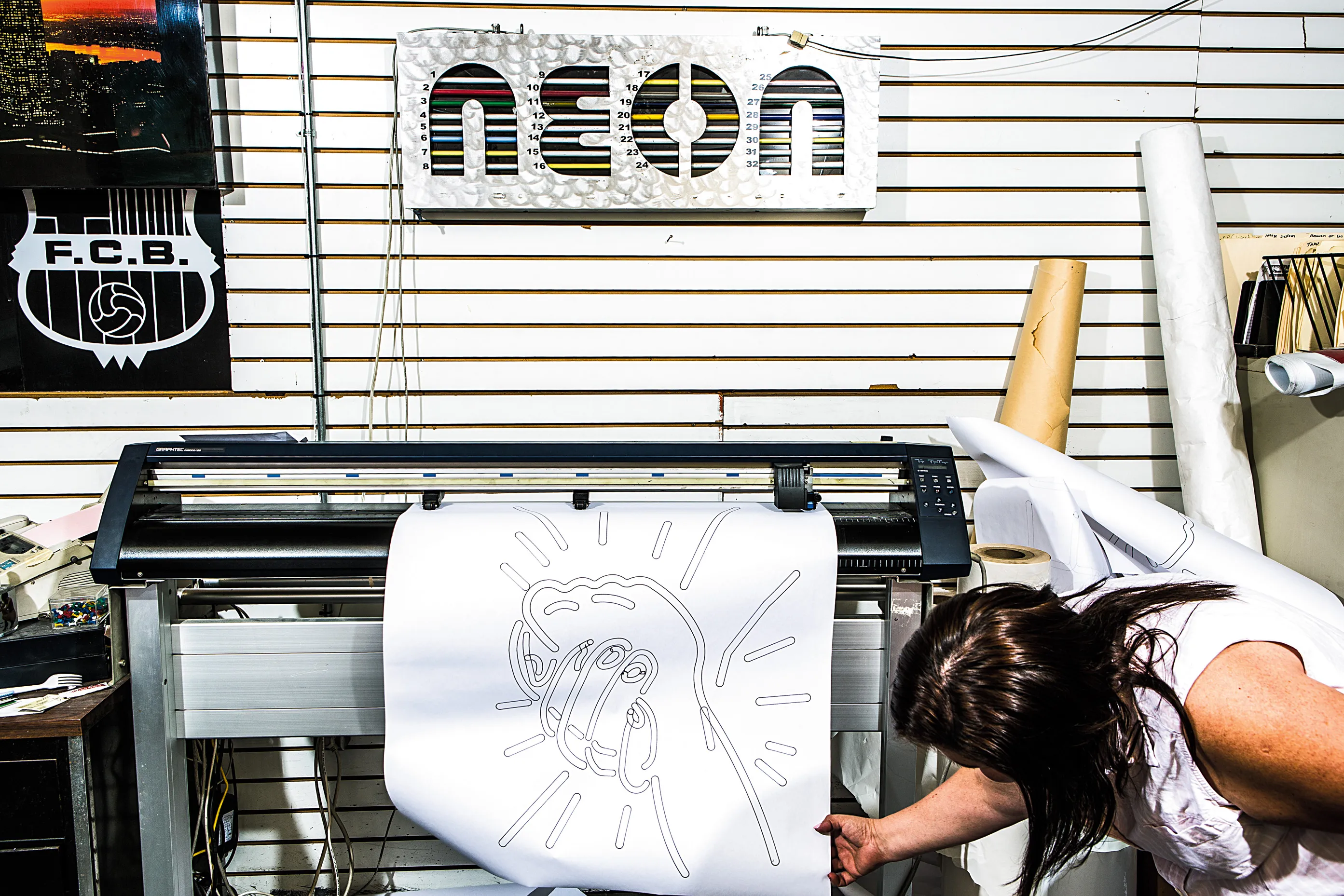
- The pattern. The artist’s drawing is drawn out at full size. The bender plans the tube runs: where each run starts and ends, and where a run must pass behind the work to reach the next letter or shape.
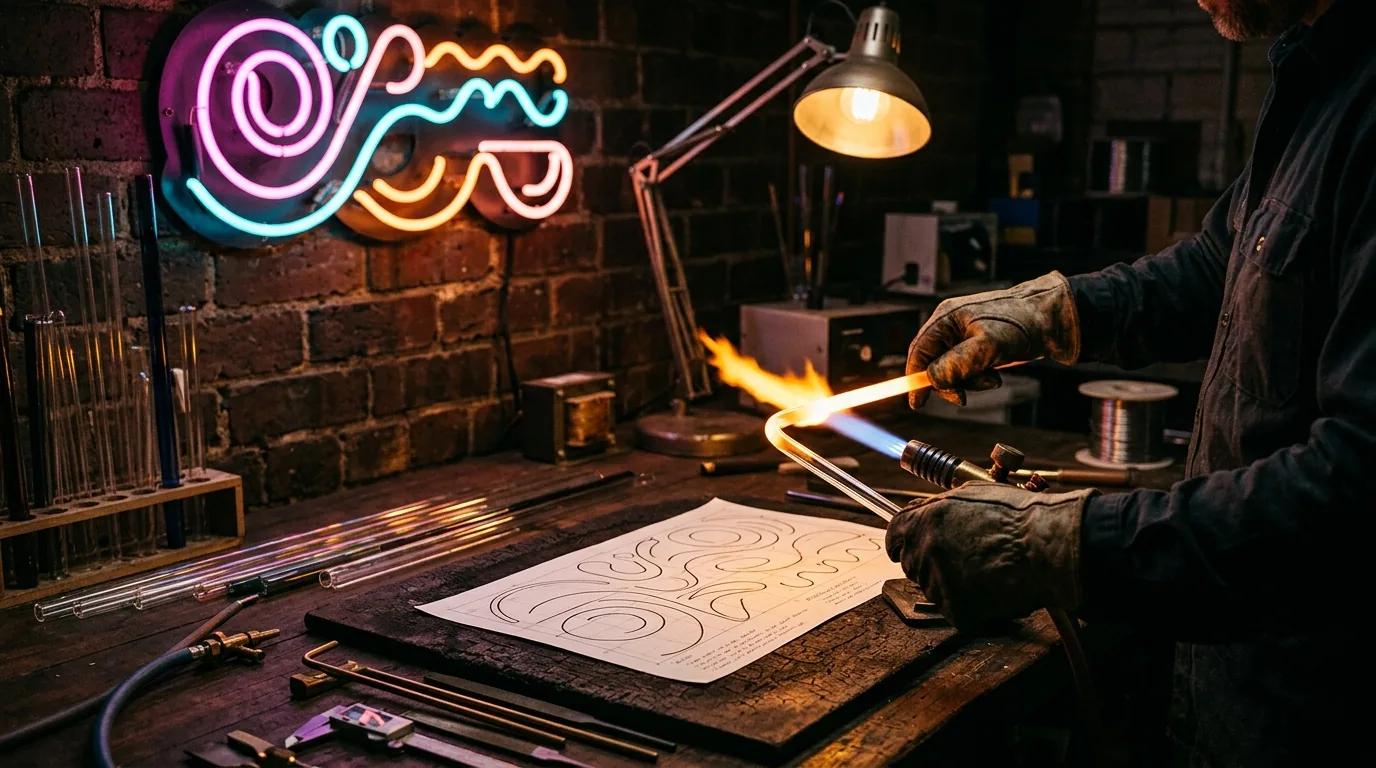
- Bending. Glass tubing, typically about 9 to 25 mm across, is heated in a gas flame until it softens and is bent by hand to the pattern. Long or complex pieces are made in sections, and the bender joins them by heating and fusing their ends.
- Electrodes. A metal electrode sealed in glass is fused onto each end of the run.
- Bombarding. The tube goes on a vacuum pump. The air is pumped out and a very high current is passed through the tube to heat the glass and electrodes, which drives out impurities for the pump to remove.
- Filling. The tube is filled with neon or argon at a small fraction of normal air pressure and sealed.
- Blocking out. Parts of the tube that should not show, such as the jumps between letters, are painted with opaque blockout paint.
- Wiring. A transformer raises the mains voltage to several thousand volts. Sign transformers commonly supply up to about 15,000 volts. The gas glows when current flows between the two electrodes.
The gas and the glass decide the colour. Pure neon glows orange-red. Argon with a small amount of mercury glows blue, and the mercury’s ultraviolet light makes a phosphor coating on the inside of the glass glow. Coated or tinted glass gives the other colours. For a closer look at the material, see our guide to glass neon signs.
Why neon art looks the way it does
Most of what makes neon art recognisable comes from the limits of hand-bent glass tube.
A tube is a line. Neon draws with one glowing line of even width. That suits handwriting, outlines and words, which is why so much neon art is text. Where a letter cannot be drawn in one stroke, the bender doubles the tube back or jumps to the next letter and paints the jump out. Tracey Emin’s neons are made in her own handwriting.
Every colour change is glasswork. A change of colour means a change of gas, coating or glass, so the colours of a multicoloured piece are planned section by section before the first bend.
The hardware is part of the work. Bruce Nauman’s Human/Need/Desire hangs on glass tubing frames, and MoMA lists them in the work’s materials. Glenn Ligon turned blockout paint into the subject: in Warm Broad Glow (2005), his first neon, the fronts of the letters are painted black, so the words “negro sunshine” glow only from behind. MoMA lists the medium as “neon and blackout paint”.
Glass neon stays fragile and hand-made. Every bend is made by hand in hot glass, so no two pieces are exactly the same, and a broken section has to be bent again by a bender. Gas does not last forever either: The Glass House in Connecticut says the argon and mercury in its Nauman neon, Neon Templates of the Left Half of My Body Taken at Ten Inch Intervals (1966), last 25 to 30 years. If you own glass neon, our neon sign repair guide covers what can be fixed.
Who bends the glass: workshops and artist-benders
Many well-known artists design their neon and have a specialist workshop make it. Others bend the glass themselves.
Artists and their benders
M+, Hong Kong’s museum of visual culture, notes that Nauman’s 1967 The True Artist Helps the World by Revealing Mystic Truths was “fabricated by neon technicians under Nauman’s supervision”. Some of the workshops behind famous neon are known by name:
- Let There Be Neon in New York was founded in 1972 by Rudi Stern and is now in Brooklyn. It says it has worked with Tracey Emin since 2003, and it made an exterior installation, The Ladder, for the artist Iván Navarro.
- Lite Brite Neon was founded by Matt Dilling in Brooklyn in 1999 and moved its main workshop to Kingston, New York, in 2017. It has made neon for artists including Glenn Ligon and Keith Sonnier.
- God’s Own Junkyard in London grew from Electro Signs, founded by Dick Bracey in 1952. Chris Bracey, who died in 2014, made neon for films including Blade Runner and Eyes Wide Shut, and his clients included David LaChapelle and Martin Creed.
Artists who bend their own
The Los Angeles neon artist Michael Flechtner learned to bend glass himself after an early piece he had designed but not made: “I hadn’t actually made the piece…only designed and wired it up…so I really couldn’t claim it as my art.” Meryl Pataky and Kelsey Issel co-founded She Bends in 2018, and museums have since shown the group’s work: the Museum of Glass in Tacoma in 2023, and the Museum of Craft and Design in San Francisco in She Bends: Neon as Soulcraft (20 July to 24 November 2024).
Fewer benders than before
In a House of Commons debate on neon signage on 6 May 2025, Yasmin Qureshi MP said there are “only 27 full-time neon glass benders left in the United Kingdom, down from hundreds in previous decades”, and no full-time trainees. In Hong Kong, according to a 2023 Hong Kong Free Press report, the craftsman Wu Chi-kai estimated that “maybe eight or nine” neon masters were left, and an unfinished 2022 count by Tetra Neon Exchange put the number of neon signs at about 400.
If you run a sign shop, an art commission is a different job from a shop sign: the artist’s drawing is the work, and the piece is often unique or one of a small edition.
Auction prices for neon art
Neon by famous artists can sell for high prices at auction. Some published results:
| Work | Sale | Price |
|---|---|---|
| Tracey Emin, George Loves Kenny, neon commissioned by George Michael in 2007 | Christie’s London, March 2019 | £347,250 with fees (estimate £40,000–60,000) |
| Bruce Nauman, Violins Violence Silence, neon, 1981–82 | Sotheby’s New York, November 2009 | about $4 million |
| Dan Flavin, alternate diagonals of March 2, 1964 (to Don Judd), fluorescent light | Sotheby’s New York, May 2014 | $3,077,000 with fees, then a record for the artist |
The Flavin is in the table because it is often described as neon art. It is fluorescent light, which shows how loosely the name “neon art” is used. For what LED neon costs a sign shop’s customers, see what custom neon signs cost.
Glass neon or LED neon
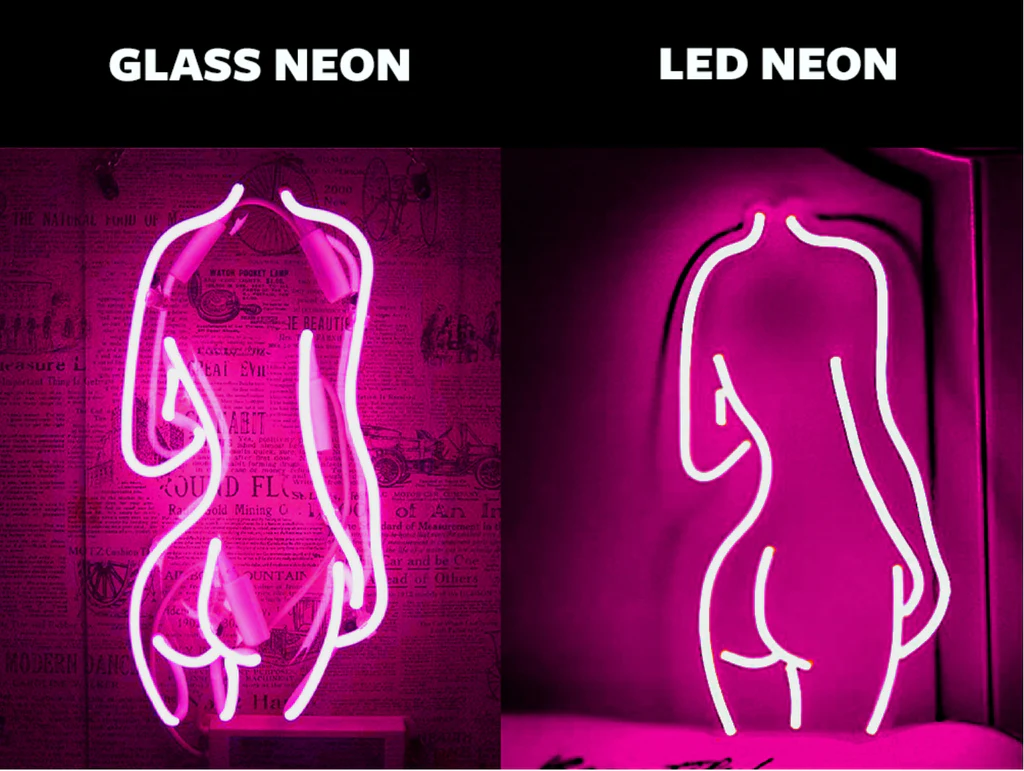
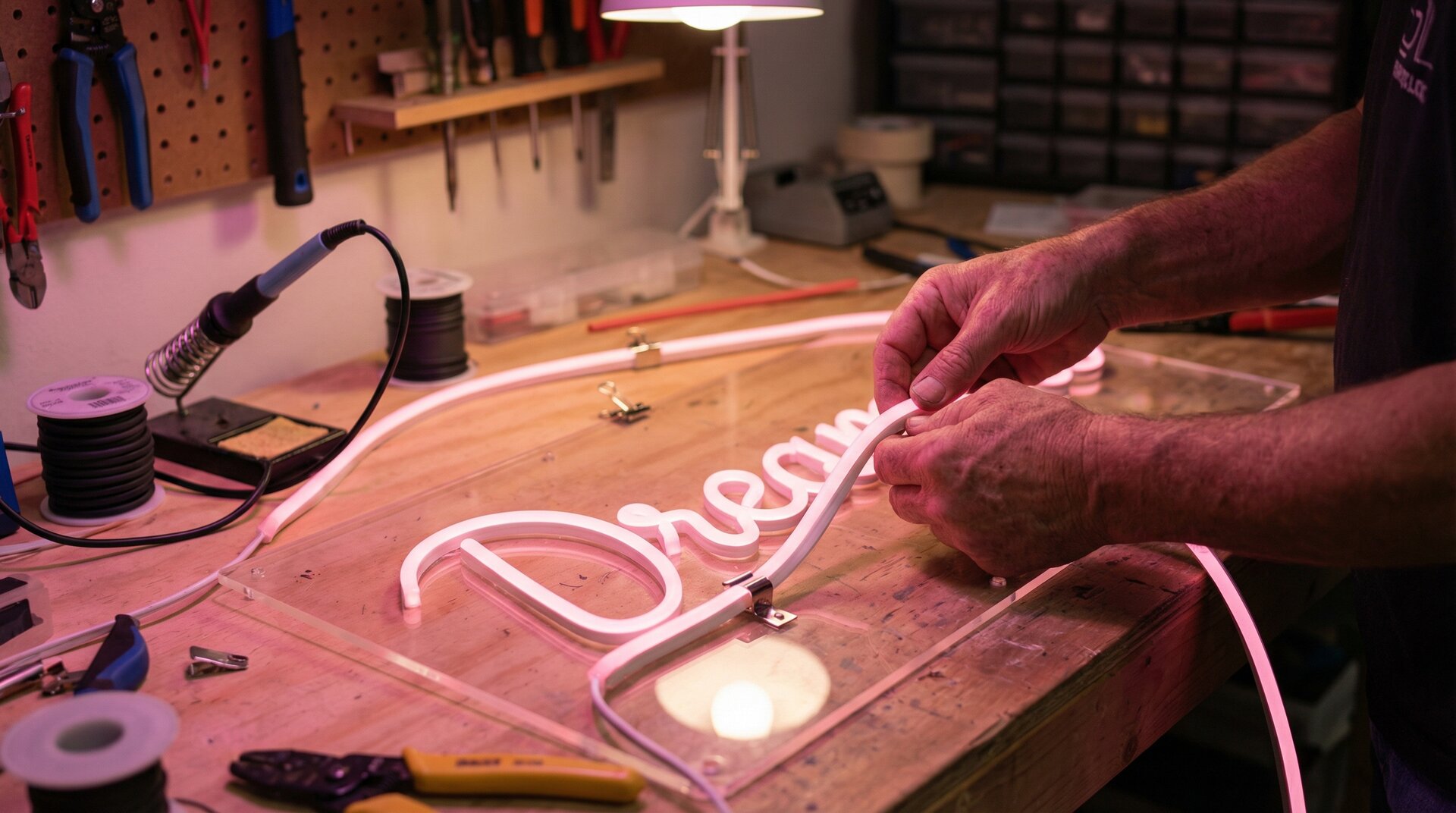
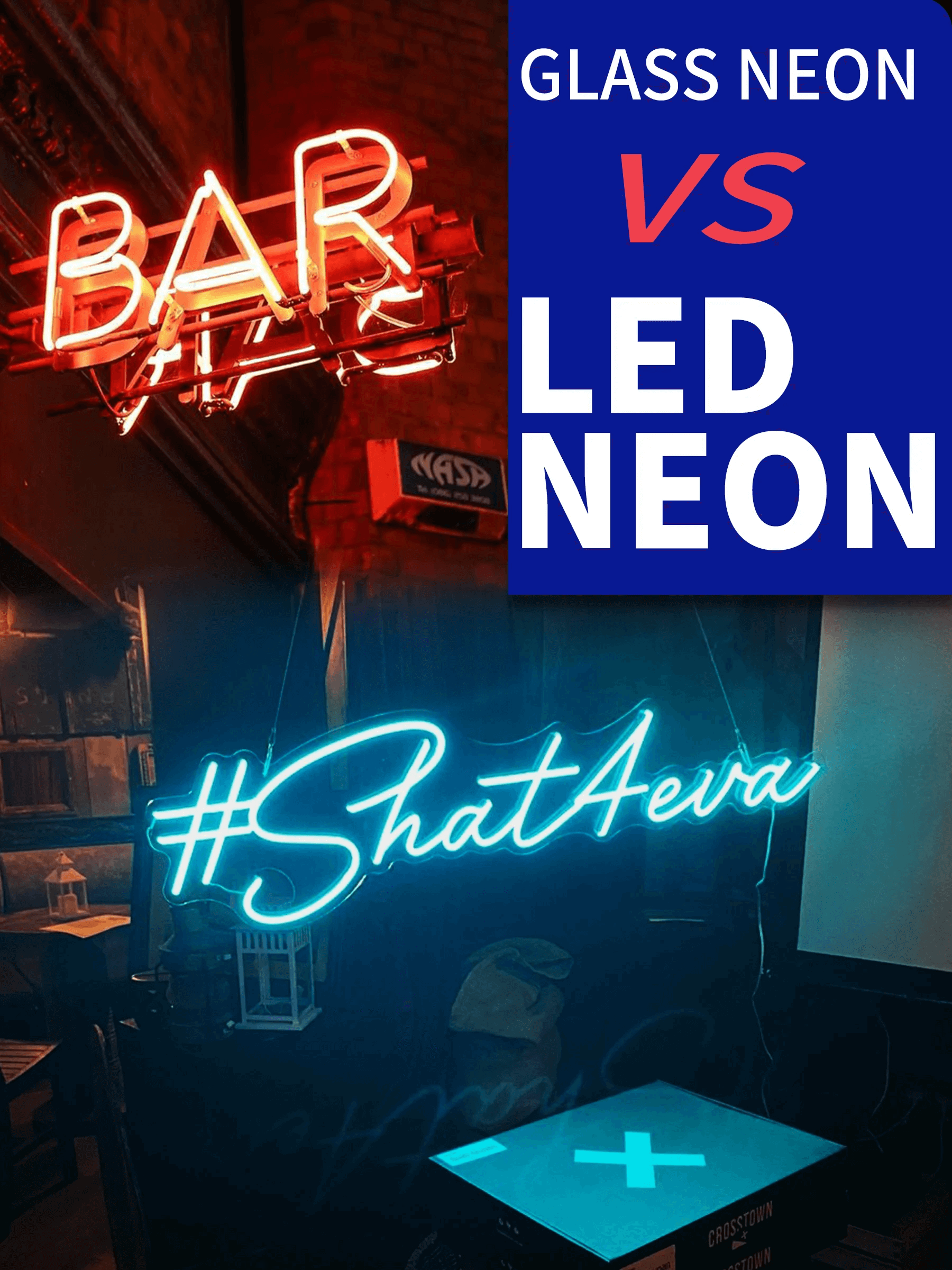
LED neon flex is a strip of LEDs inside a silicone cover that spreads their light into an even line. It has no gas and no glass and runs at low voltage. One product, ICL’s Halo Micro, is rated on its datasheet at 24 volts, can be cut every 50 mm, is rated for 50,000 hours and is made to bend in one direction.
For art, the difference is the material. Every glass neon piece in the table above is shaped by hand in a flame, and the light comes from the gas inside the glass. LED neon gives a similar look for less money with LEDs and silicone, and many shops that sell “neon art” for homes and events make it from LED neon flex.
Most sign companies now use LEDs: in July 2020, Signs of the Times reported that 85% of sign companies in its State of the Industry survey use LEDs as the light source for their electric signs. For a side-by-side comparison of running costs, safety and lifespan, see neon versus LED, and for how LED neon signs are made, see LED neon sign production.
Where to see neon art
Museums of neon:
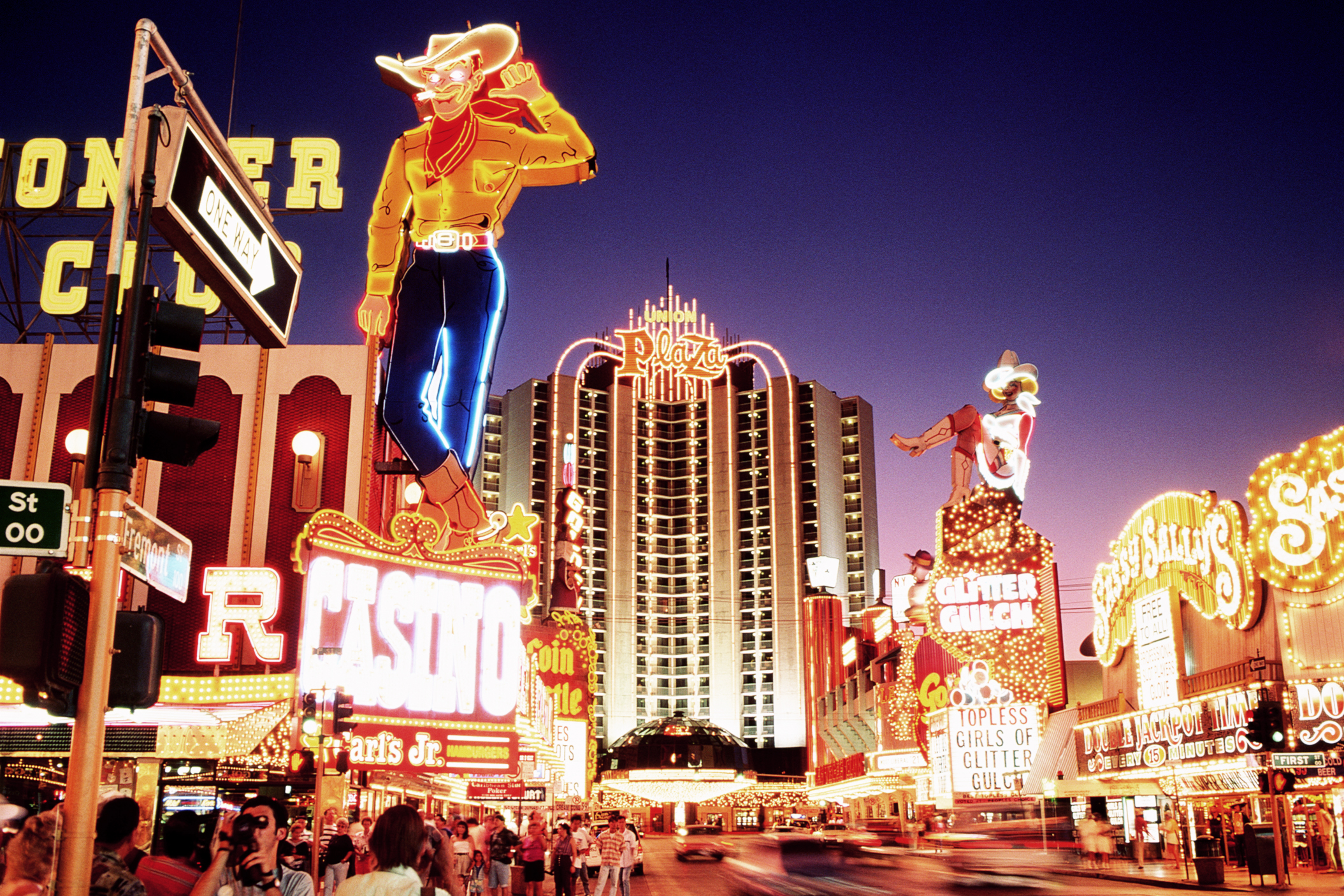
- The Neon Museum, Las Vegas. Founded in 1996. In October 2026 its website said the collection holds 322 signs in 977 pieces from more than 200 properties.
- The Museum of Neon Art (MONA), Glendale, California. Founded in 1981 by the artists Lili Lakich and Richard Jenkins in Los Angeles. It runs hands-on neon bending classes.
- The American Sign Museum, Cincinnati, Ohio.
- God’s Own Junkyard, Walthamstow, London. The Bracey family’s neon workshop and collection; Dick Bracey founded the business as Electro Signs in 1952.
In public, outside a museum: Mario Merz’s Il volo dei numeri, red neon Fibonacci numbers on the dome of the Mole Antonelliana in Turin.
Museums: a reconstruction of Lucio Fontana’s 1951 neon hangs in the Museo del Novecento in Milan. Collections that hold neon artworks include MoMA (Nauman, Ligon), the Whitney (Kosuth), Tate (Emin, Creed), the Philadelphia Museum of Art and the Kröller-Müller Museum (Nauman), the Museum of Fine Arts, Houston (Kosice, Sonnier), Benesse House Museum, Naoshima (Nauman), and the Walker Art Center and the Buffalo AKG Art Museum (Chryssa). Check each museum’s website for what is on display, because collections rotate.
From a drawing to a neon design online
A bender’s first job is to turn a picture into lines a tube can follow. Sign shops that sell neon online face the same job every time a customer uploads a logo or a sketch, and most of those files are pictures, not line drawings: 90% of the 17,076 artwork files customers attached to design and quote requests on Sign Customiser stores in the year to September 2026 were PNG or JPG images. Our artwork intake policy for sign shops covers what to do with them.
We built the bender’s first step, turning a picture into lines, into the AI Sign Designer. It turns a customer’s logo, photo or sketch into a sign design with an instant price on the shop’s own website. For LED neon, AI Sign Designer V2, which is available to all eligible stores, lays out a design much as a bender lays out a pattern:
- An image model first redraws the upload as clean sign artwork, and code flattens it into shapes with at most 12 colours.
- It asks an image model to redraw the design as “the flow lines a glass bender would lay out as tube runs”: one smooth centre line for each normal stroke (an outline for a very wide shape), no forks, an even line width, no tiny serifs, and the same position and size as the original.
- Before the drawing is traced, it removes stray lines that are not in the original: lines thinner than 40% of the median tube width and up to 8 tube widths long, such as short bridges between letters and loose tails. If it finds a longer stray line, it rejects that drawing rather than deliver a poor one.
- Code, not the model, then measures the drawing against the cleaned artwork from step 1: at least 90% of the redrawn lines should sit inside it, and they should cover at least 60% of it. If a drawing misses either mark, the customer still sees it, and the merchant sees a “Design check” warning on that AI design file: “The neon drawing may not match the uploaded artwork exactly.”
- It puts the original colours back on each tube and shows the design to the customer as lit neon tubes, with a price from the shop’s own price settings. If the drawing step fails to run, the customer sees the first, filled design instead.
The order arrives with vector files, but the AI Sign Designer does not check bend radius, the gap between tubes or the width of the flex. The shop, or the maker it works with, still checks the files against its flex before bending, just as a bender checks an artist’s sketch. The software takes the first draft and the quote off the shop’s desk.
If you run a sign shop, our neon sign design and quoting software lets your customers design and price neon on your own website. To see how a neon design looks lit before anything is made, try the free neon sign maker.
Frequently asked questions
Who is the most famous neon artist?
Bruce Nauman and Tracey Emin are the neon artists named most often. Nauman began making neon in the 1960s, including The True Artist Helps the World by Revealing Mystic Truths (1967). Emin has made neon in her own handwriting since the mid-1990s. Dan Flavin is often listed too, but he worked with fluorescent tubes, not neon.
How does neon art work?
A neon artwork is one or more sealed glass tubes. A bender heats the glass and bends it by hand to a full-size pattern, fits a metal electrode at each end, pumps out the air, heats the tube to drive out impurities and fills it with neon or argon at low pressure. A transformer raises the voltage to thousands of volts, and the gas glows when current flows between the electrodes.
Is Dan Flavin a neon artist?
No. Dan Flavin made his light works from standard fluorescent tubes and fixtures, for example the nominal three (to William of Ockham) (1963) and “monument” 1 for V. Tatlin (1964). He appears on many neon art lists because his work looks similar, but his works are fluorescent light, not neon.
What colours can neon art be?
Pure neon gas glows orange-red. Argon with a small amount of mercury glows blue, and its ultraviolet light makes a phosphor coating on the inside of the glass glow. Coated or tinted glass gives the other colours. So every colour in a glass neon artwork is a choice of gas, coating and glass.
Why did people stop using neon?
Neon is still made, but most sign companies now use LEDs. In July 2020, Signs of the Times reported that 85% of sign companies in its State of the Industry survey use LEDs as the light source for their electric signs. Fewer people learn to bend glass: in May 2025 Yasmin Qureshi MP told the House of Commons that there are only 27 full-time neon glass benders left in the United Kingdom.
Is LED neon real neon art?
Not in the gallery sense. LED neon is a strip of LEDs inside a silicone cover that spreads the light, with no gas and no glass. It gives a similar look for less money, and many shops that sell “neon art” for homes make it from LED neon. The neon art in museums, by artists such as Bruce Nauman and Glenn Ligon, is glass neon.
Where can I see neon art?
The Neon Museum in Las Vegas, the Museum of Neon Art in Glendale, California, the American Sign Museum in Cincinnati and God’s Own Junkyard in London show neon. MoMA, the Whitney and Tate hold neon artworks. In public, Mario Merz’s red neon Fibonacci numbers climb the dome of the Mole Antonelliana in Turin, and a reconstruction of Lucio Fontana’s 1951 neon hangs in the Museo del Novecento, Milan.
Sources
Facts and figures in this guide were checked on 1 October 2026. History: the Science History Institute and Dydia DeLyser, “An exploration of neon sign origins”, Signs of the Times, April 2014. How neon is made: Wikipedia’s Neon lighting (tube sizes and gas pressures) and Neon-sign transformer (transformer voltages), Echo Neon and MoMA’s record for Ligon’s Warm Broad Glow (blockout paint). Works: the museum records linked in the table, plus Dia and MoMA for Flavin, Guide London for St Pancras, M+ for Nauman’s fabrication and The Glass House for gas life. Workshops and benders: Let There Be Neon, Hudson Valley magazine on Lite Brite Neon, Euronews and Meer on God’s Own Junkyard, Voyage LA (Flechtner), the Museum of Glass and the Museum of Craft and Design (She Bends), Hansard, 6 May 2025, and Hong Kong Free Press, 16 April 2023. Prices: The Art Newspaper (Emin), artnet (Nauman) and Sotheby’s (Flavin). LED: ICL’s Halo Micro datasheet and Signs of the Times, July 2020. Museums: the Neon Museum, the Museum of Neon Art and the American Sign Museum. The AI Sign Designer steps come from Sign Customiser’s own code.